

Words by Jack Foley
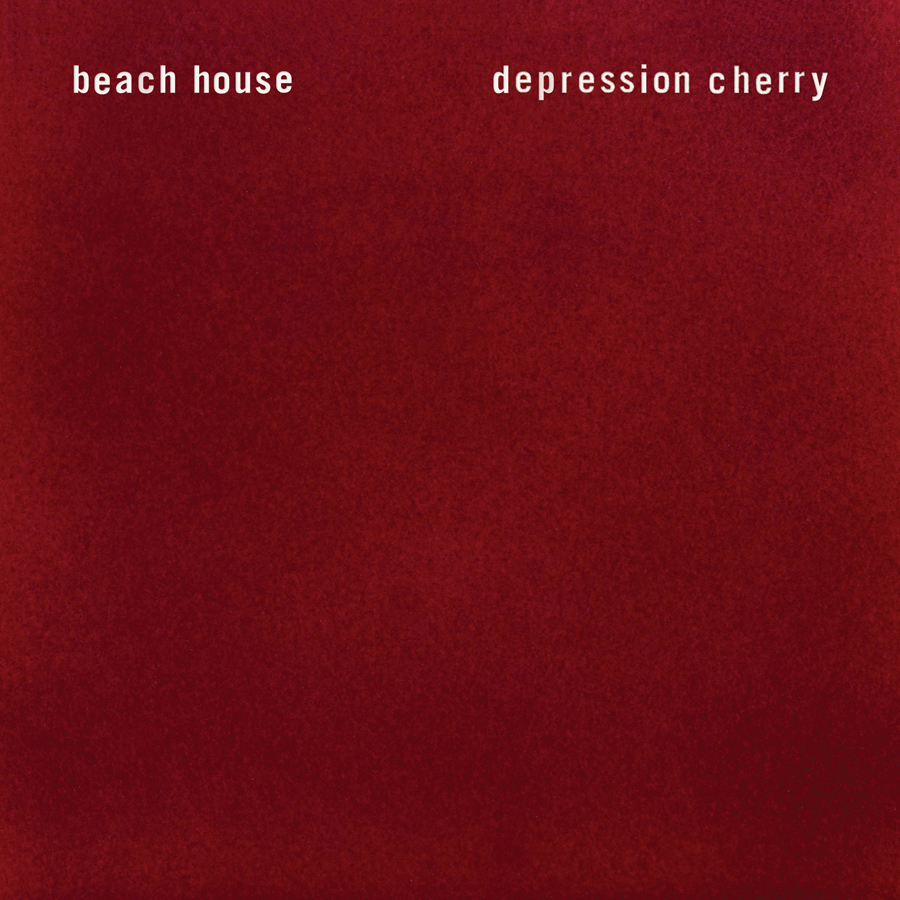
Beach House occupies a unique niche in the music world. Their sound can be gentle and ambient as Victoria Legrand’s synthesizers arpeggiate and drone into oblivion. On the contrary, it can be an emotional firestorm of Alex Scally’s crying slide guitar layered over Victoria’s vocals, sending chills down your spine. They’re something of an enigma in the music world; they have garnered significant attention and success, yet they have managed to maintain a certain air of mystery surrounding their story, lives, and inspiration behind their art. Beach House has always had a special place in my heart, and their music can be found somewhere in my rotation at all times. They are a band that I grew up with, and their sound defined many moments in both high school and college. I often find myself romanticizing driving around during the summers after 11th and 12th grade, listening to this record on windy Pennsylvania backroads, admiring the amber, lilac, and violet hues saturating the hazy sky as the sun begins to set and the cool breeze calls you home. It was an interesting transitional period of my life, and I often found solace in this record as I navigated my first year of adulthood in a pandemic. To celebrate the tenth anniversary of Depression Cherry, an album that dropped at the peak of the 2010s indie movement, let’s revisit the tracks that were central to my teenage experience.
Depression Cherry is the perfect description of Beach House’s 2015 release. It’s a warm blanket of sound interleaved with true poetry. Whenever I discuss this album with other people, I pull out my vinyl copy and show them the cover. The cover is made of red velvet, with “Depression Cherry” printed in the corner. The packaging is genius marketing, and I am lucky to have purchased it before the cover was changed to a simple gloss print. Enough fluff–let’s get into the music.
Levitation is a beautiful introduction to the record in all its darkness. The droning synth fade-in makes you feel like you could levitate, and just before you reach weightlessness, Victoria cuts in with her angelic vocals. The song, at face value, paints vignettes of a psychedelic experience. Weightlessness, levitation, and the experience of oblivion all point to a semi-religious experience. Deeper analysis and some digging on web forums reveals that I was completely wrong. The song depicts two people who perished in an accident involving a train, recounting their last moments. It’s an unfortunately true story, and Victoria’s lyrics perfectly capture what I can imagine the inevitability of death feels like–the sensation of leaving your body as you experience such incredible trauma and make peace with your own mortality. It’s a beautifully crafted, deeply poetic song that does not get the credit it deserves.
Sparks opens with a hypnotic vocal loop, which gets broken apart by a signature Alex Scally slide riff, caked in crunchy distortion. This song is the smell of a bonfire during a dramatic sunset with your closest friends. Beach House shows even more of their psychedelic side here, bringing life to a town seemingly crumbling and melting around them: “We drive around this town, houses melting down.” Further analysis shows that there may be more of a social commentary here that’s being viewed through the lens of hallucination. “A new development, wishing that it meant something natural, don’t we know it’s cruel,” can be interpreted in a handful of ways. Some have suggested a commentary on gentrification, ego death, and the profoundness of simply thinking abstractly, but the band themselves have said it’s about energy, specifically the moments where things “click,” and everything falls in line. Is it an allusion to overcoming writer’s block? Political Critique? Who knows. Nonetheless, the open-ended themes of Beach House songs are why I find them so enchanting–you can search for explicit meaning, but ultimately, your own lived experiences influence your interpretations.
Space Song is one of the band’s most famous songs, and rightfully so. The name tells you everything you need to know. The song begins with a haunting synth fade-in, and captures the essence of loneliness; “It was late at night, you held on tight. From an empty sea, a flash of light.” Accompanied by 8-bit octave arpeggios and corresponding eighth-note synth chords, the song takes what may be seen as a simplistic approach to music, but this is far from the truth. The layers are incredibly intricate, with vocal harmonies reverberating between your ears, a punchy, dirty bass tone, and the signature slide guitar that has roped in so many new fans, it’s hard to ignore the musical prowess of Beach House. As the song nears its conclusion, Victoria repeats “fall back into place” into the fadeout, leaving the listener with this experience of singularity–a reminder that we are all a blip on the timeline of the universe, and the vastness of our existence.
Beyond Love was a track that I have only really listened to when I spin my vinyl copy of the record; that being said, after going back and listening a few times, I wish I would have given it the time of day and tuned into the content. There’s something magical about the drum machine, coupled with Alex’s spacey, dissonant riffs. It’s timeless in a way. It’s a lot more reminiscent of some of their work from earlier records in its arrangement. Beyond Love tackles the experience of unrequited love, a relationship ended too soon. The protagonist expresses their frustration with the other party, ripping petals off the rose in their mouth, shutting the lights off on their relationship in the end. Victoria compares this person to “Elvis,” perhaps to highlight the protagonist’s idolization of this man despite his indifference. The abrupt end to their relationship and experience in the time shortly thereafter leads them to question what went wrong in a last-ditch effort to bargain with him; “all I know is what I see, and I can’t live without this. Could you ever believe beyond love?” The protagonist wants more than simply being “in love.” Anyone can have the capacity to love another person on a surface level, but believing in their connection on a deeper, more spiritual level is what he lacks. Perhaps he is scared of being alone and truly does care for the protagonist, but the fear of emotional intimacy sours the entire relationship in the end.
To be honest, I have no idea what 10:37 is about. But, there’s something about the cryptic title, lyrical content, and stripped-back production that just feels like brain food for a study session or late-night drive. Victoria’s sporadic vocal chimes and fluttering runs carry the song, backed by a simple linear drum pattern and synth. No intense layering, reverb, or delay needed. You feel as if you have achieved a state of bliss, levitating in the stratosphere above the clouds. The clearest lyric is, as the title suggests, “10:37.” I like to think that the ambiguous nature of much of Beach House’s catalog is intentional–sometimes having everything spelled out ruins the magic. Needless to say, I catch the time 10:37 more frequently, or at least I notice it with more intent. Perhaps the purpose is to make us stop and notice the little things and embrace the joy of nothingness.
PPP has always been one of my favorite Beach House songs since I first listened. It’s ambiguous; its title was a placeholder that came into a meaning of its own. PPP could mean anything, but to me, it is human emotion in its most raw, unadulterated form. PPP is the orange and purple sunset illuminating the car with your windows down while you leave your hometown for one last time. Alex’s vocals make a rare appearance, accompanied by an arpeggiated, twinkly Stratocaster sound. This is one of Victoria’s strongest performances on the album from a vocal standpoint, and her endurance shines throughout.
“Did you see it coming? It happened so fast. Timing was perfect, water on glass” emphasizes the uncertainty of life. Just like that, opportunities come and go. One small decision can alter the trajectory of your life, for better or for worse. Like raindrops on your car window, things pass by in an instant before you can process what happened. Victoria leans into the conflicting emotions she faces, “like tracing figure eights on ice in skates, oh well, and if this ice should break, it would be my mistake.” It’s easy to let fleeting joy shove rose-colored glasses in your face, persuading you that the highs will last forever in the moment, but inevitably, there will be a corresponding low. Viewing this from a retrospective position makes your own humanity more prominent, and the realization that everyone has regrets can be comforting. As the verses blend, the pre-chorus repeats “yet, I’m tracing figure eights on ice in skates.” Despite the signs that your optimism may cause things to go awry, it can be painful and borderline impossible to force yourself to be rational in the throes of hope. It can be easier to go in circles pretending everything is fine than to face the dismal reality. Alex’s slide guitar wails and harmonizes in a melancholy chord progression that still gives me chills every single time. Victoria’s vocals swoop in, forming layers upon layers of cries into the void. This is an aural manifestation of what can only be described as a profound experience, the realization that the memories you have loved are just that. The first time I listened to this song, I had to replay this section several times before I could even begin to find words to describe how it made me feel. I’m not often deeply affected by a song, but it’s tough to hear this genius composition without getting misty-eyed from the sheer weight of the progression. It’s the perfect sonic crescendo to depict the pain of loss, regret, and yearning for what was. Nostalgia is a powerful force to be reckoned with, akin to a drug; it can be the most beautiful, raw experience, yet it’s laden with a heaviness that leaves you with a lump in your throat. Some have critiqued the nearly three-minute outro as unnecessary and drawn-out, but I think this is an incredibly dull take. The extended outro is the culmination of an extended period of doubt, introspection, and emotional pain into an explosive crescendo that is arguably the peak of this record.
Wildflower was the first song from Depression Cherry that I ever listened to. On my bus ride to school during one of the first days of freshman year, I noticed the person in front of me playing this song over and over during the 45-minute commute. I figured there must be something to it if someone can loop a song so many times without skipping. I was immediately hooked. It’s a dreamy cacophony of swirling, chorused guitars and synths supporting Victoria’s gentle, comforting vocals. “No better color, looked everywhere…you built a city, all in your head.” Beauty is in everything, even the times when our minds feel like the constant flow of stimuli is going to be the tipping point into insanity.
I feel that Bluebird was placed strategically as a segue between Wildflower and Days of Candy. It’s just a slight bump in the energy before the incredible closer. But it’s completely unfair to treat it like a filler. Bluebirds are held in high regard in many cultures as signs of good fortune and love. Victoria uses the bluebird as a physical manifestation of her own emotions; she questions “bluebird, where you gonna go now” as a reference to the fleeting nature of consciousness throughout any period of time. Victoria knows that, as someone with deep emotions, “I should not try to capture you” and suppress or control her feelings, even if at times it may be to her detriment, “lead me to the gallows, where out of the corner of my eye, there’s something, it’s pulling me back from nothing.” Anxiety can feel like a vice grip around your mind and body, holding you back from living life as intended. Realizing that these bursts of adrenaline and questioning your sanity are nothing more than a chemical reaction is a liberating feeling, so much so that you could fly away.
Days of Candy is just that. Nostalgia is a prevalent theme in this record, and it’s easy to look back on even the worst of times positively in a stupor of depression. The Fondness for the past and romanticization of moments of ecstasy are the days of candy that we often turn to in times of turmoil. The track features a 24-part chorus that repeats throughout the song. The first B-flat note is layered upon by additional voices, creating one of the most beautiful harmonies I have heard. Victoria begins gently singing, almost with a quiver, as flanging synths and bass notes begin to build up momentum. “These days of candy live in your mind, those violet lines, white fenced in miles, across my eyes.” Victoria has an incredible ability to perfectly capture the essence of regret. “I know it comes too soon, the universe is riding off with you” cuts into your soul like a dagger. Everyone can relate to this feeling, whether it be someone you burned bridges with or reminiscing about wasted youth; we all feel the weight of regret. Victoria emphasizes her longing and feelings of loss, all while clinging to the energy of the past, hoping to manifest a recurrence in the future “I know it comes too soon, I know it stays for nobody, I want to know you there, the universe is riding off with you.” I recommend listening to the live performance of Days of Candy and PPP from Pitchfork Music Festival, 2015. It will blow your mind. I burned these on a cassette in 2019, and the warmth of a wobbly tape machine adds to the ambiance. Raw emotion flows through Victoria like a waterfall to a cliff on the edge of the world, and this record is the perfect reset for those days when you need to let yourself feel everything you have been neglecting. Here’s to many more days of Beach House, who have always been a spark of cherry-colored beauty in an otherwise grey world.
 Polyvox Magazine
Leave a comment