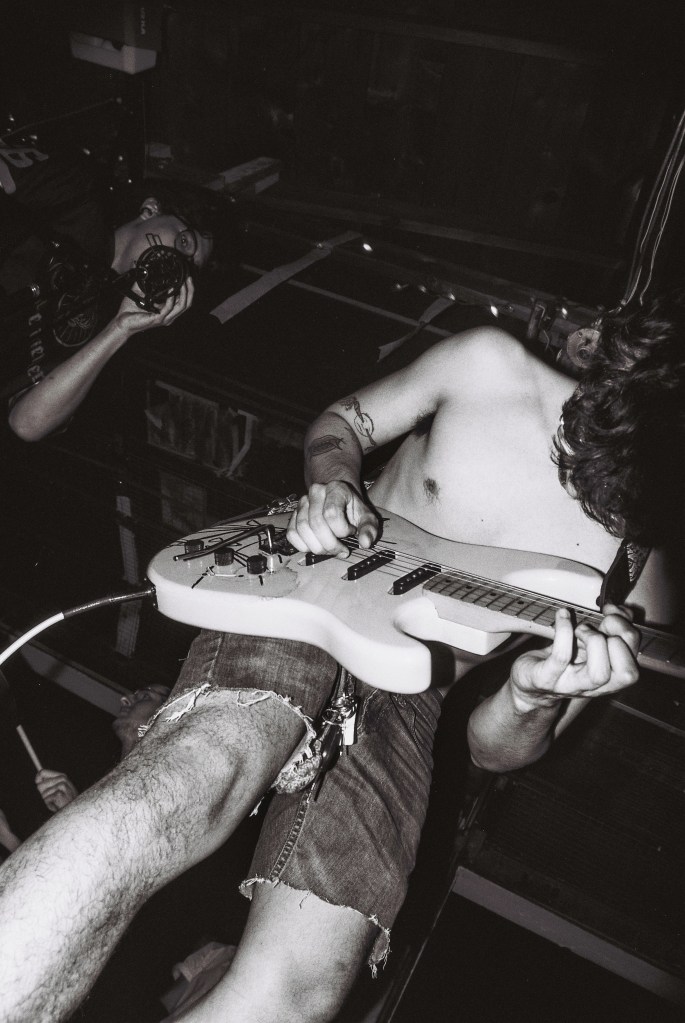
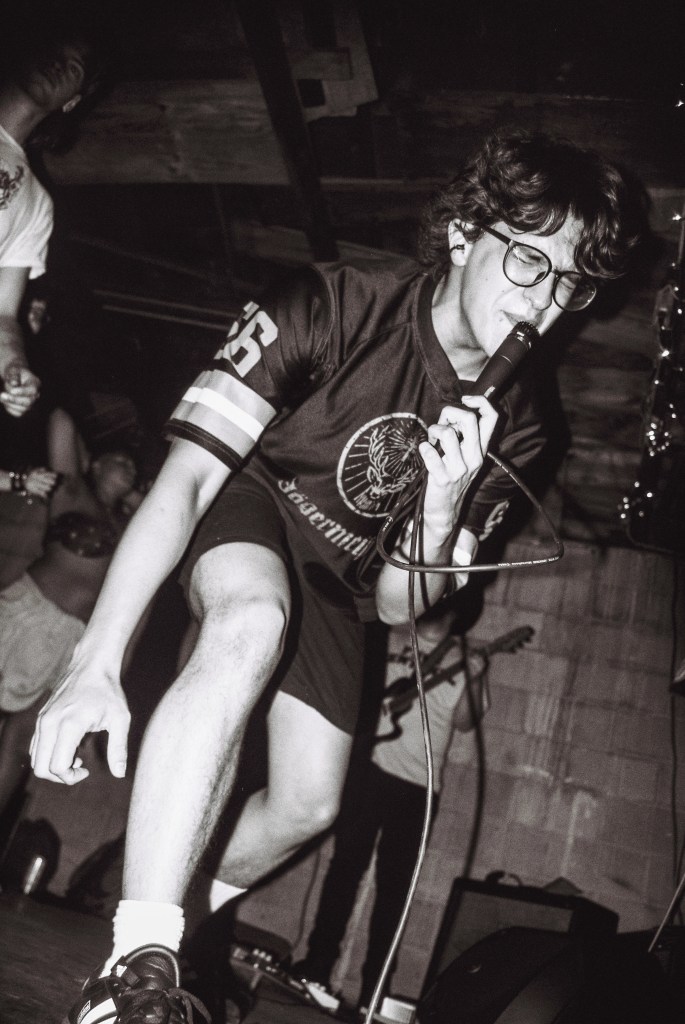
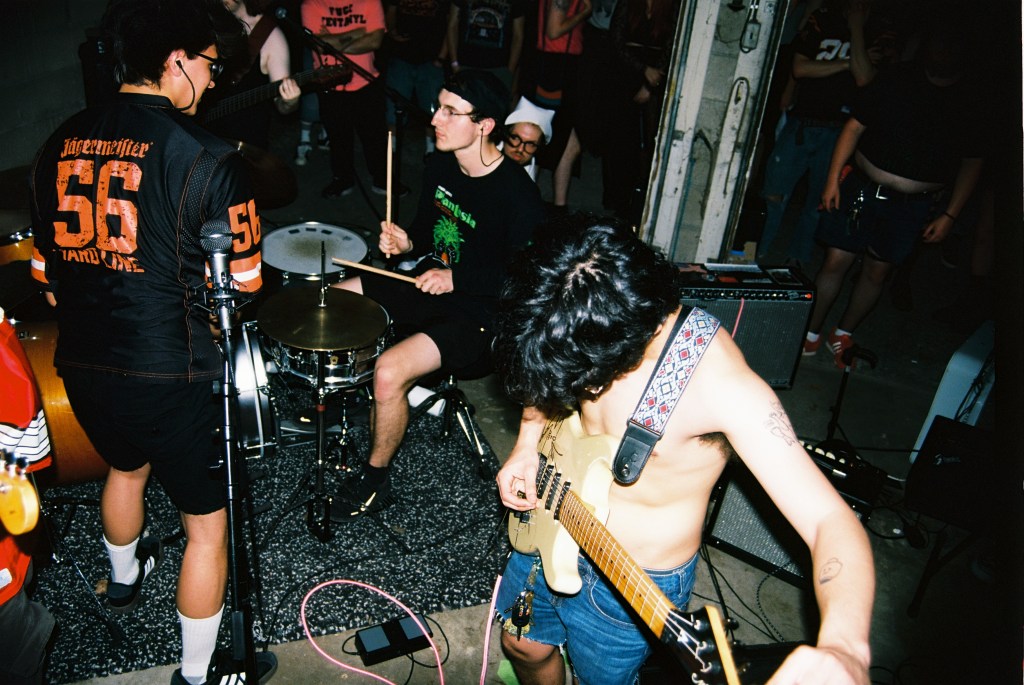
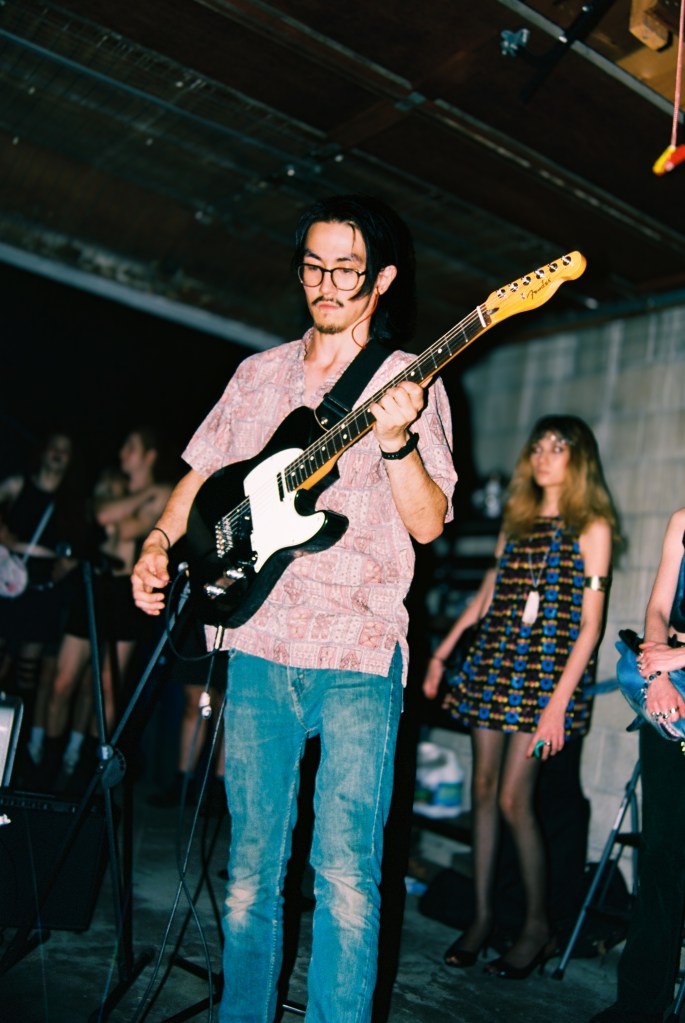
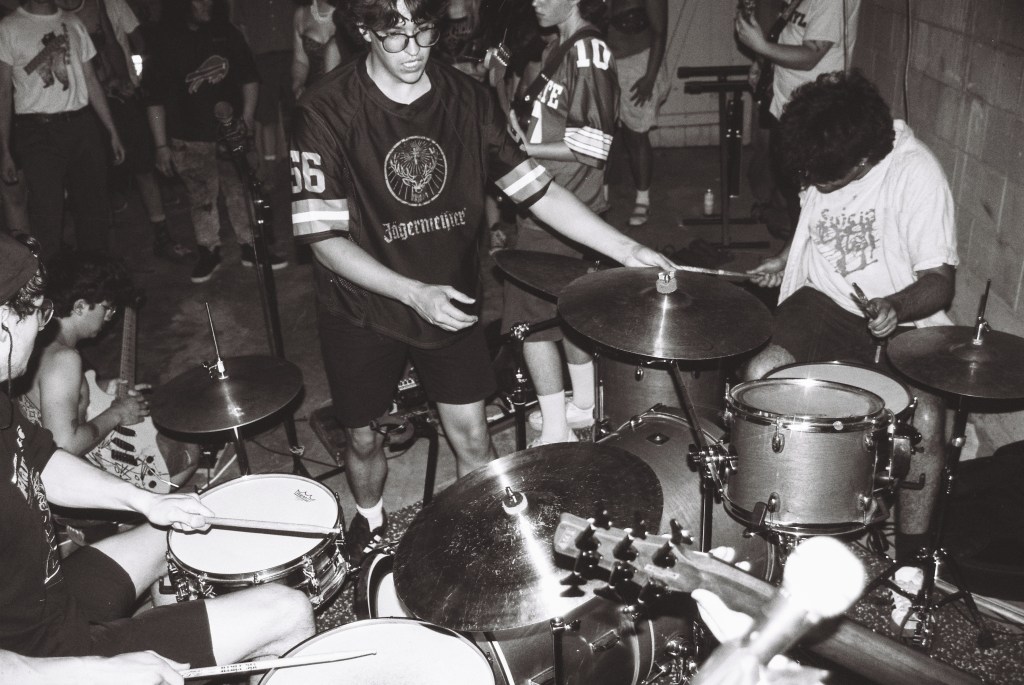
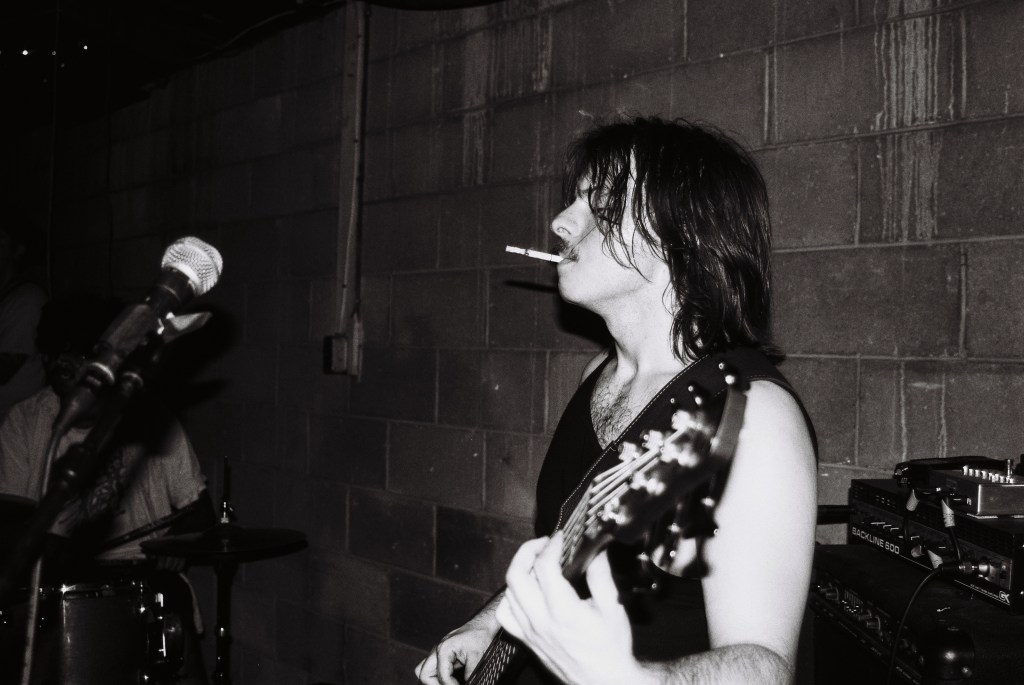
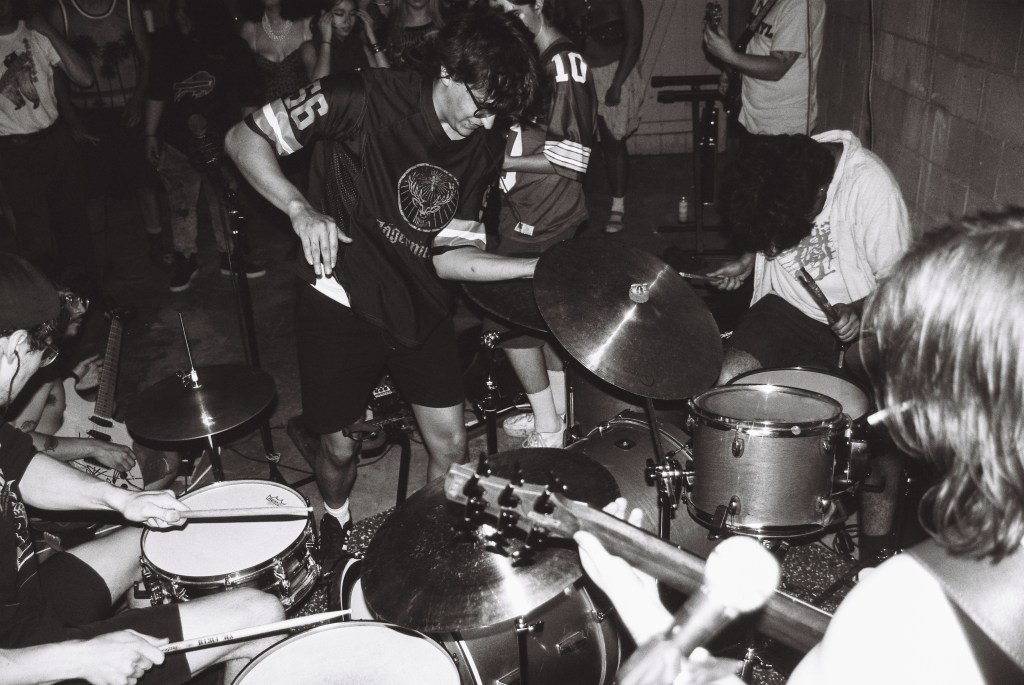
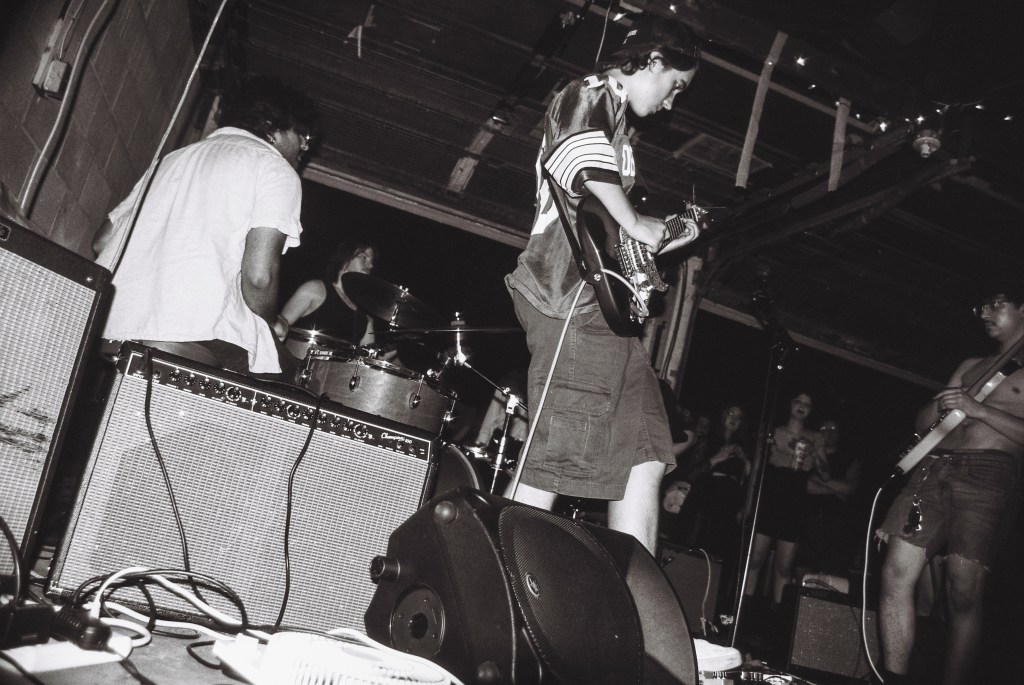
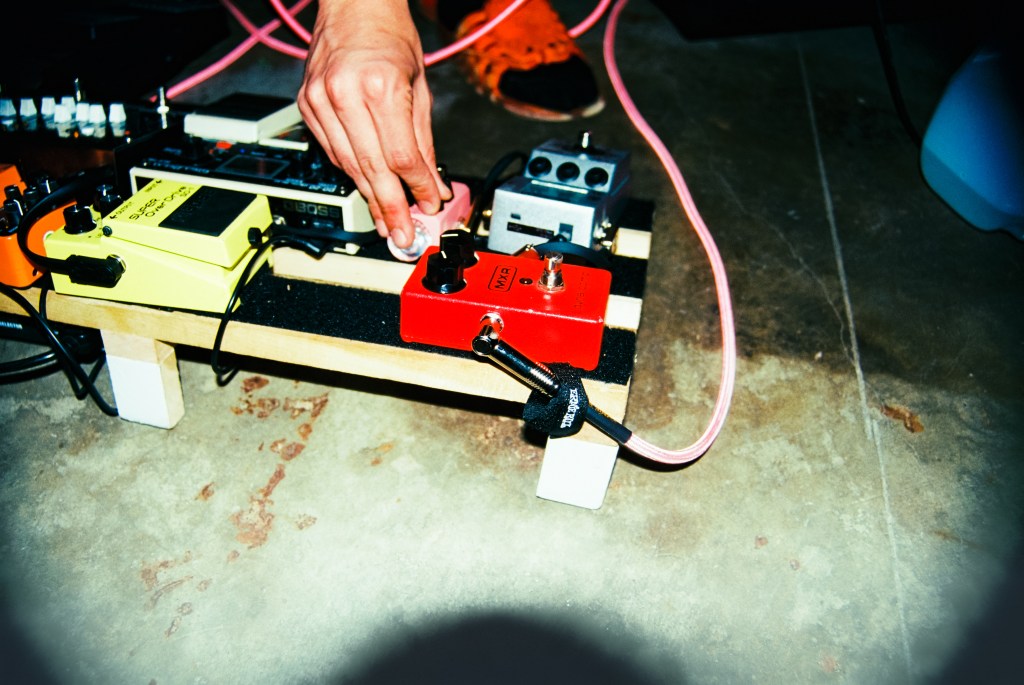
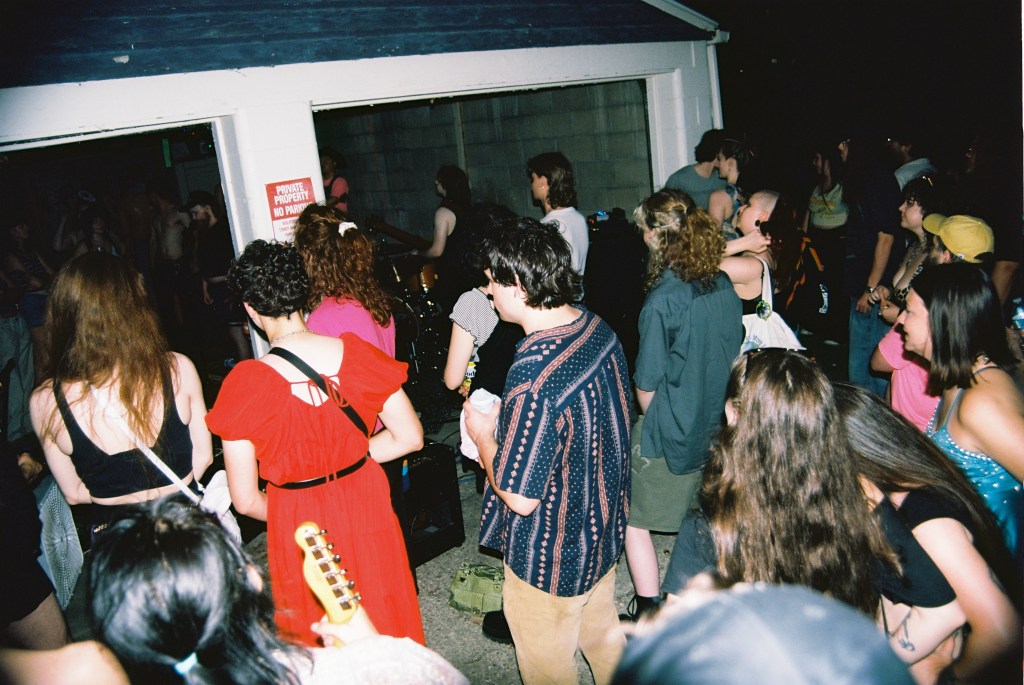
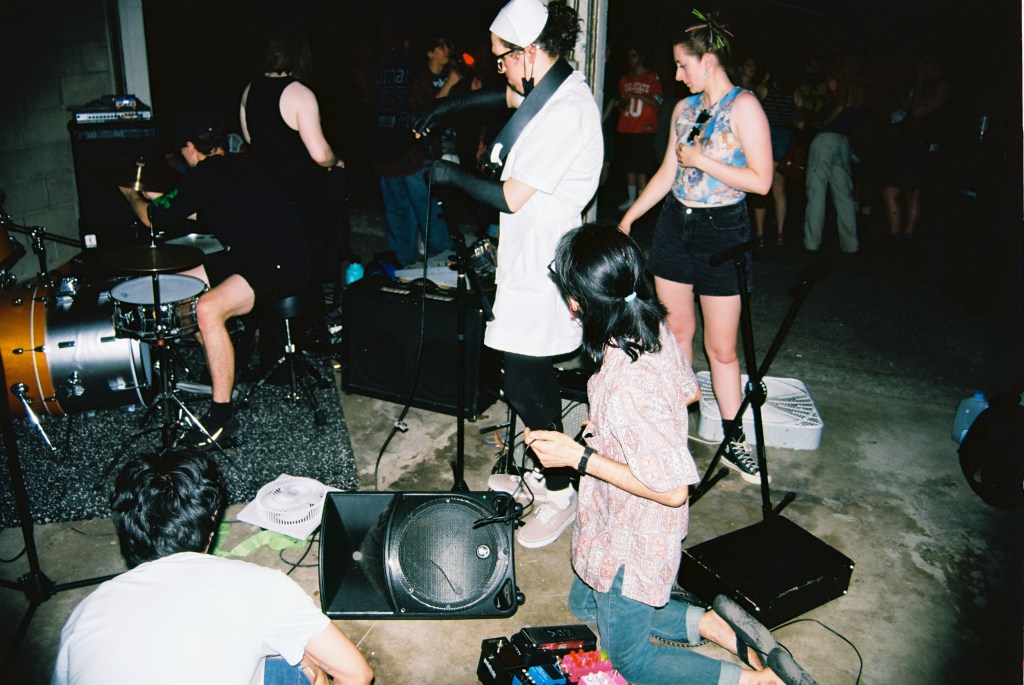
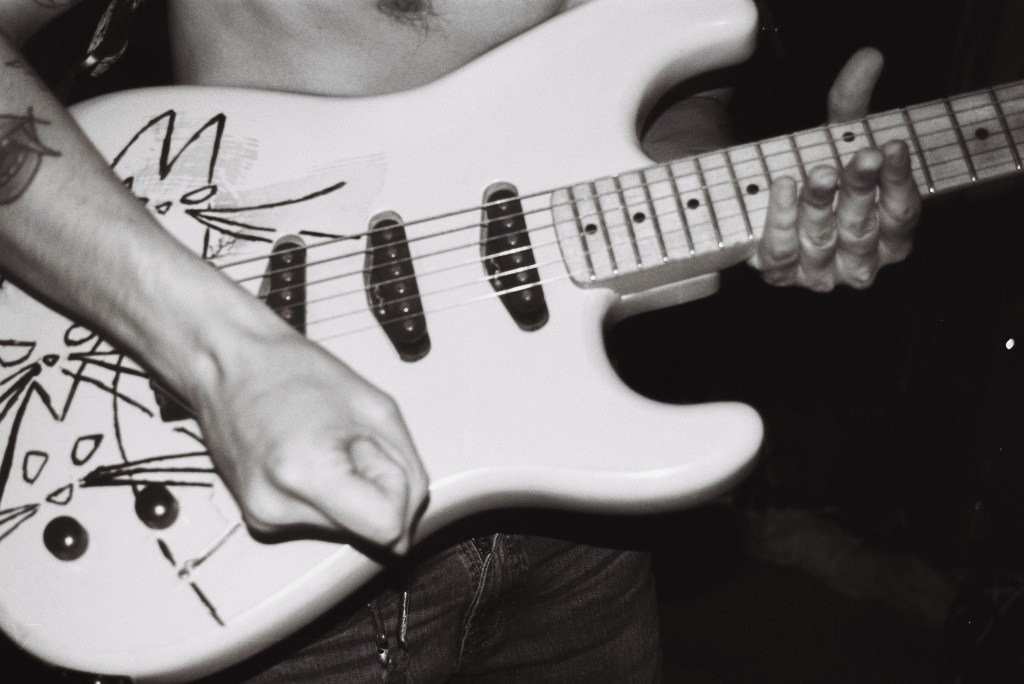
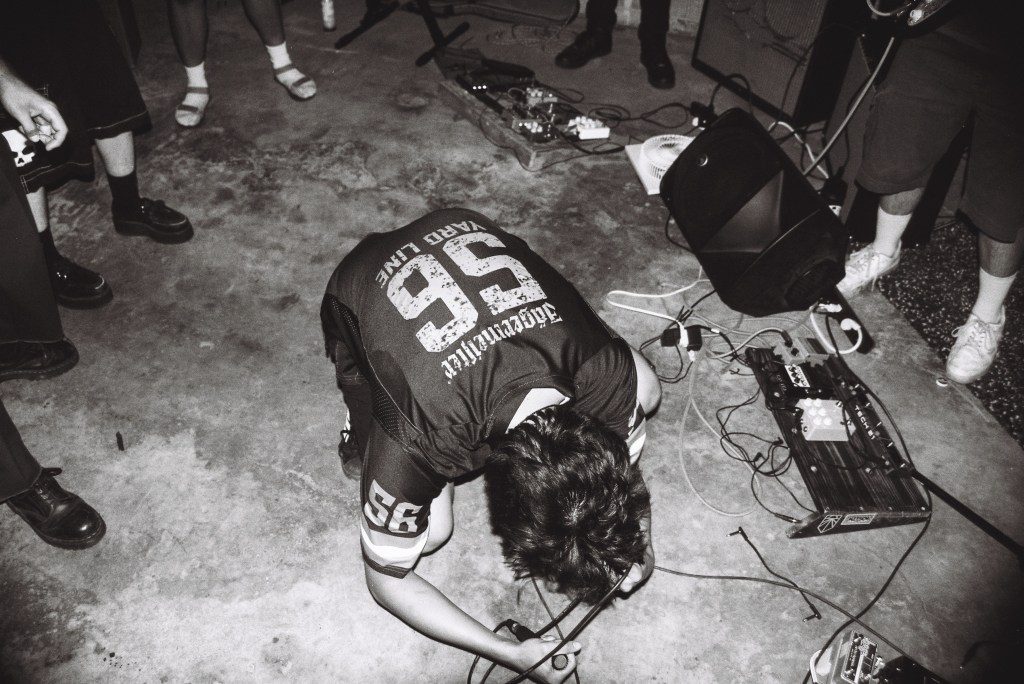
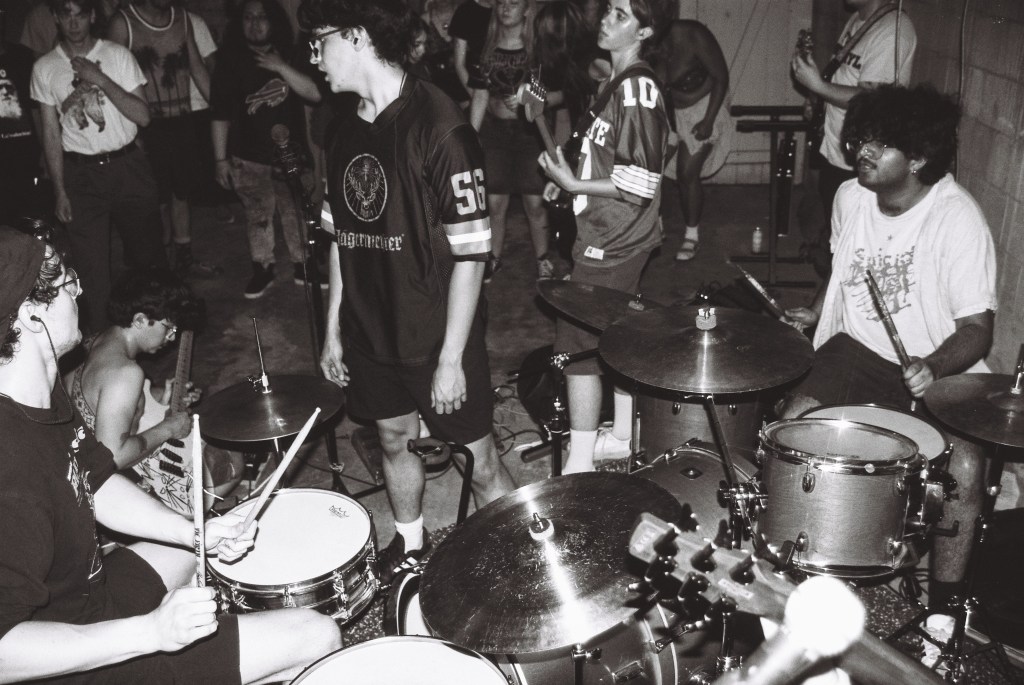
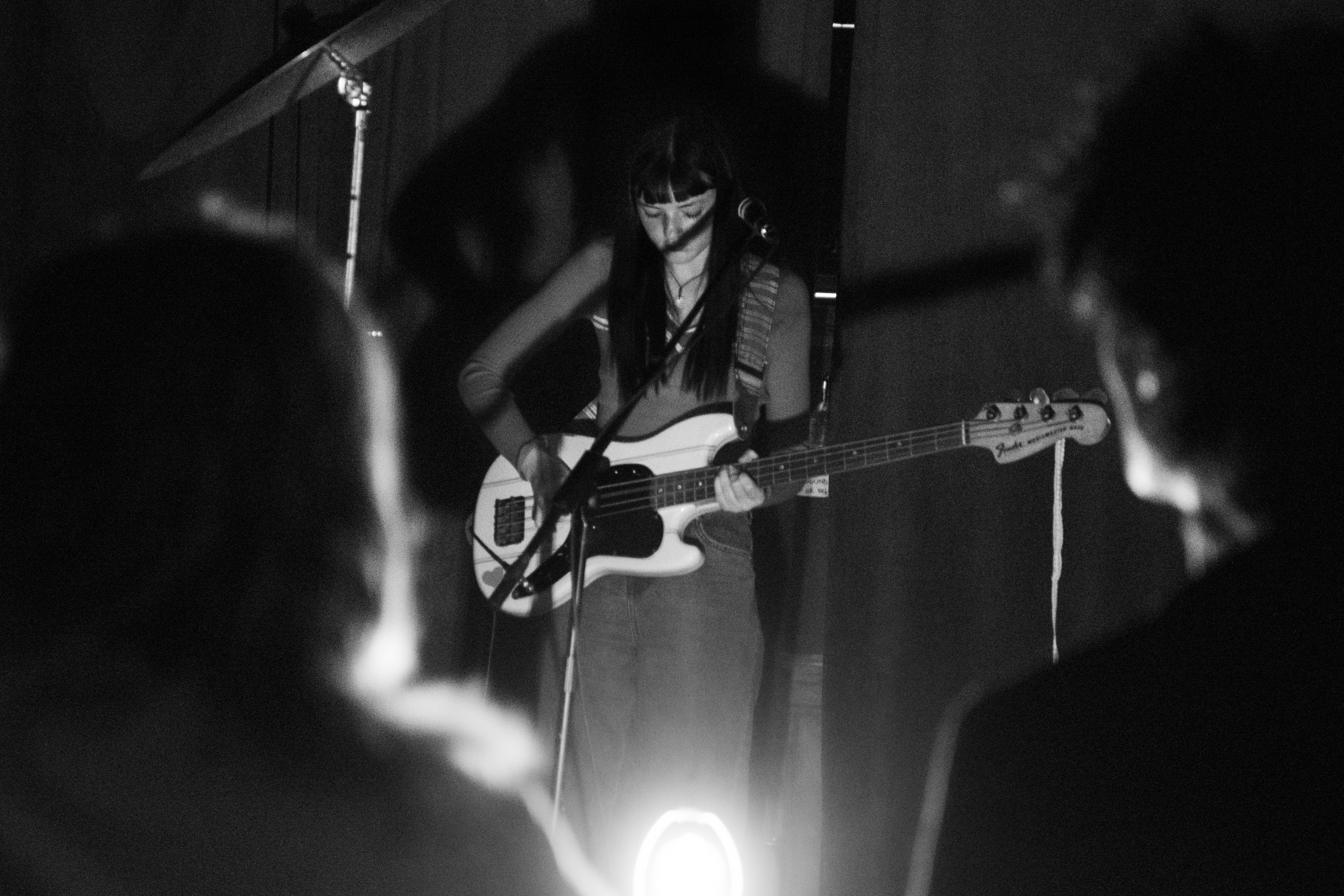
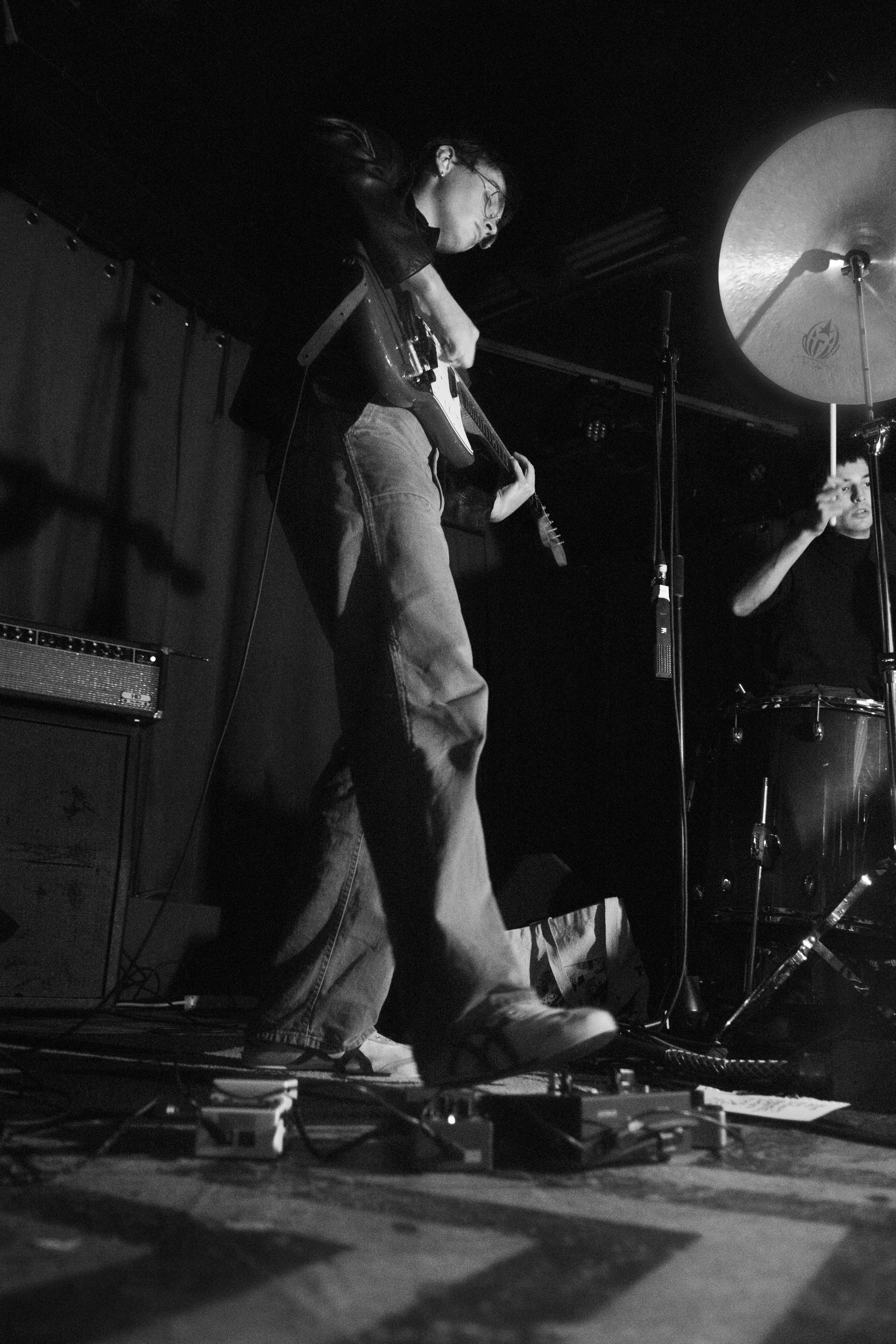
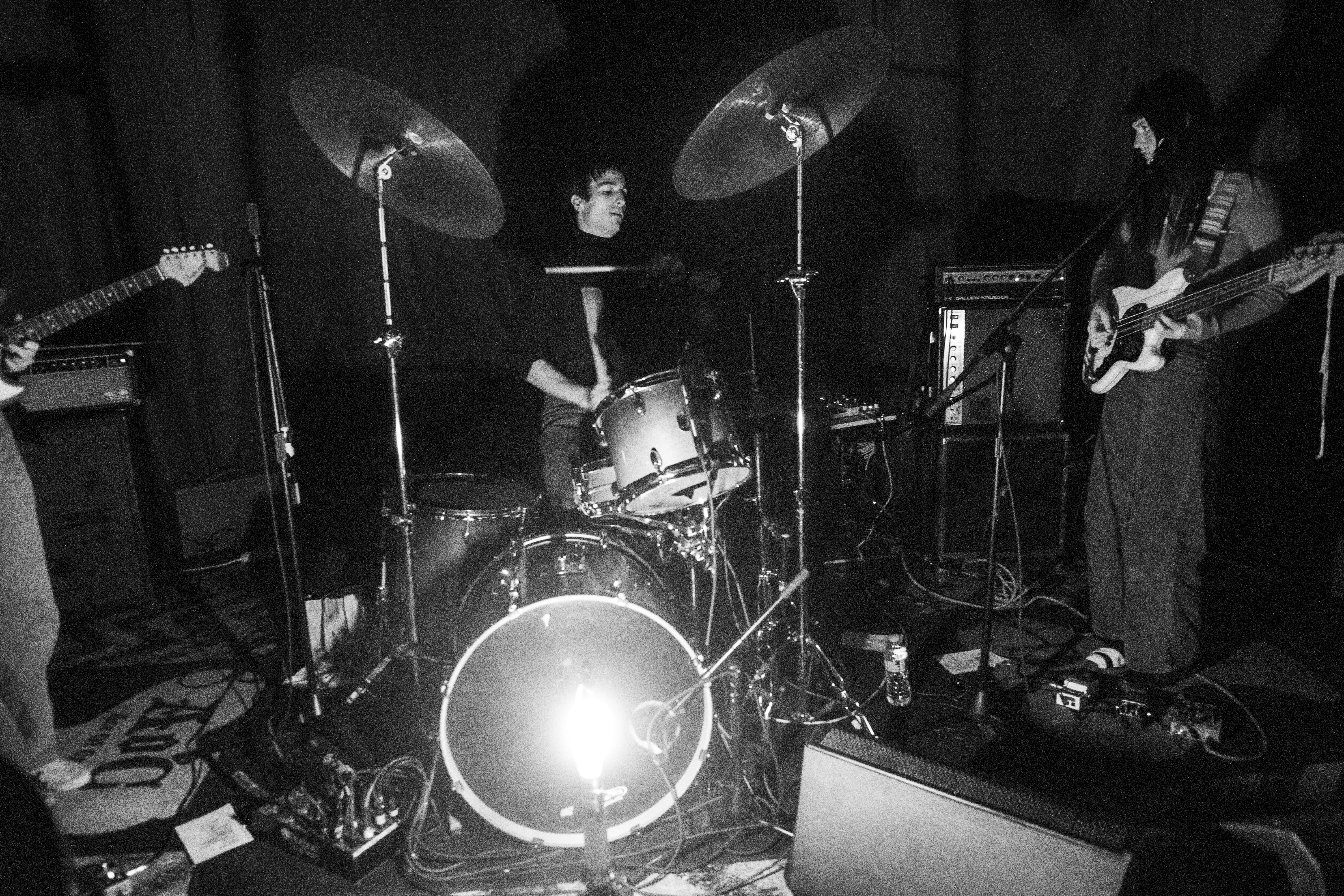
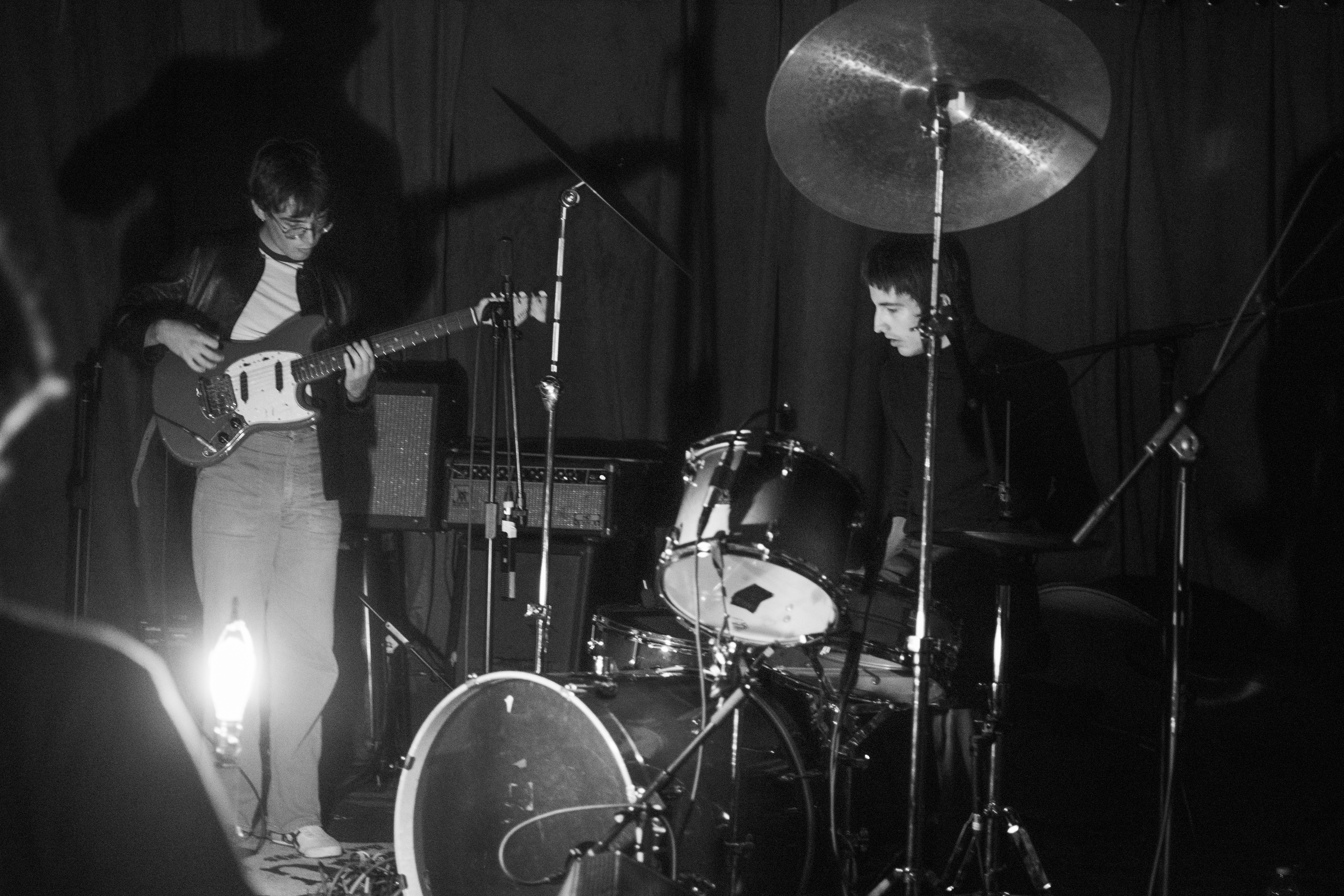
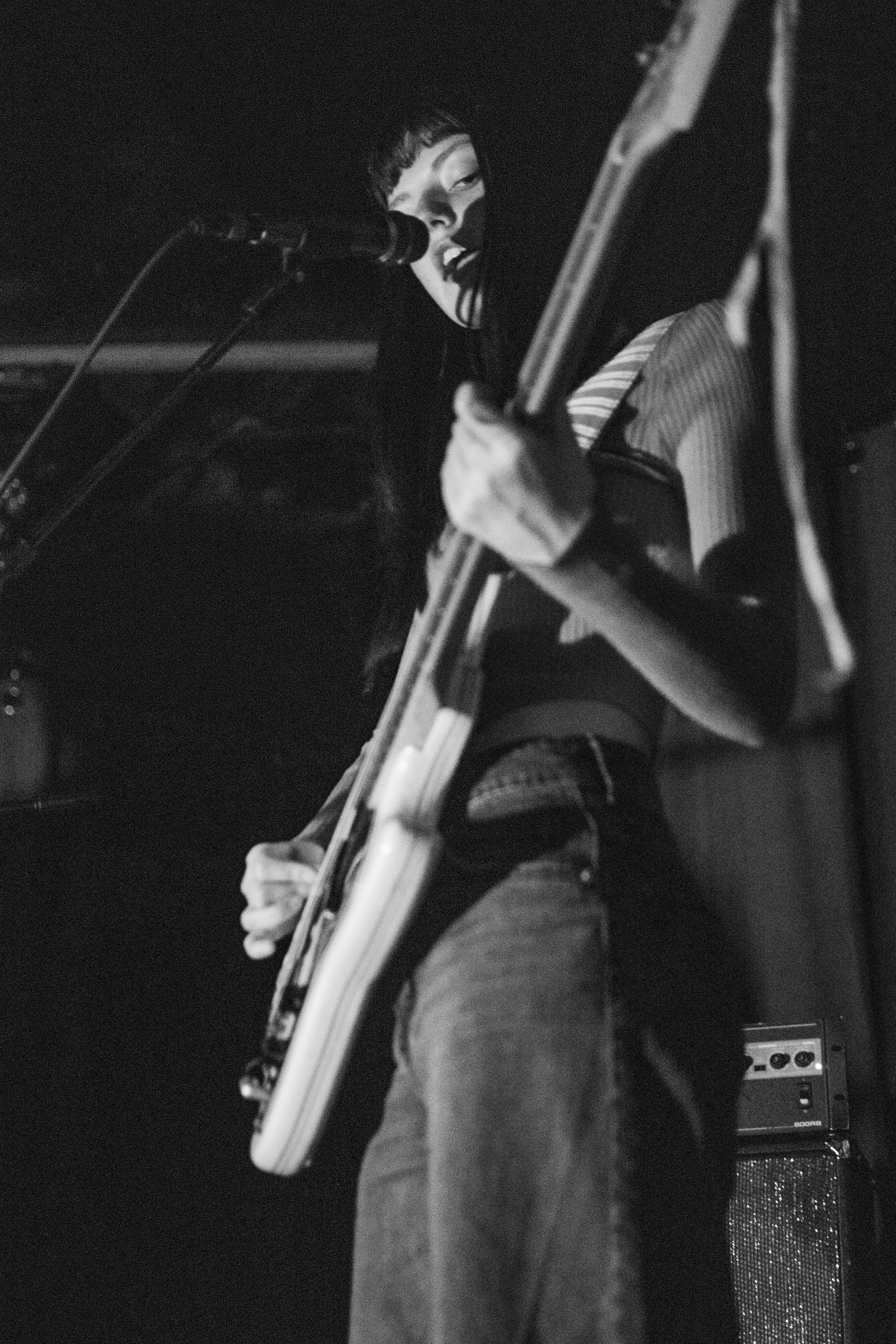
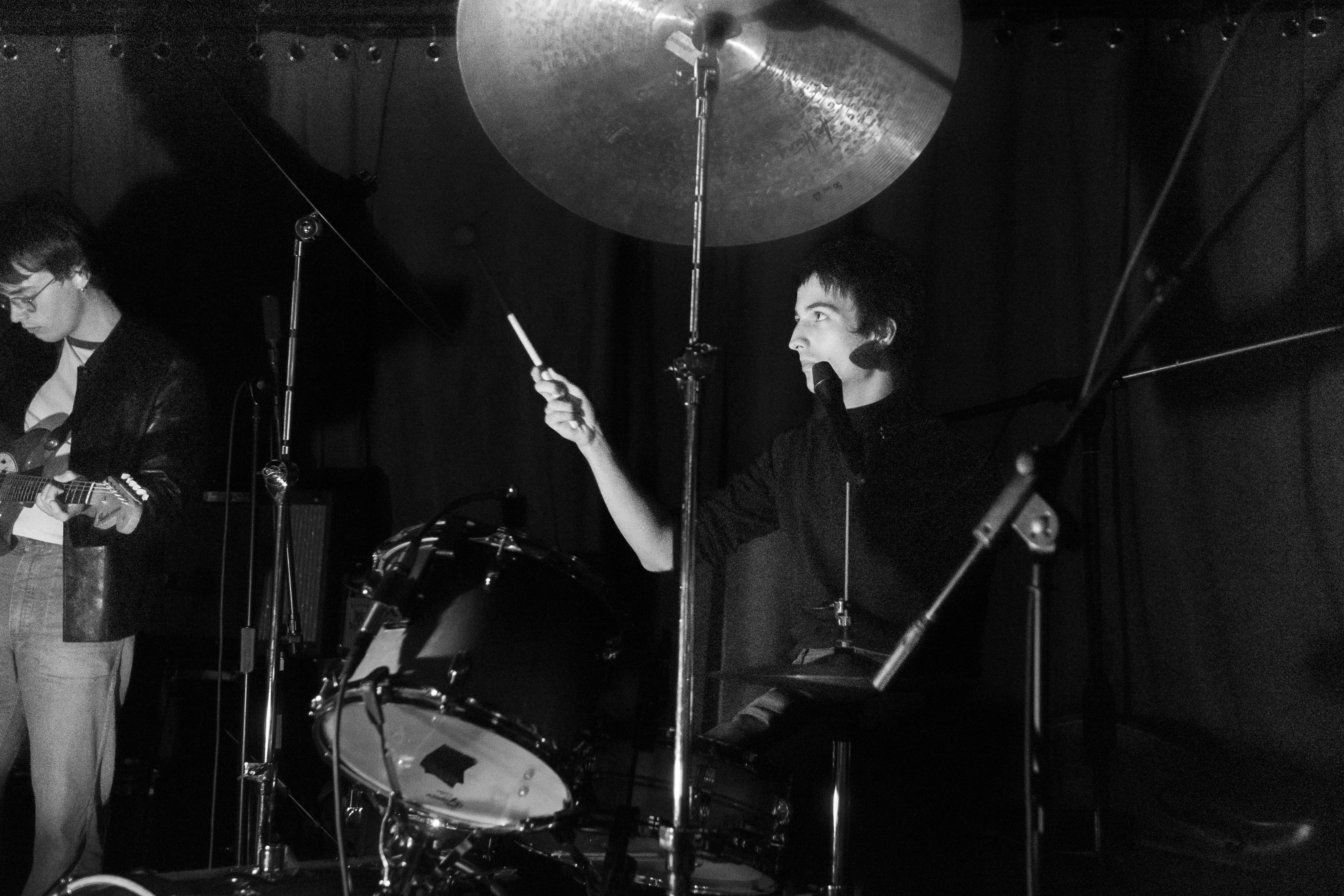
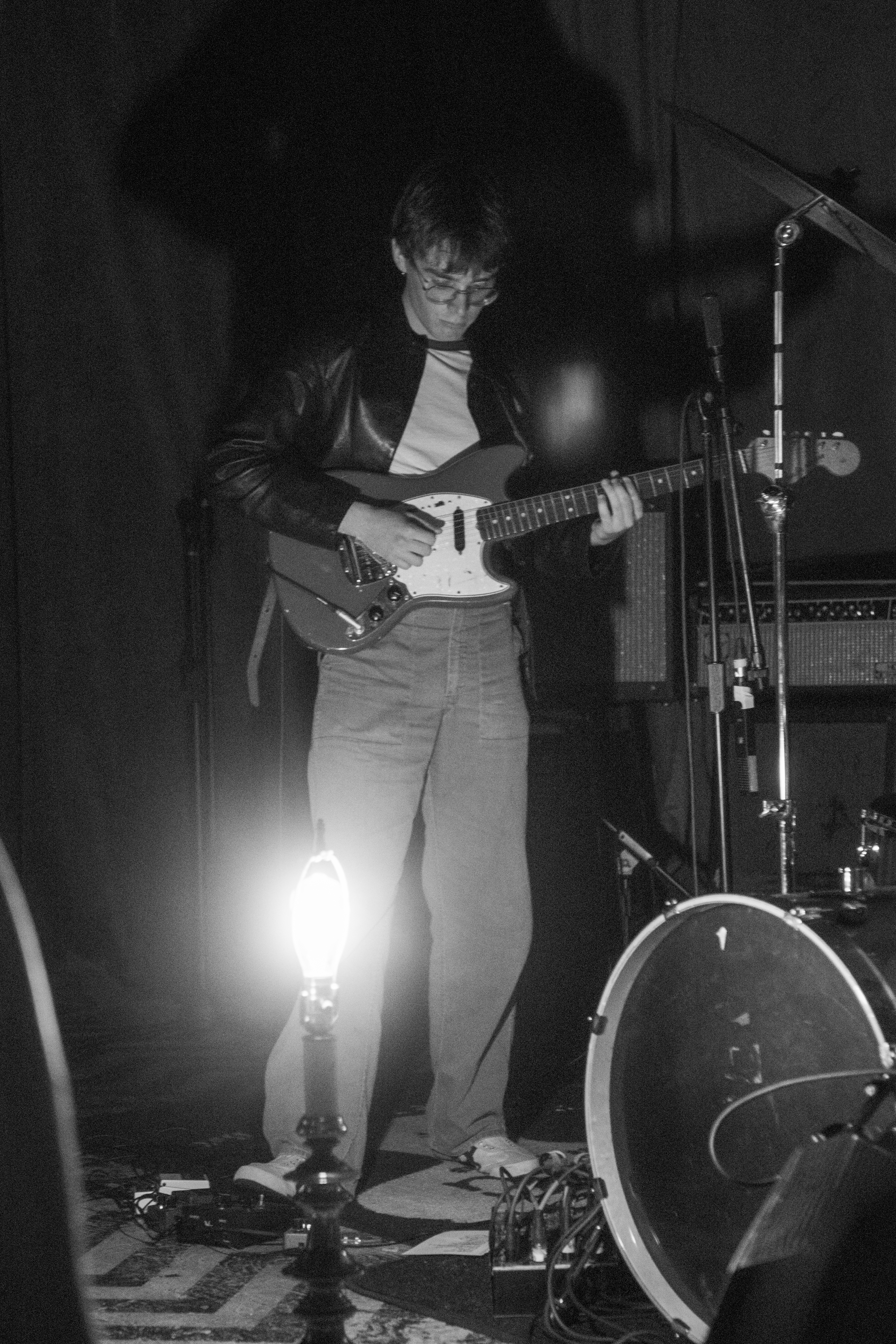
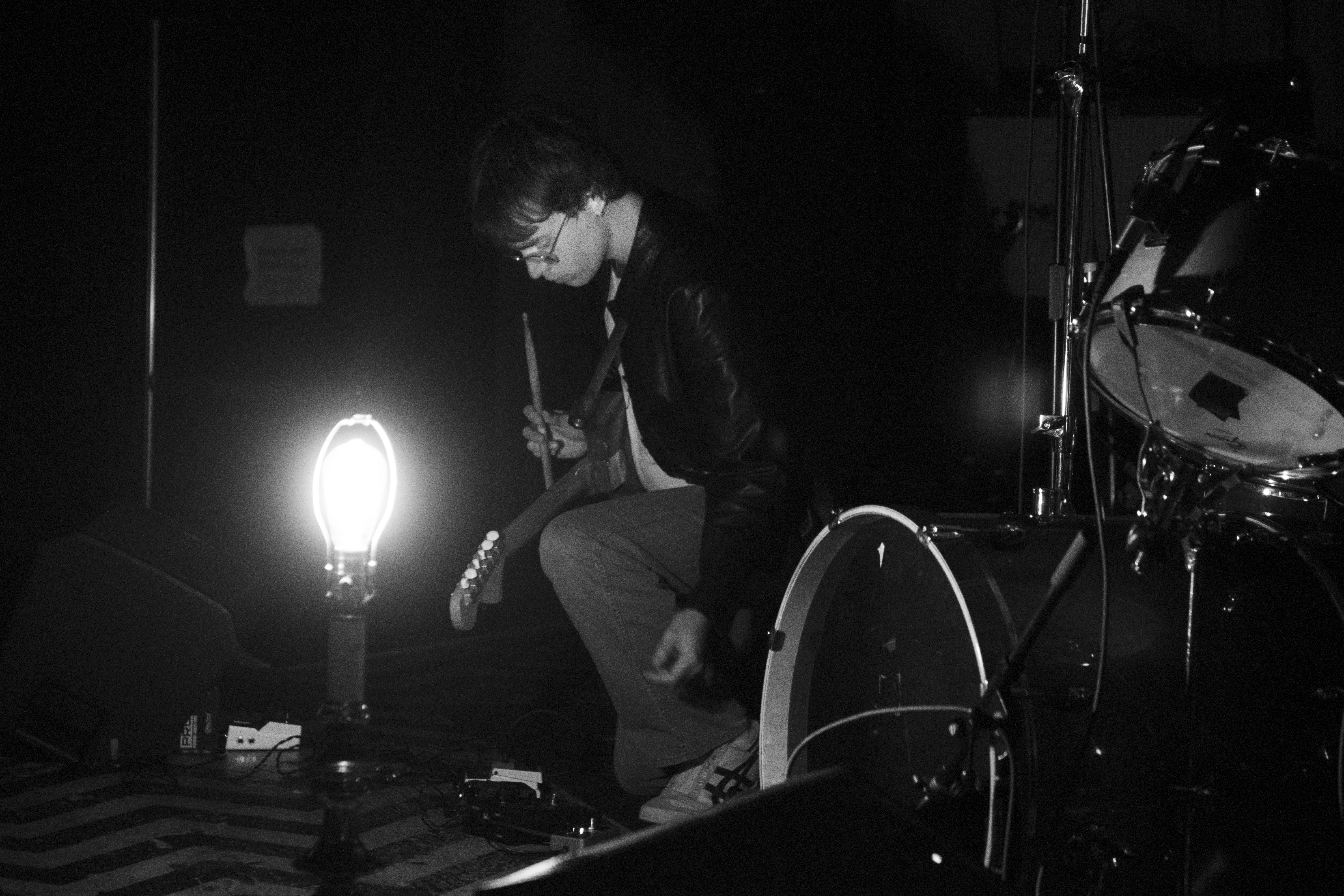
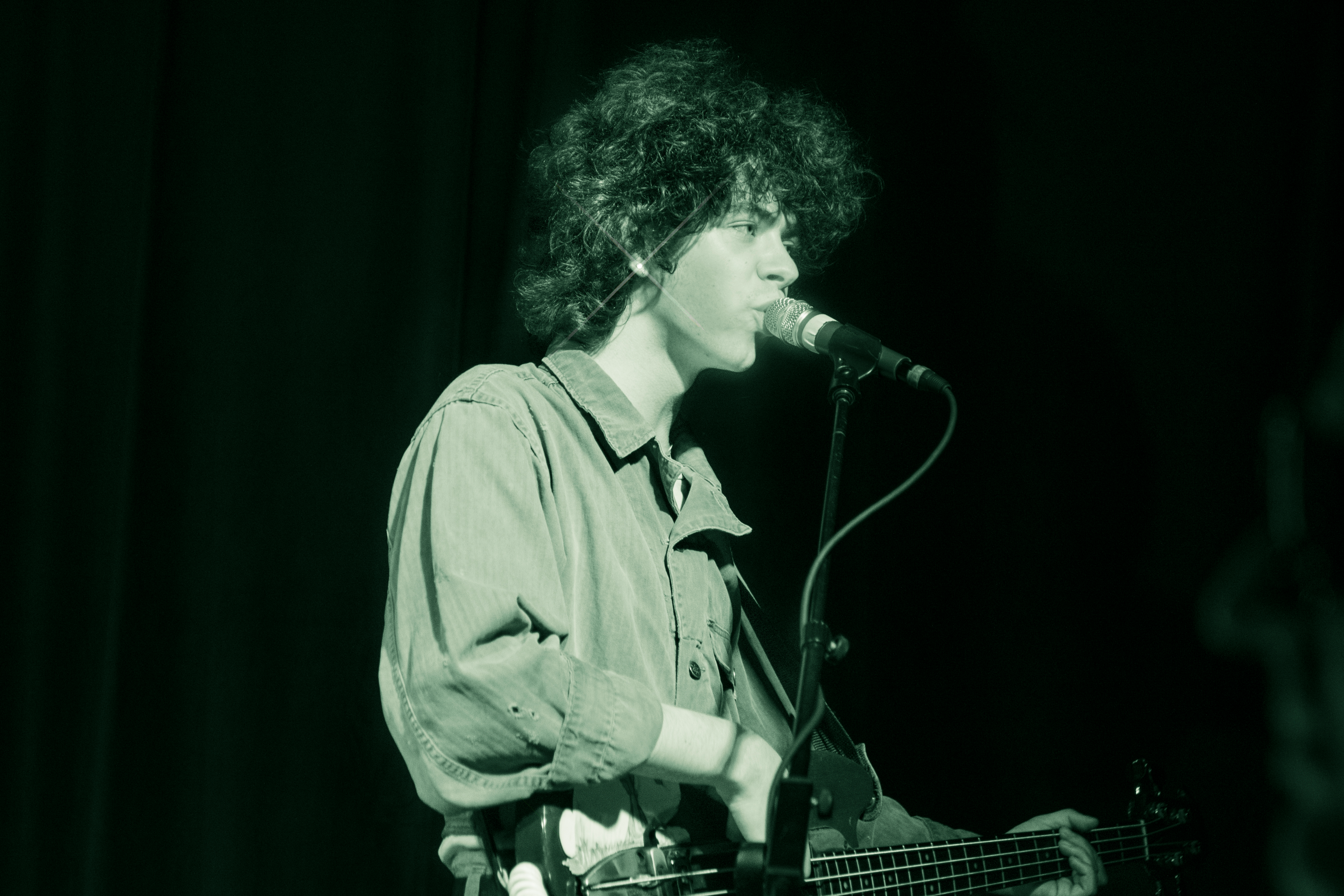
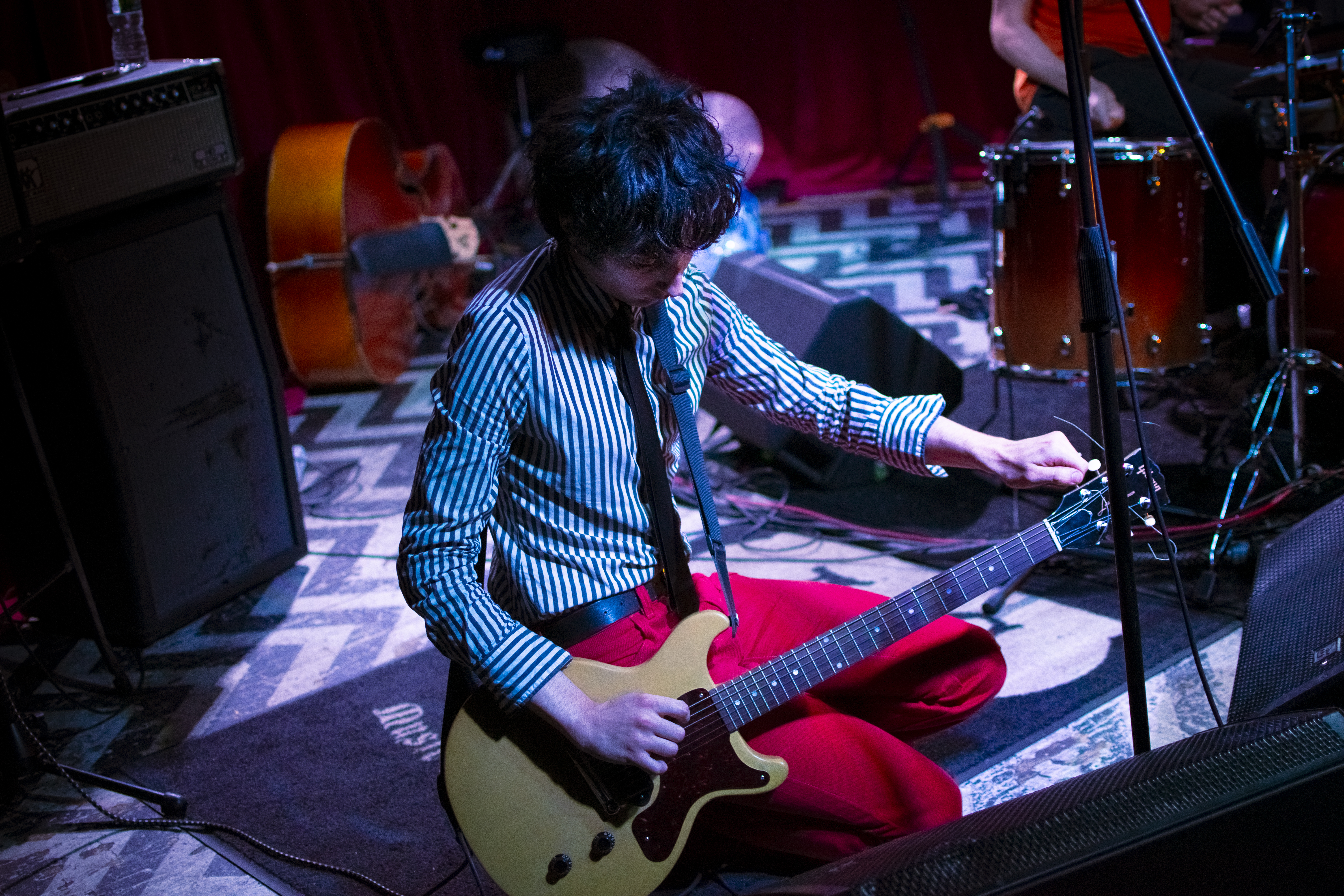
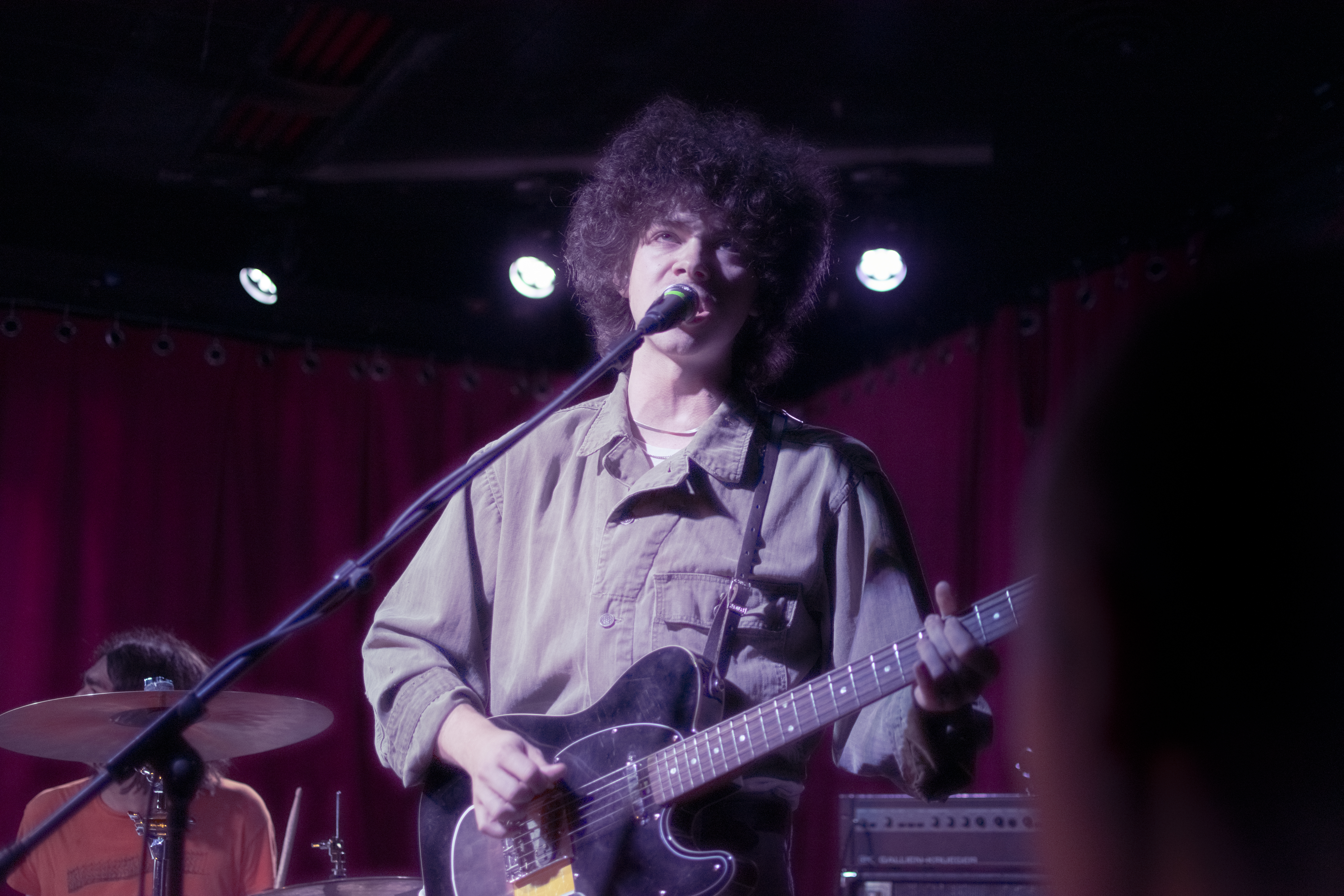
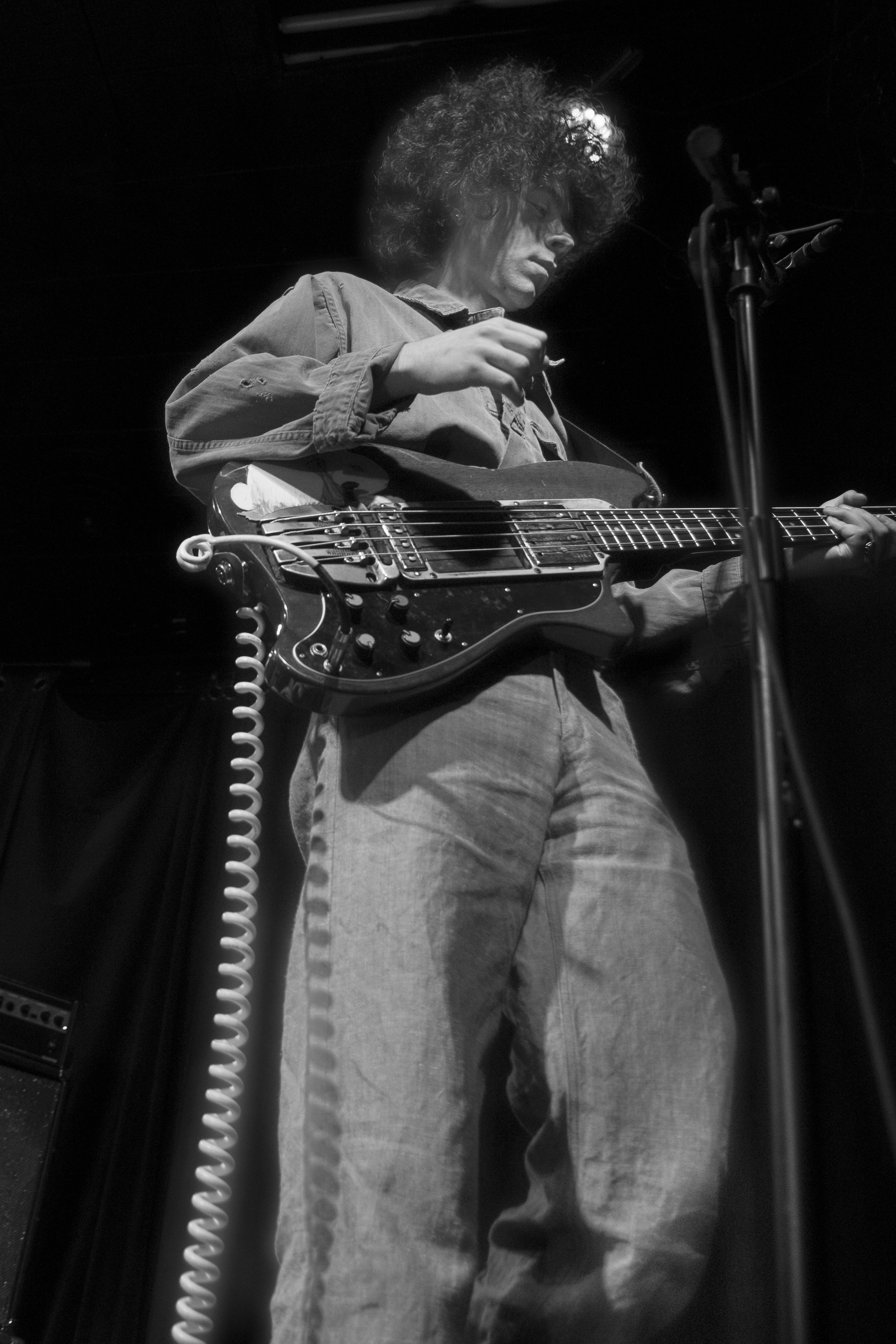
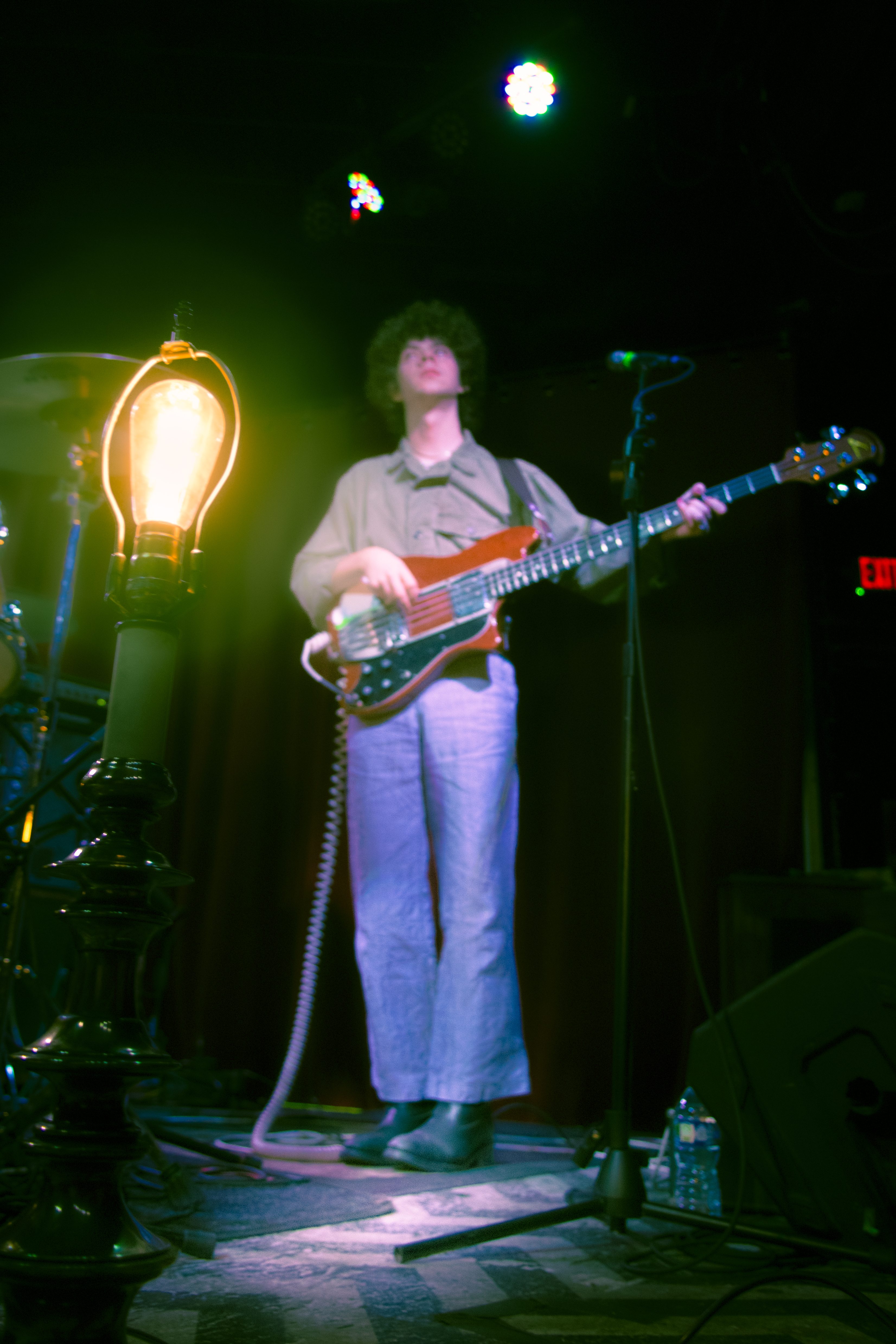
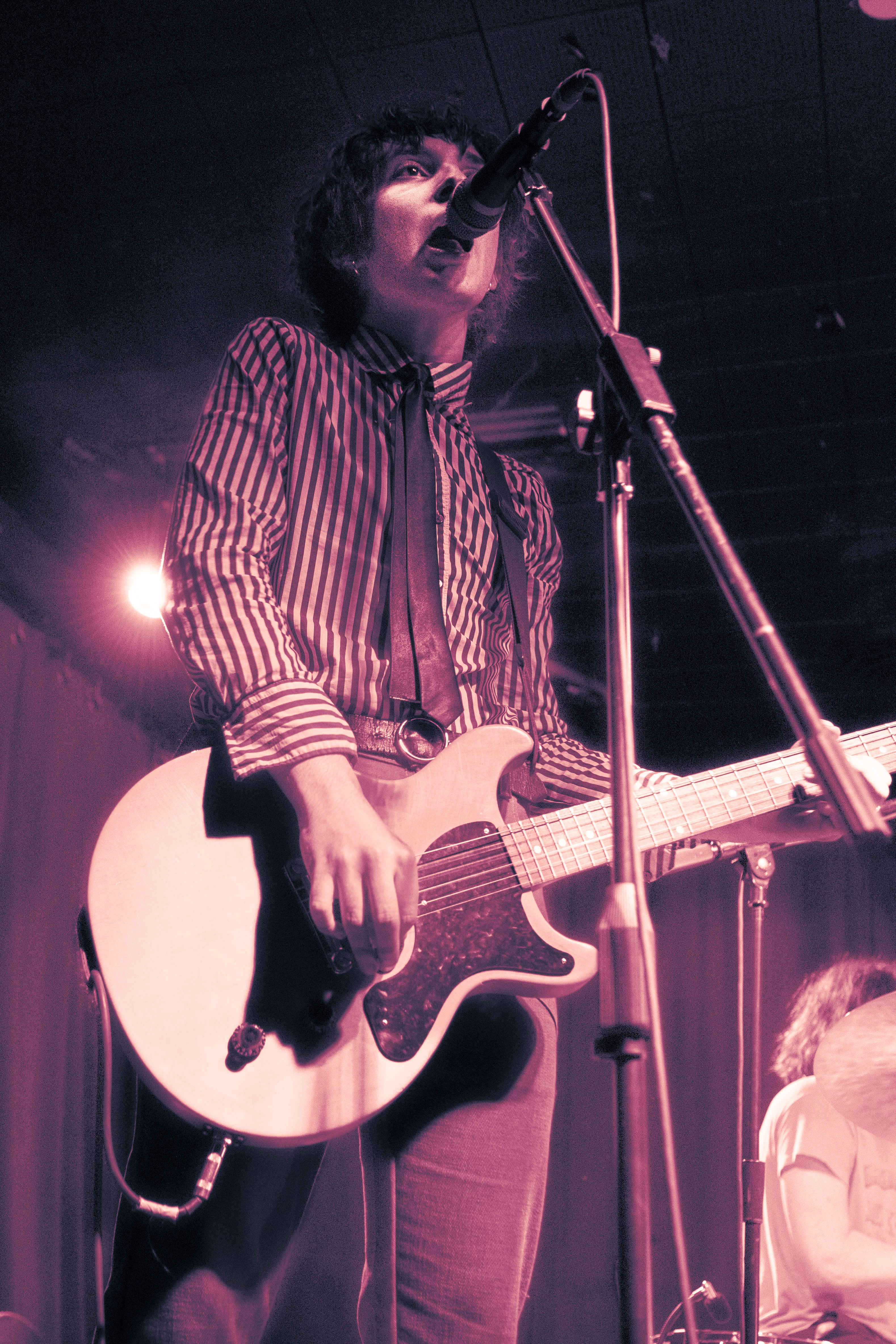
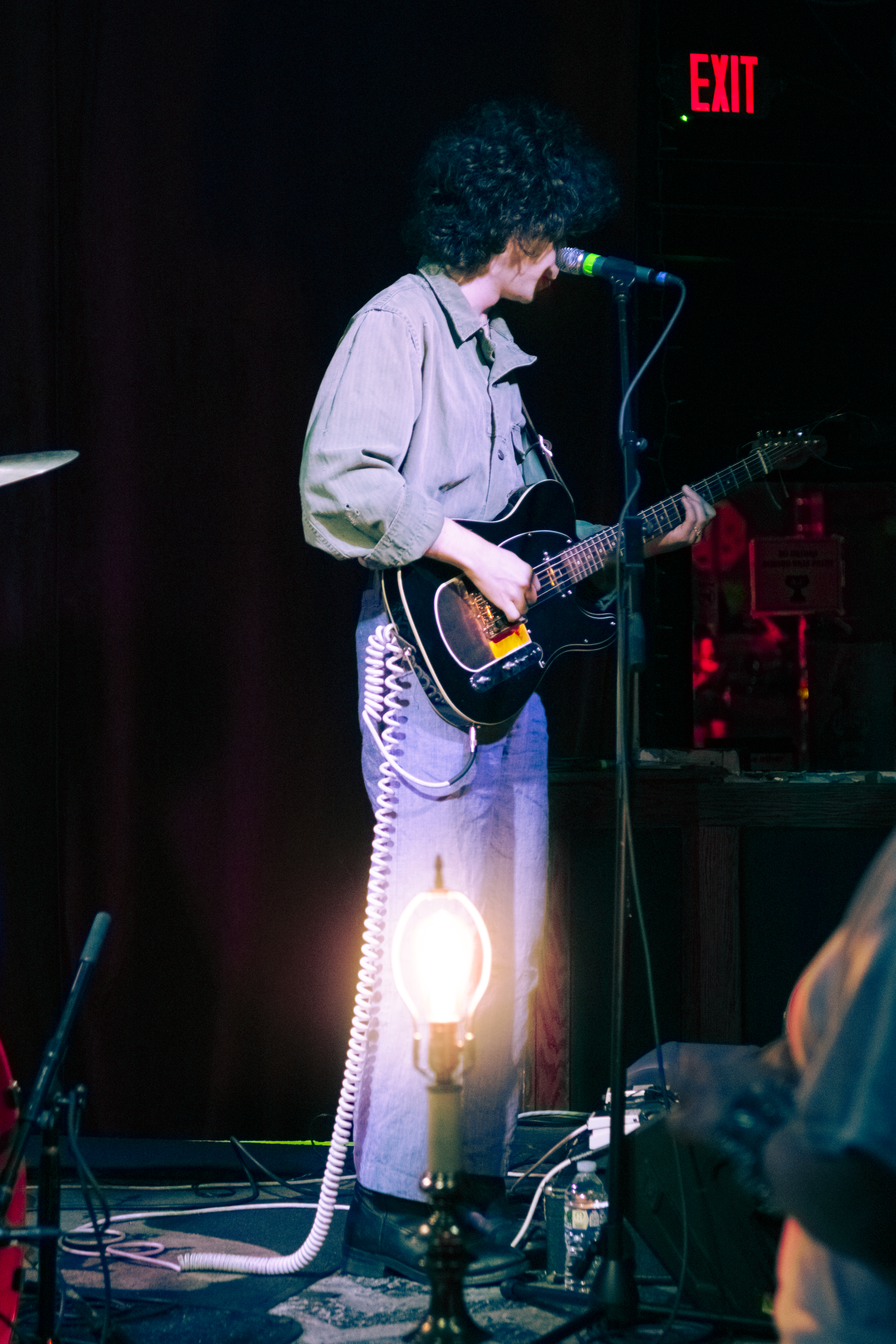
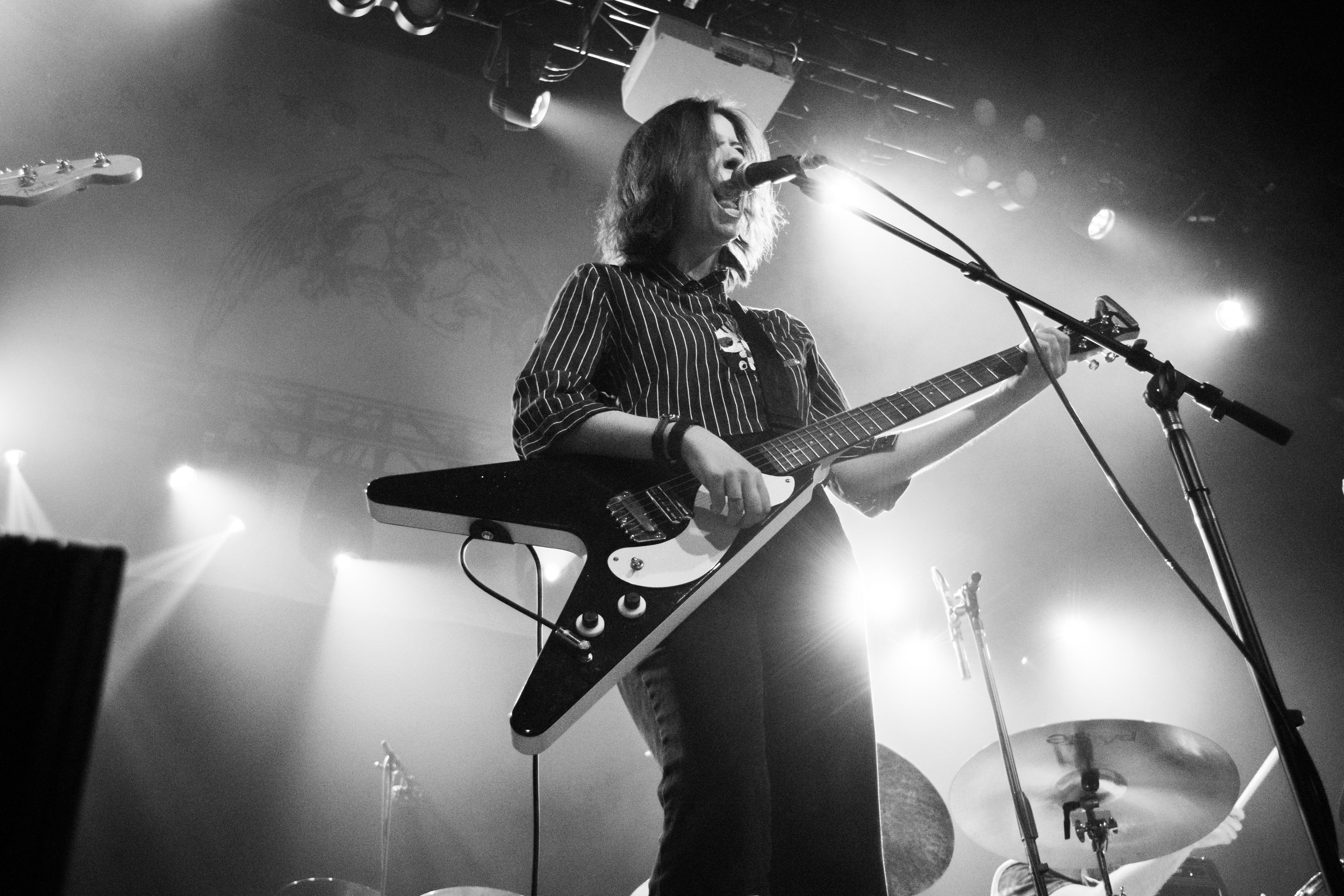
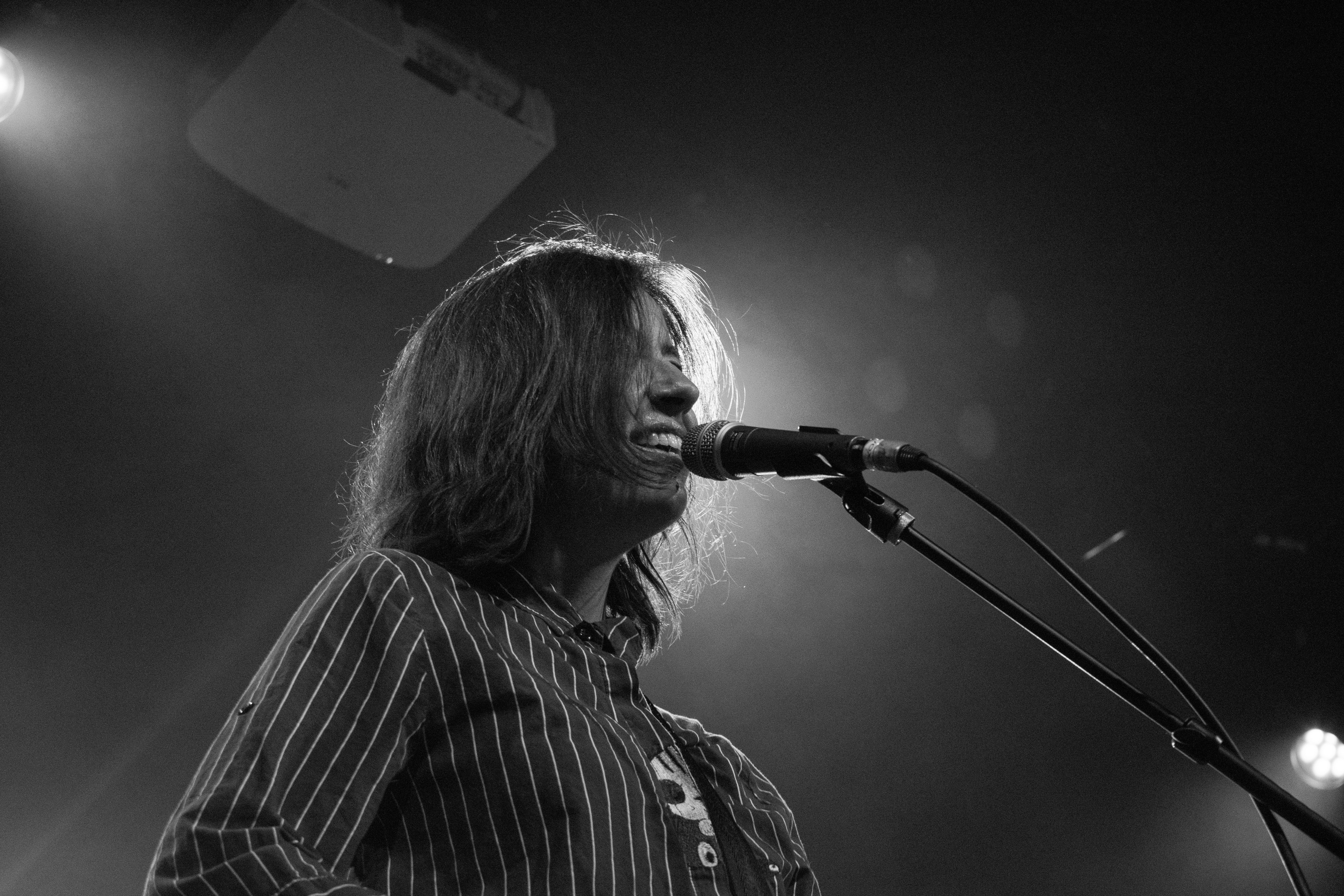
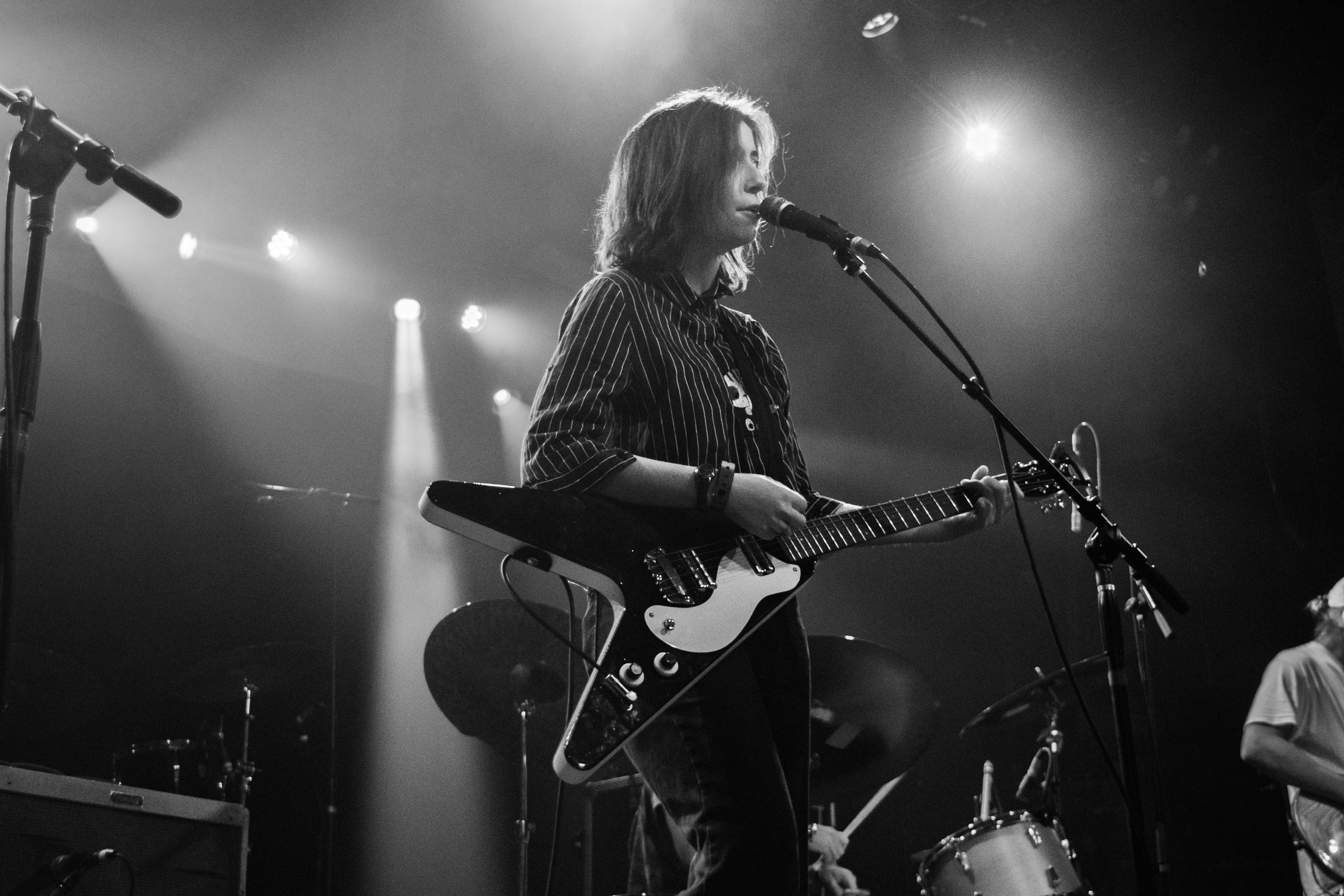
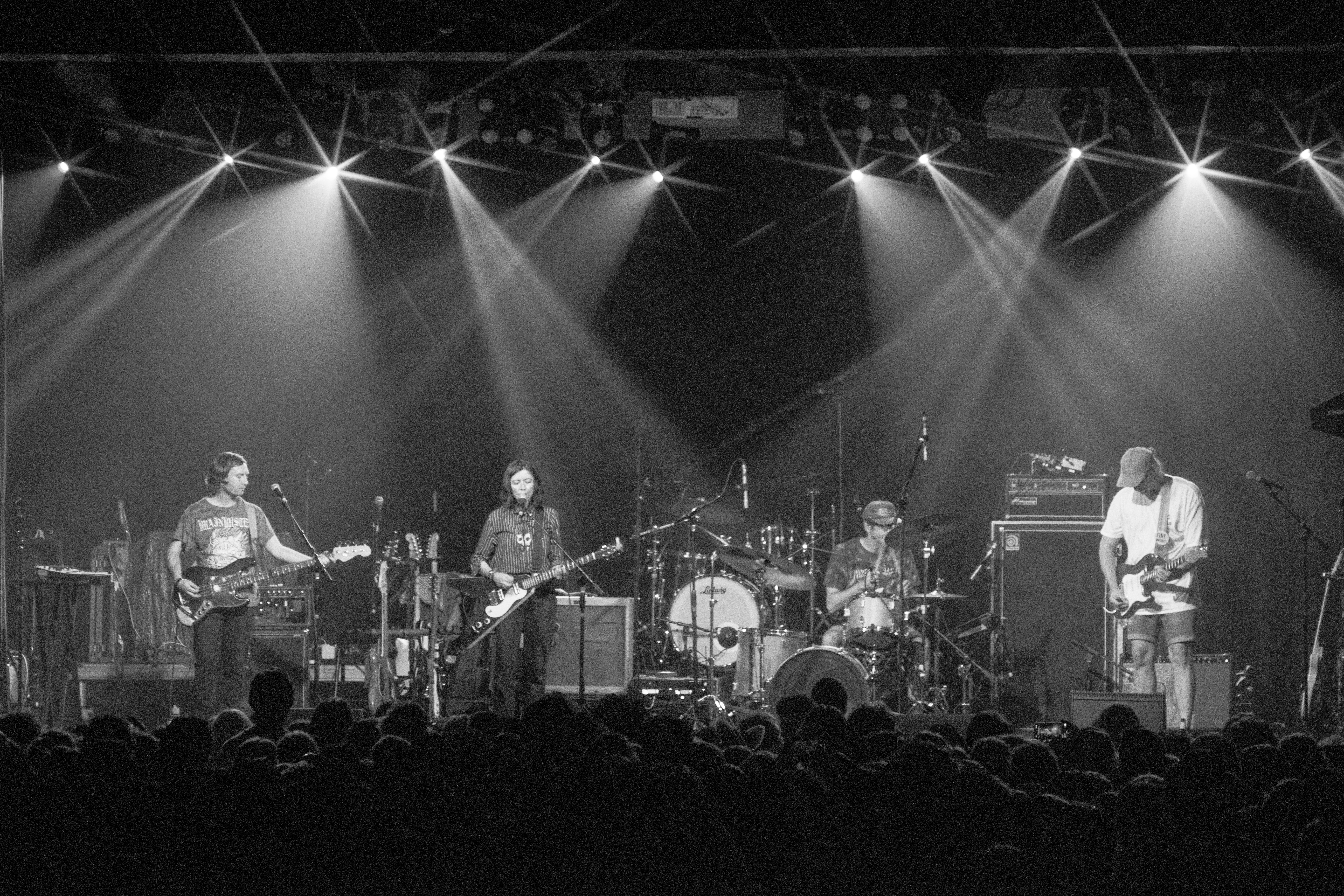
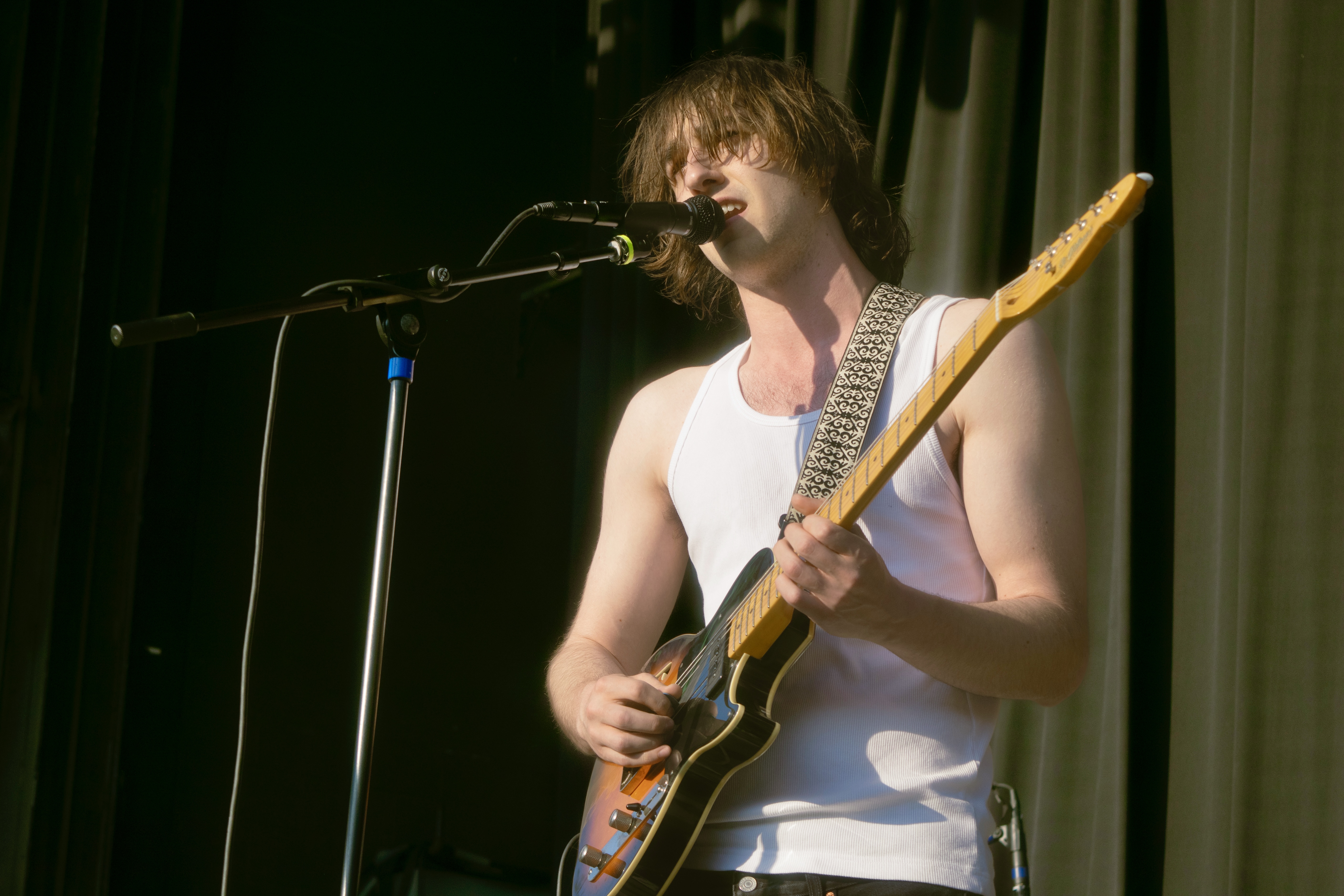
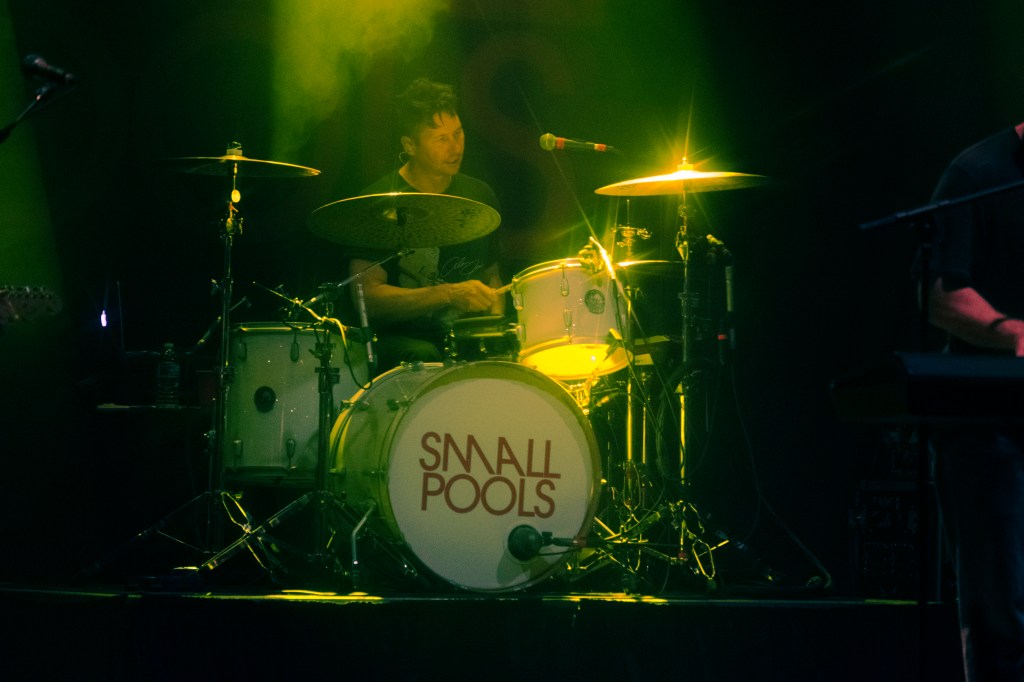
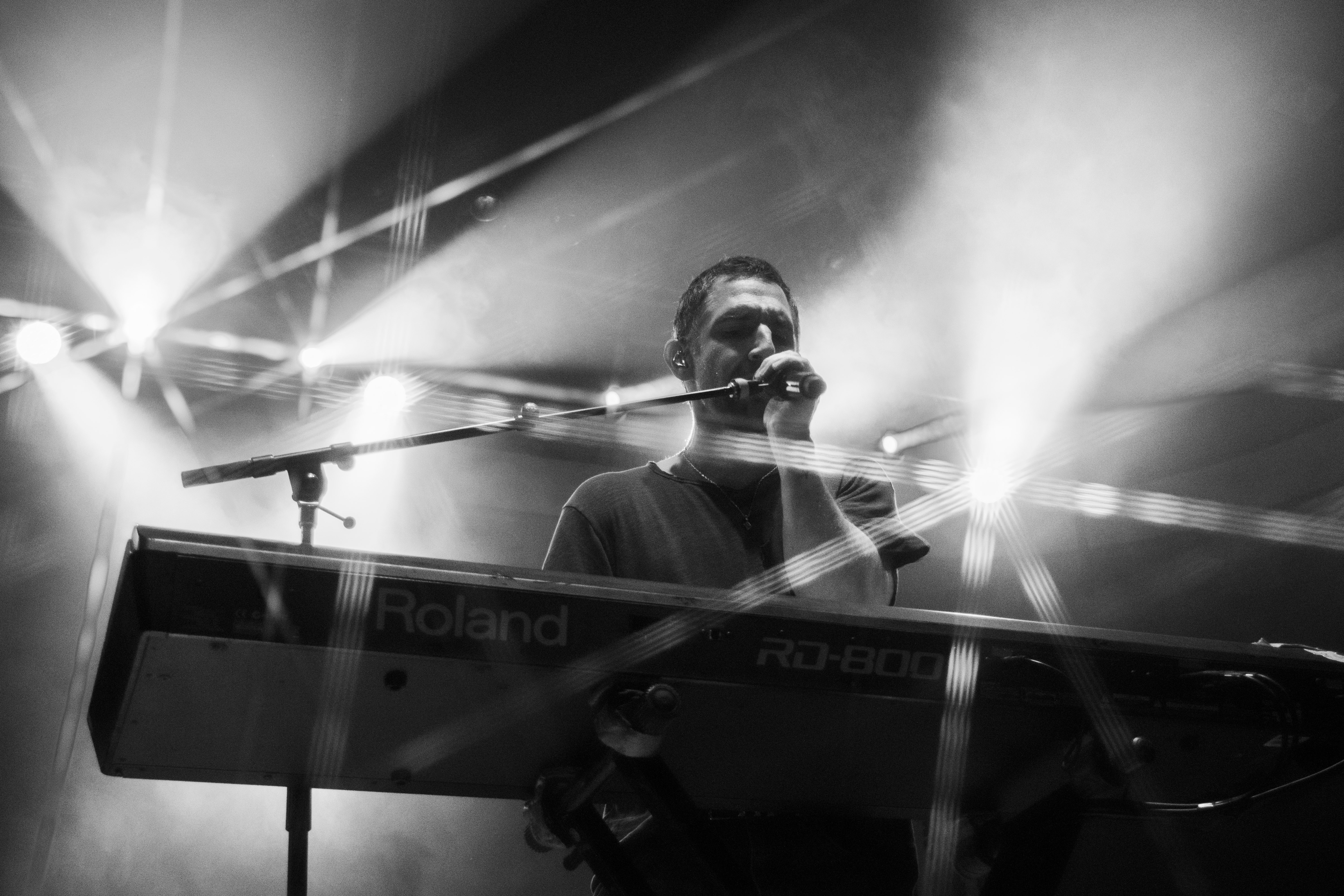
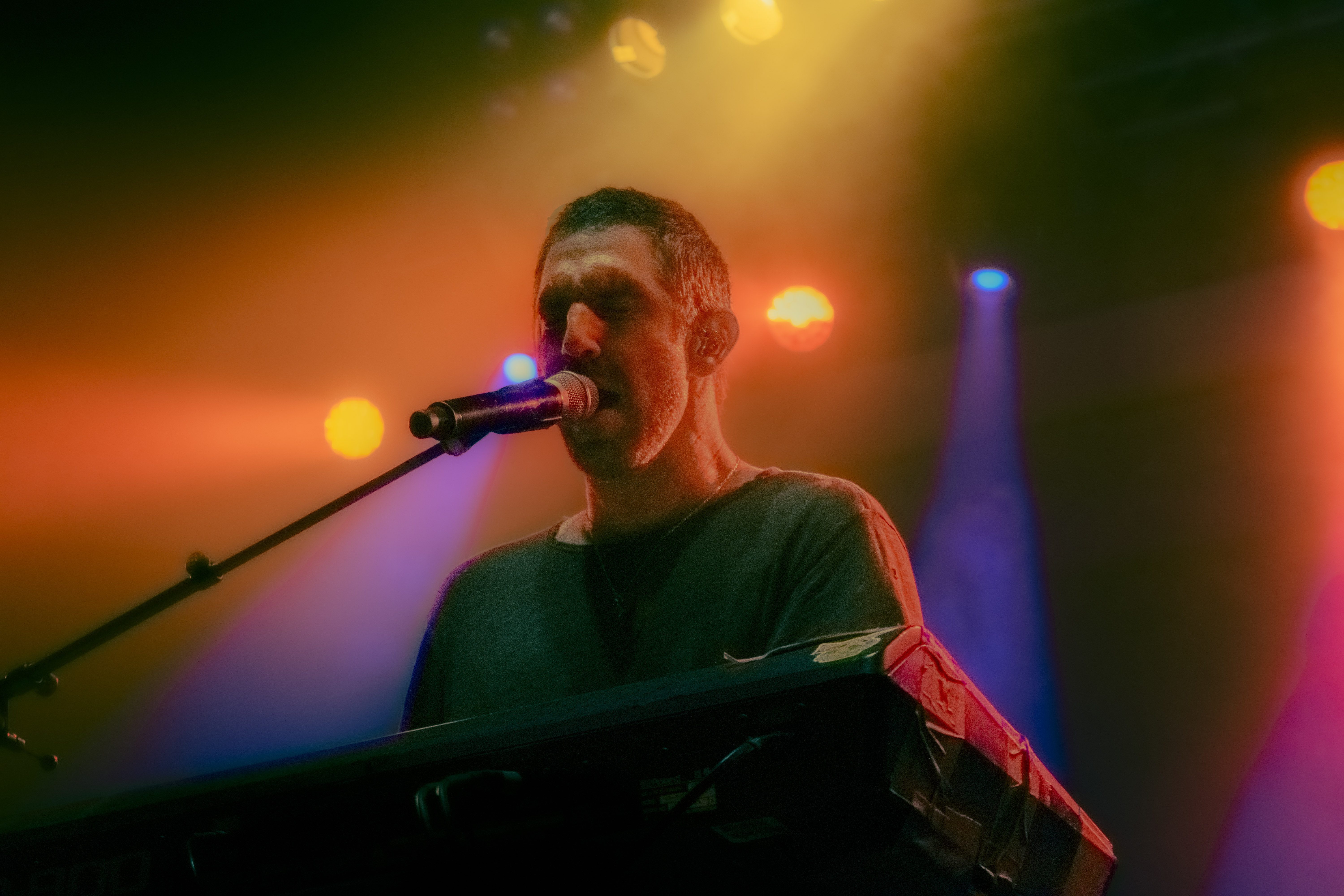
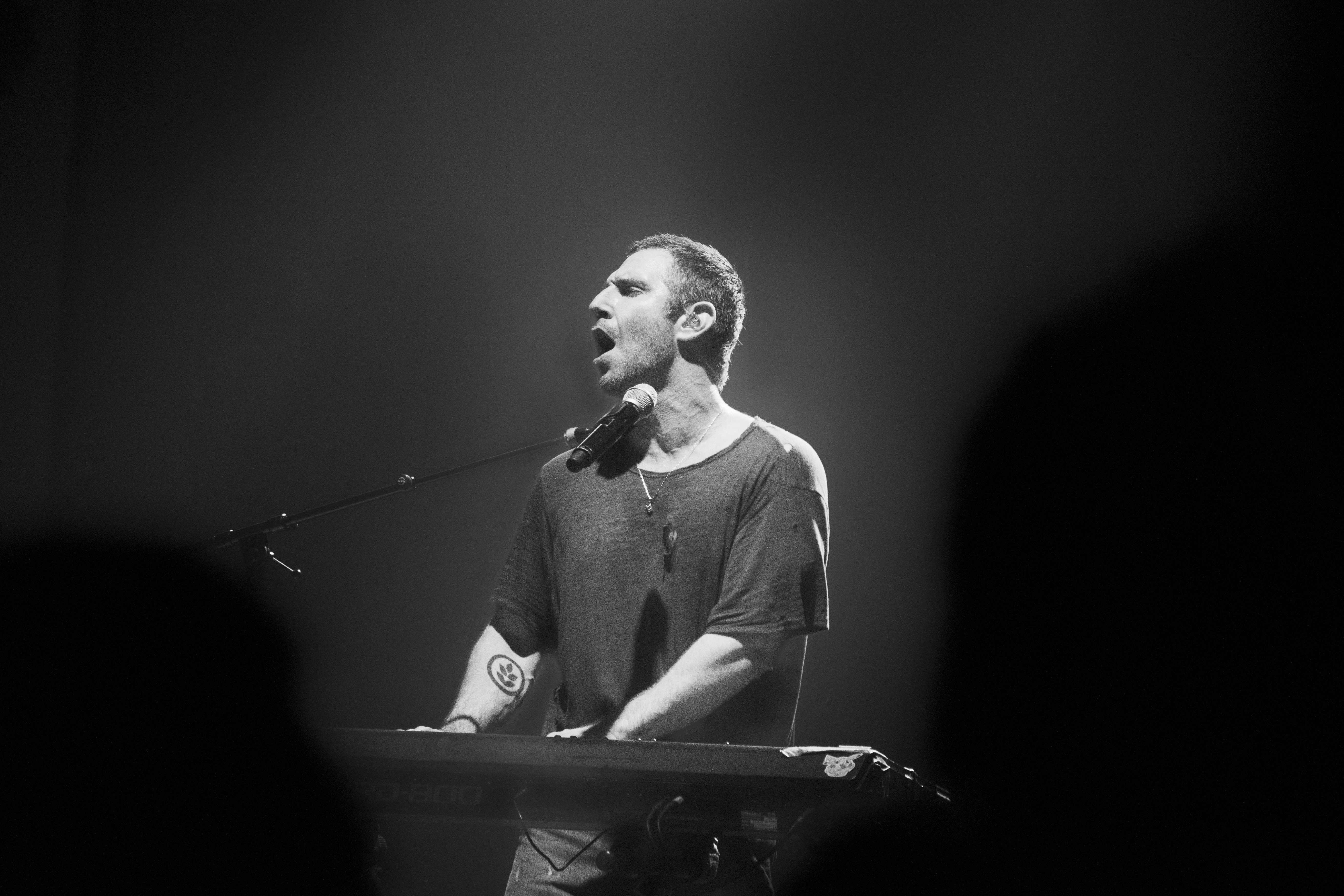
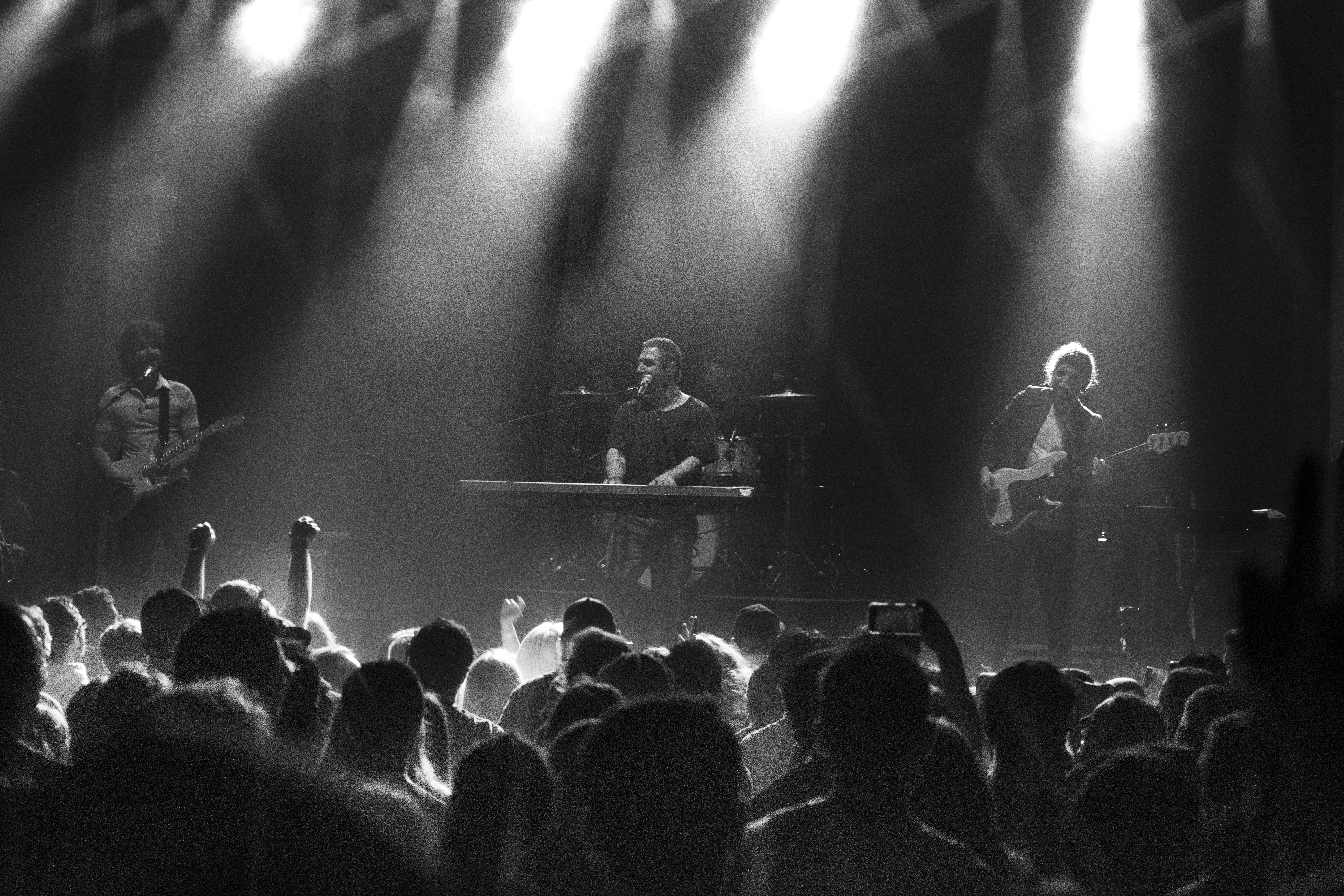
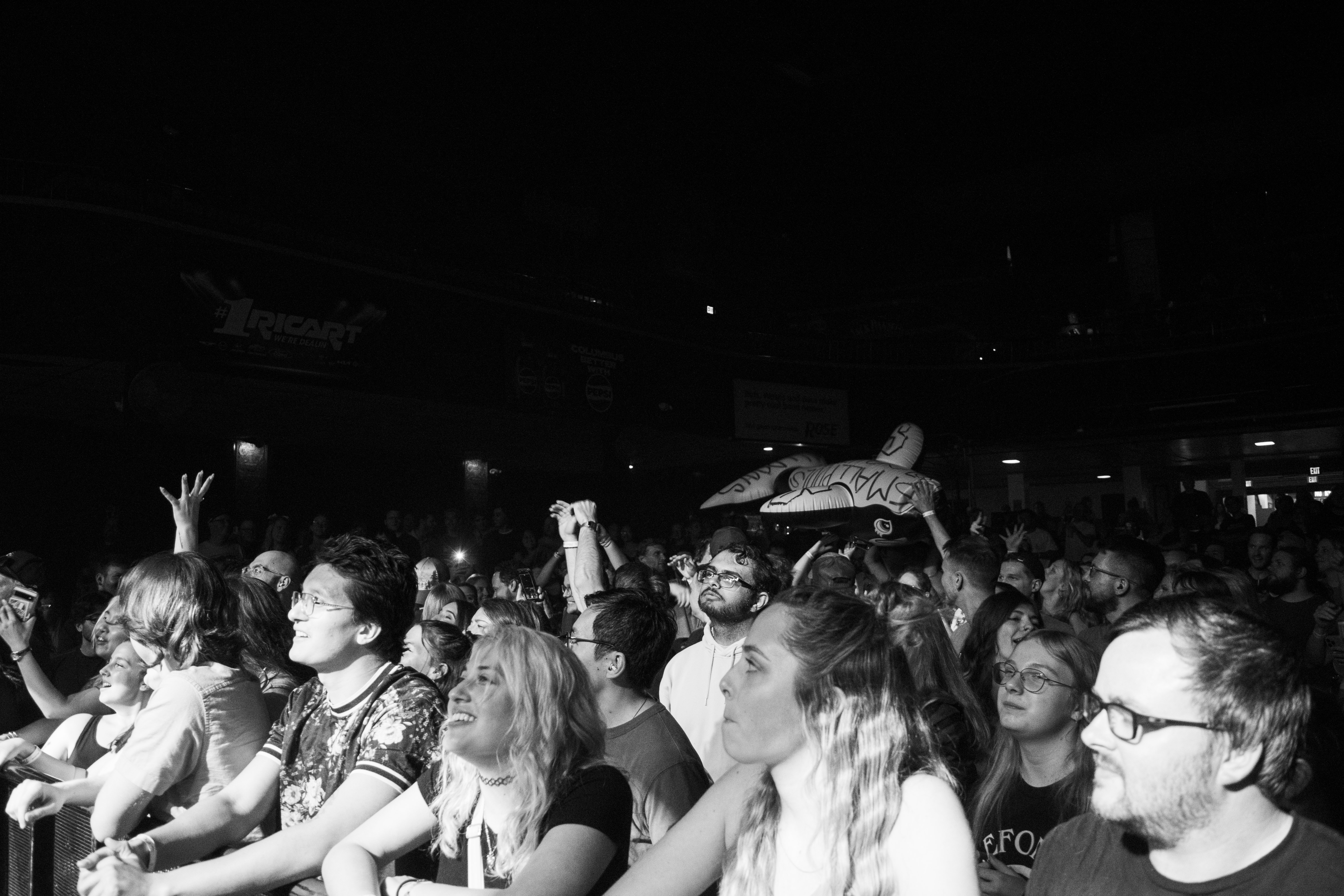
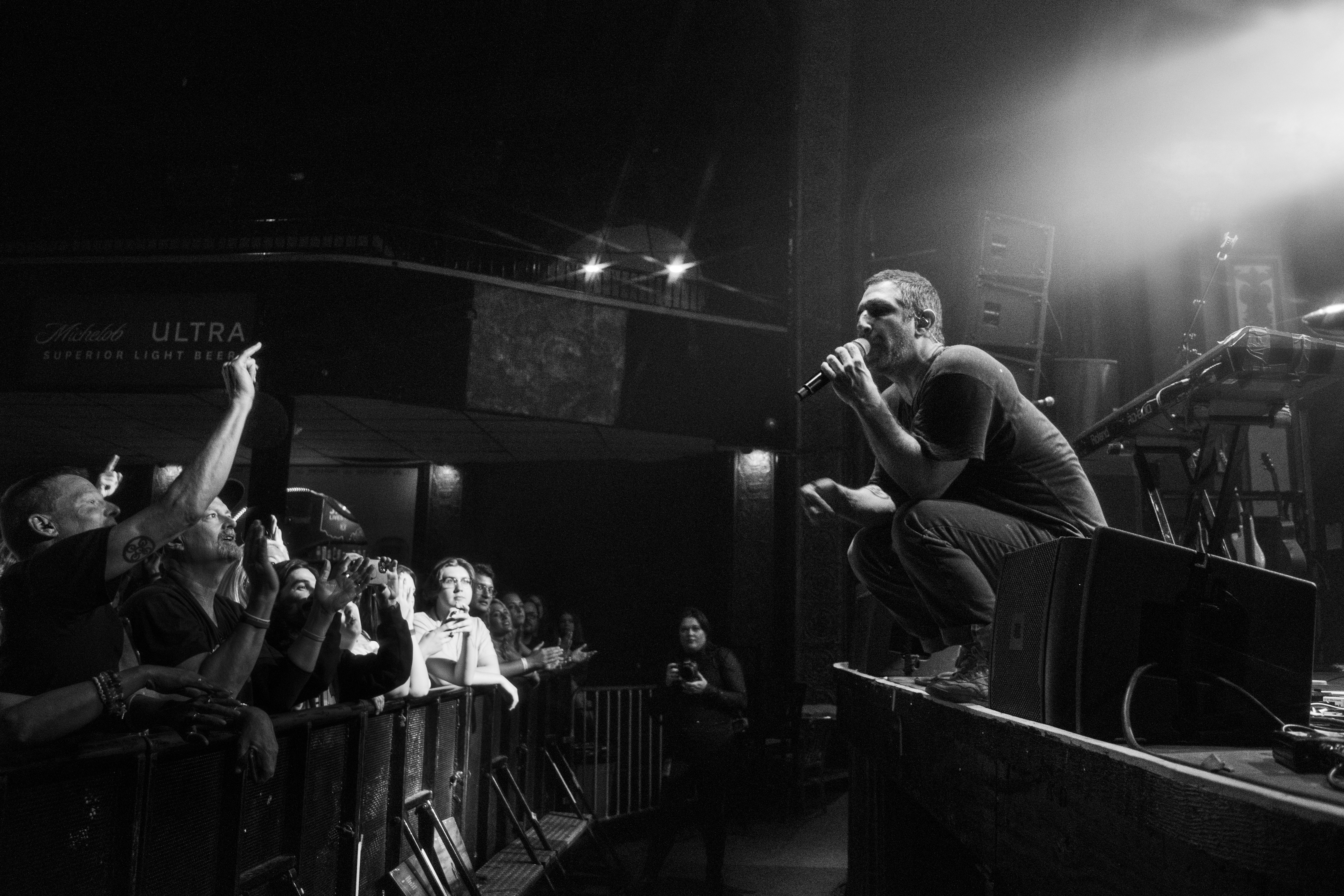
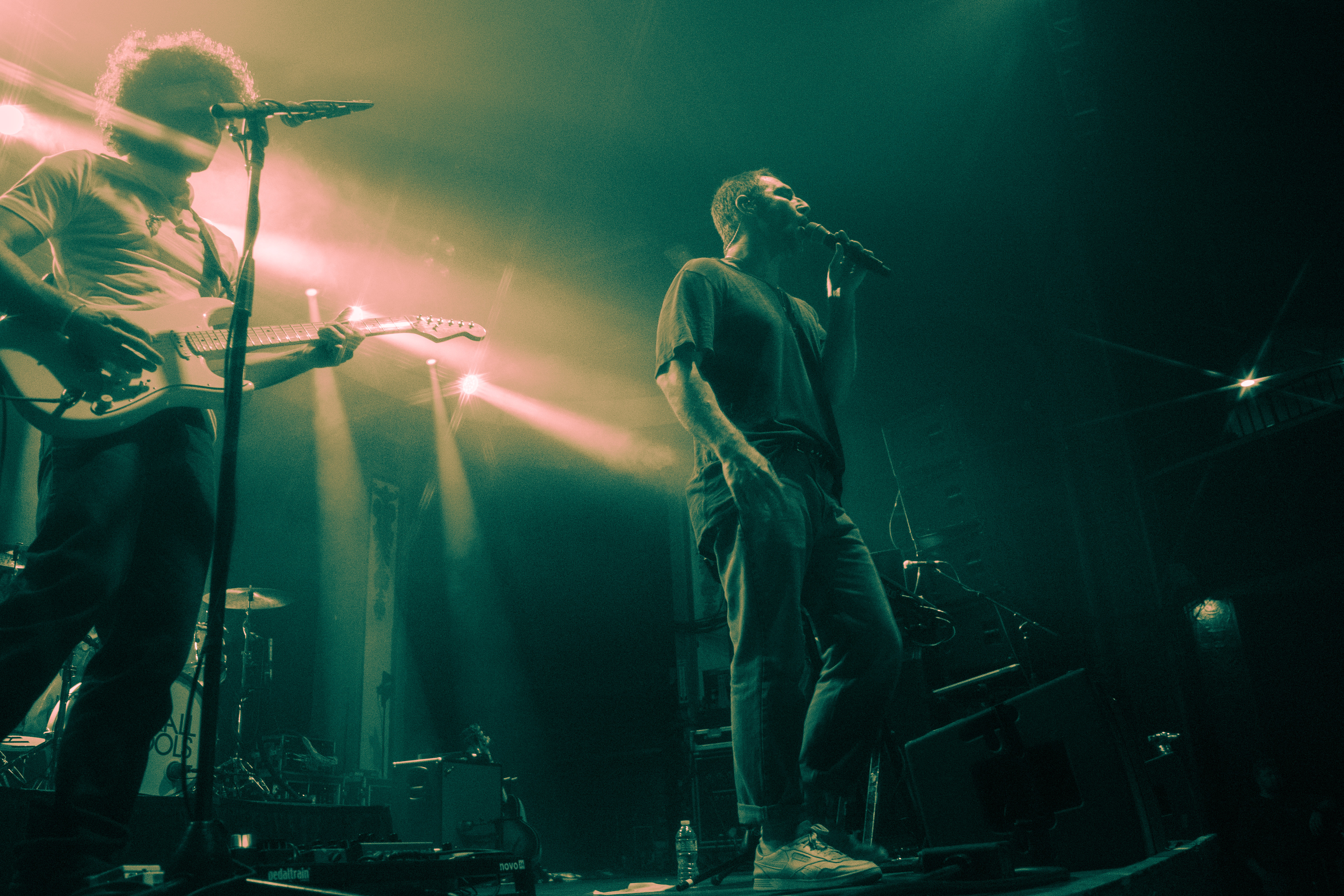
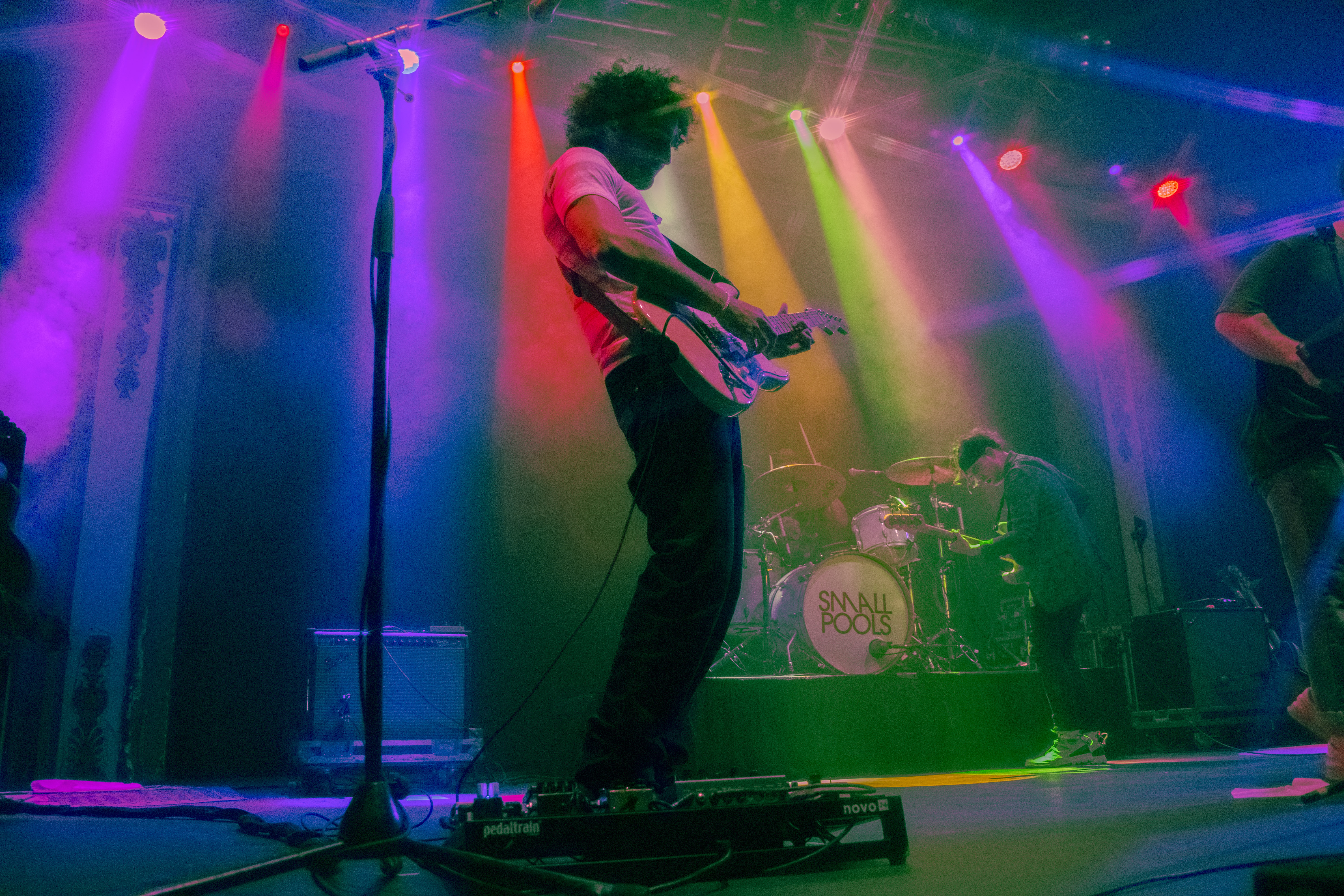
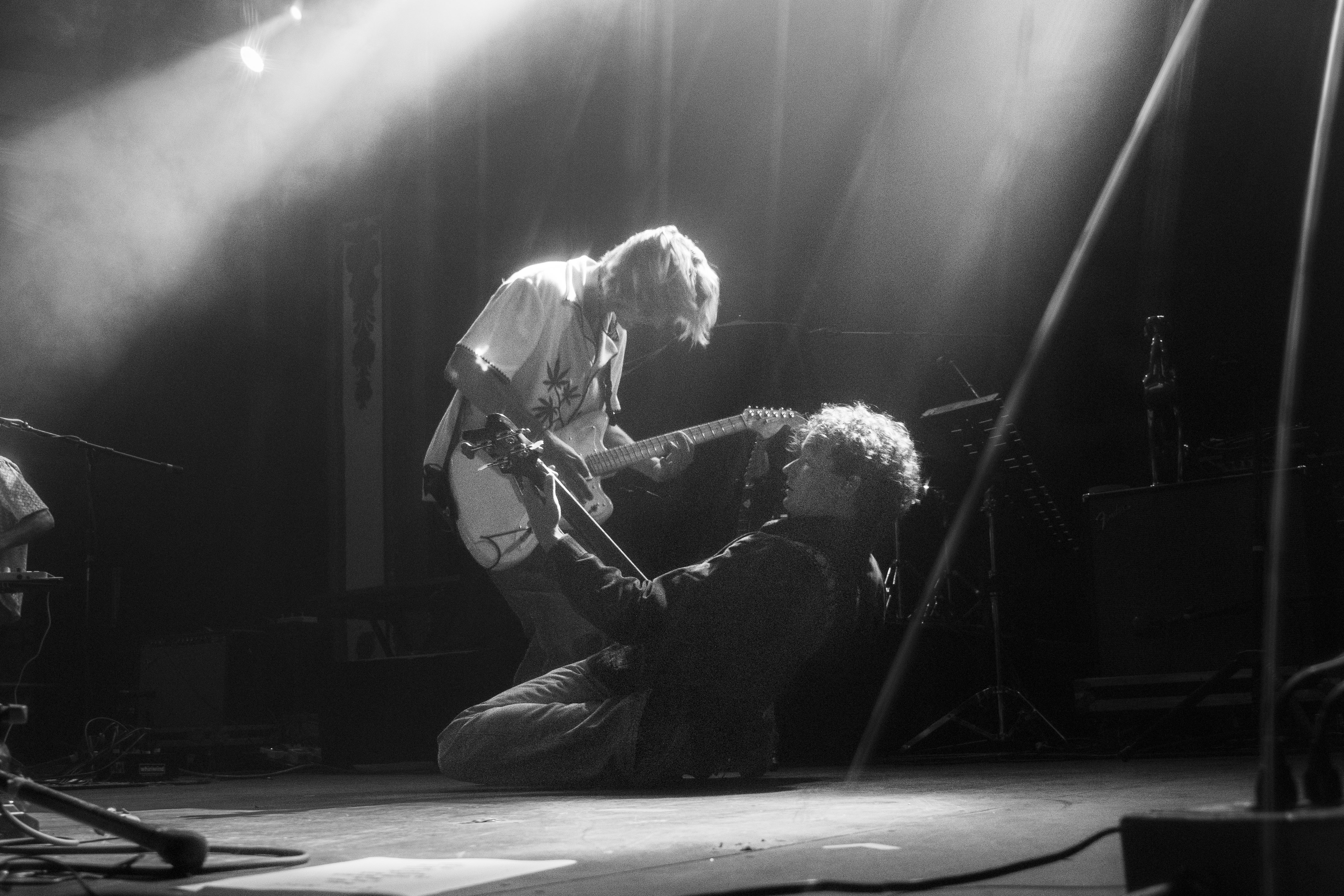
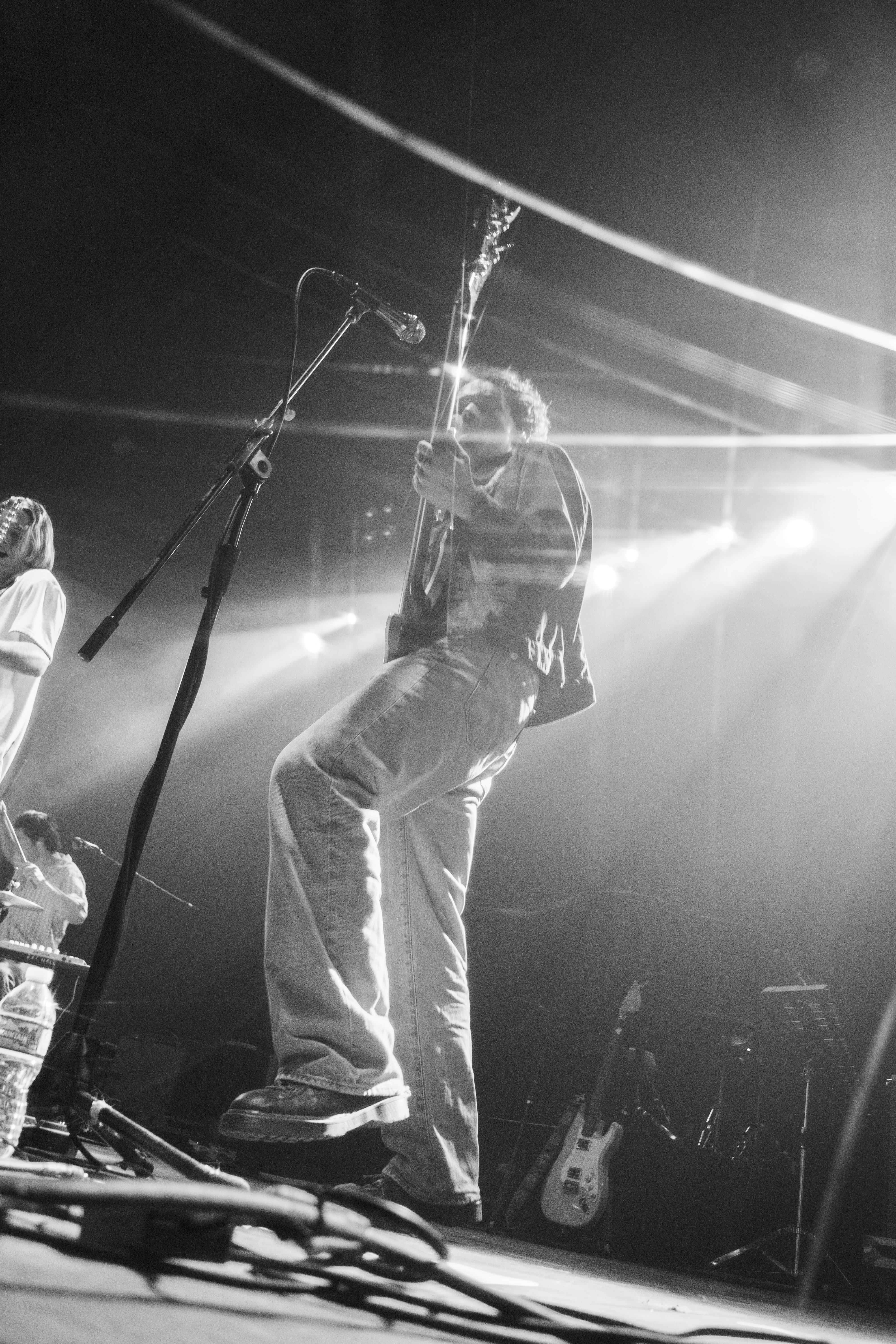
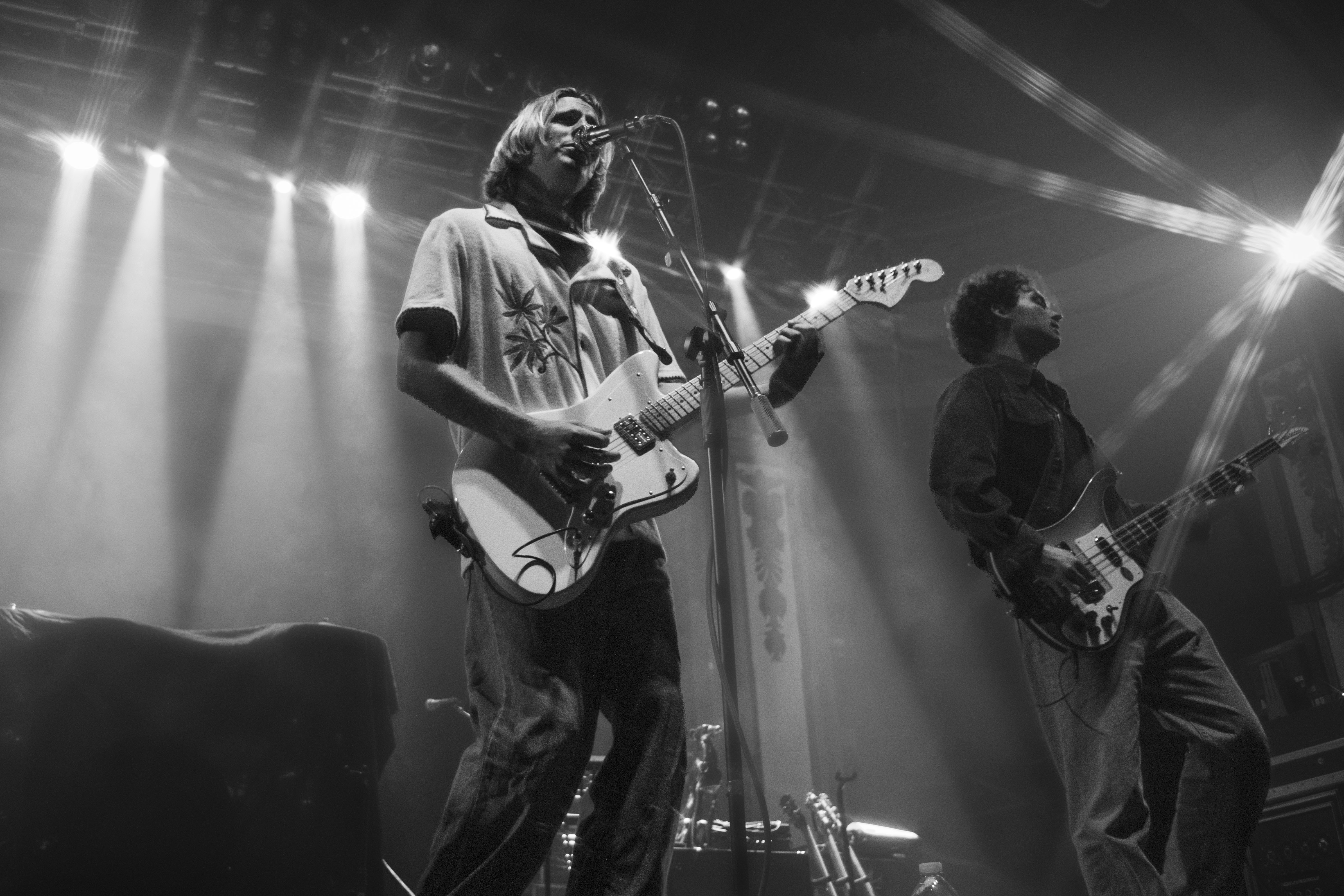
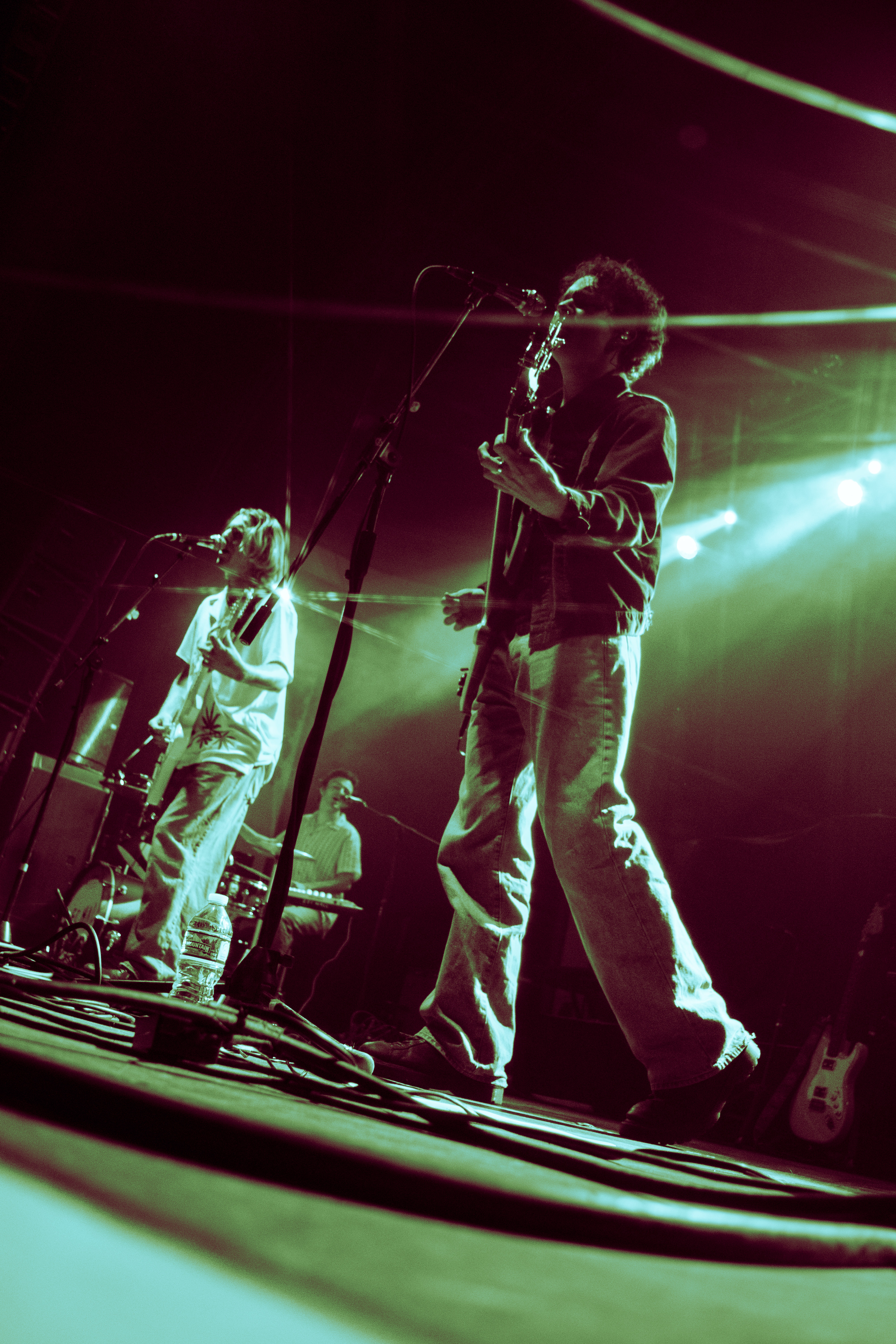
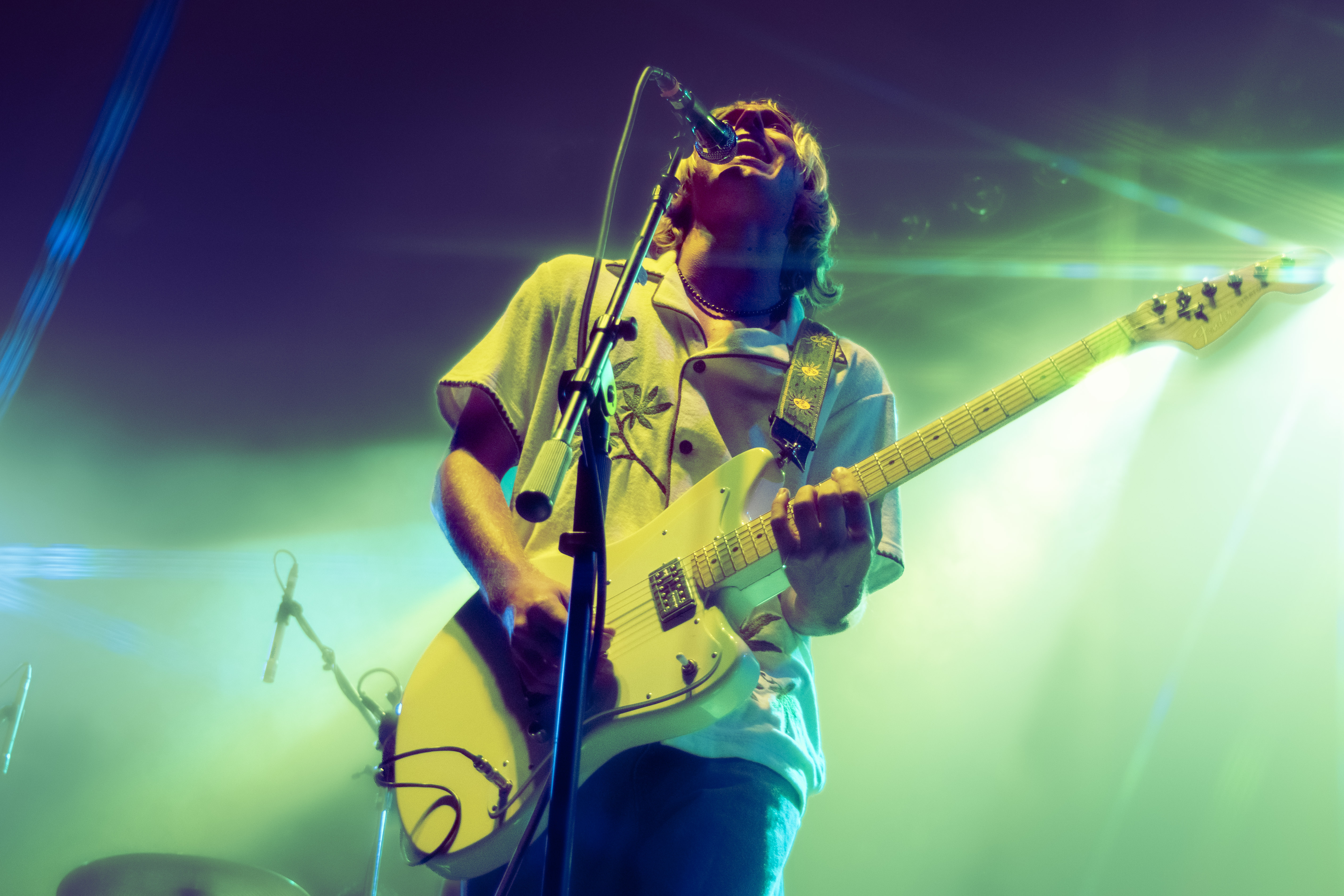
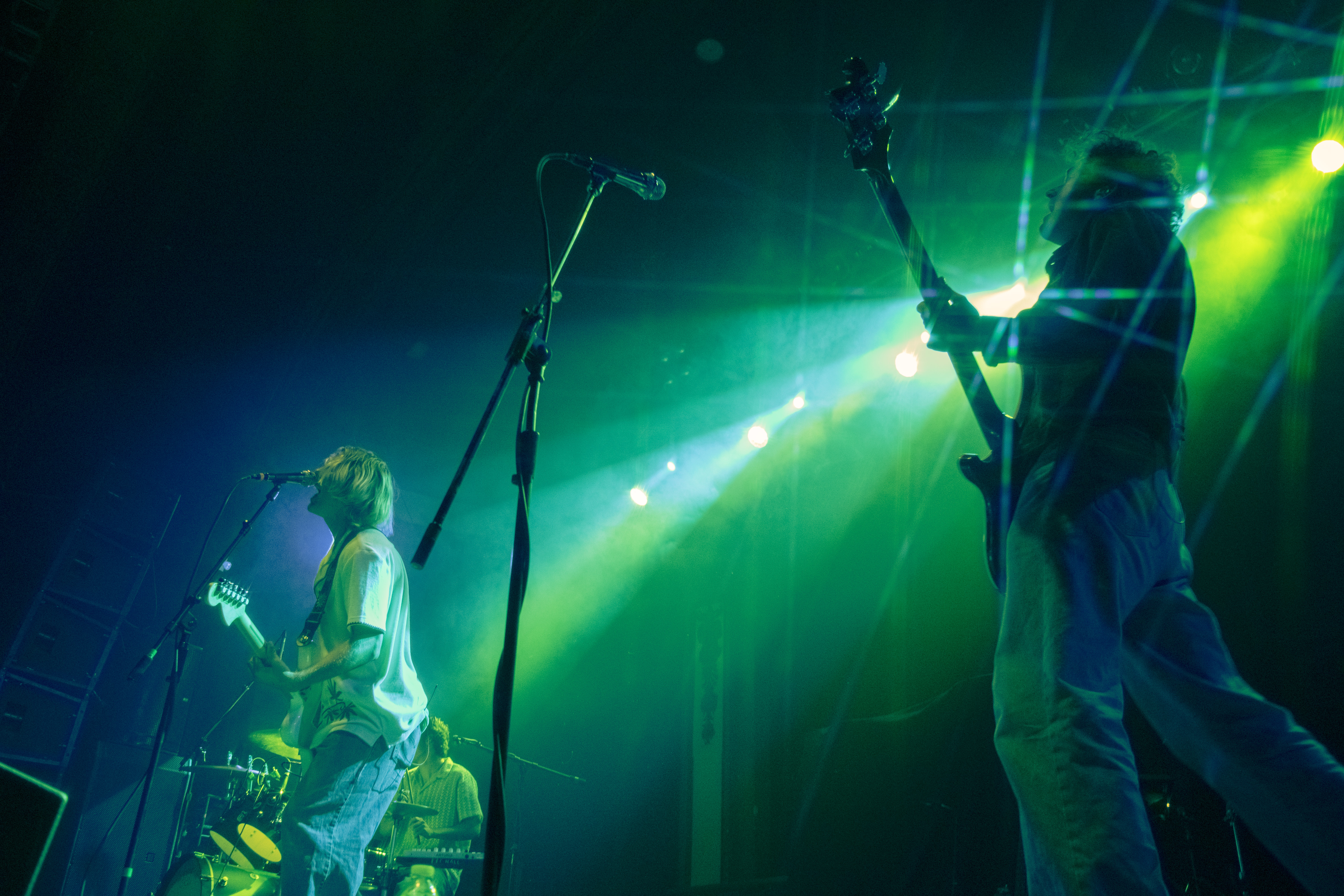
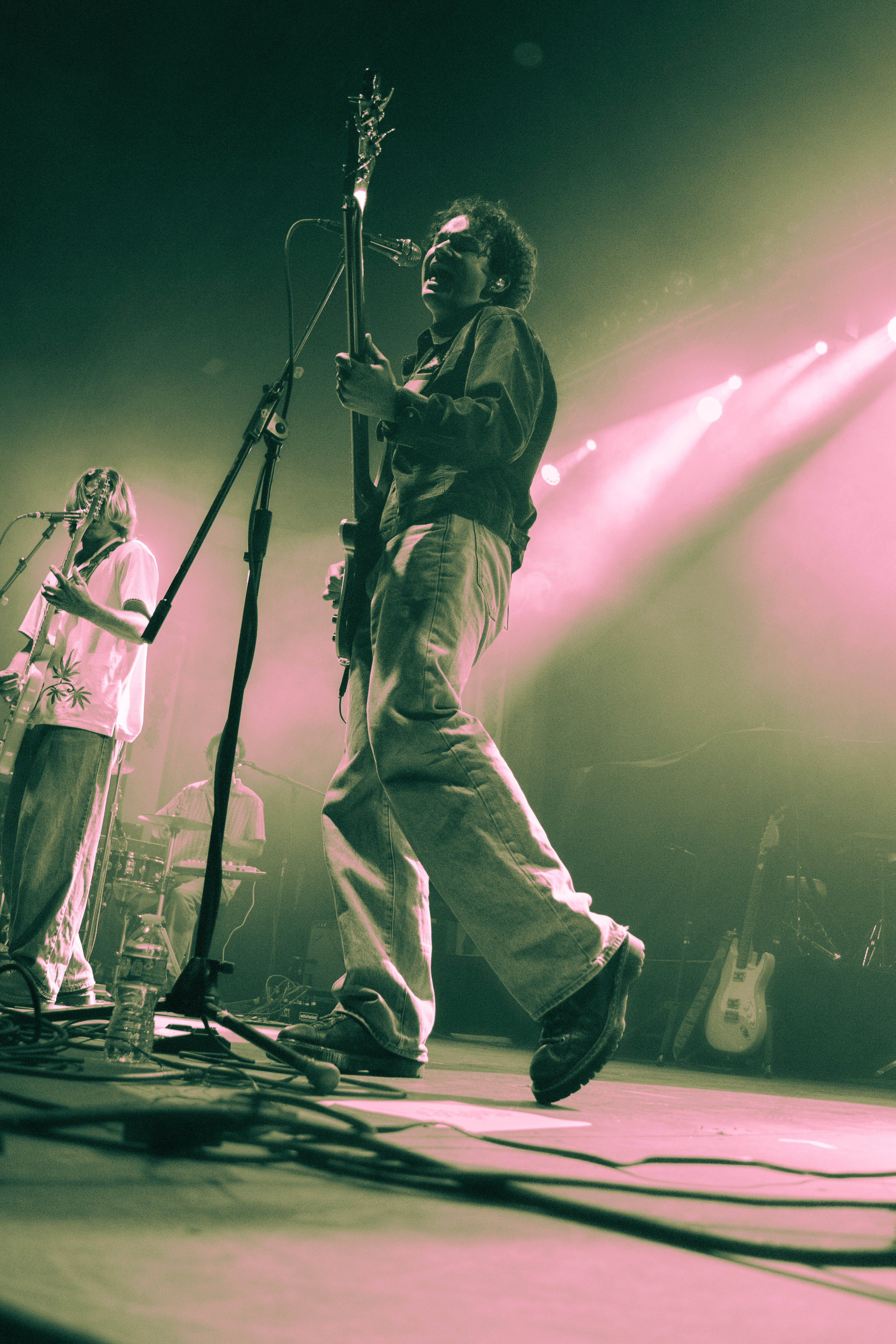
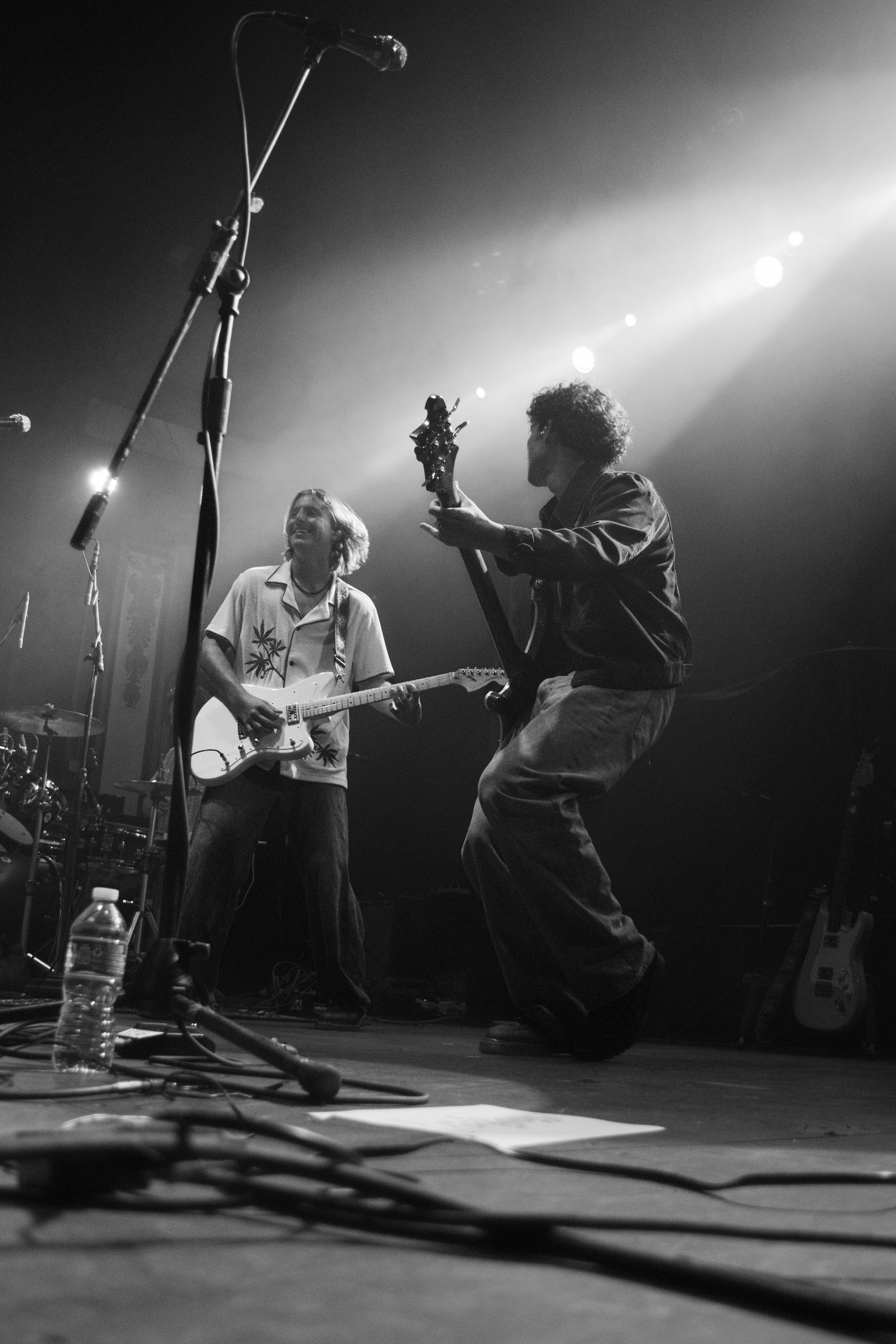
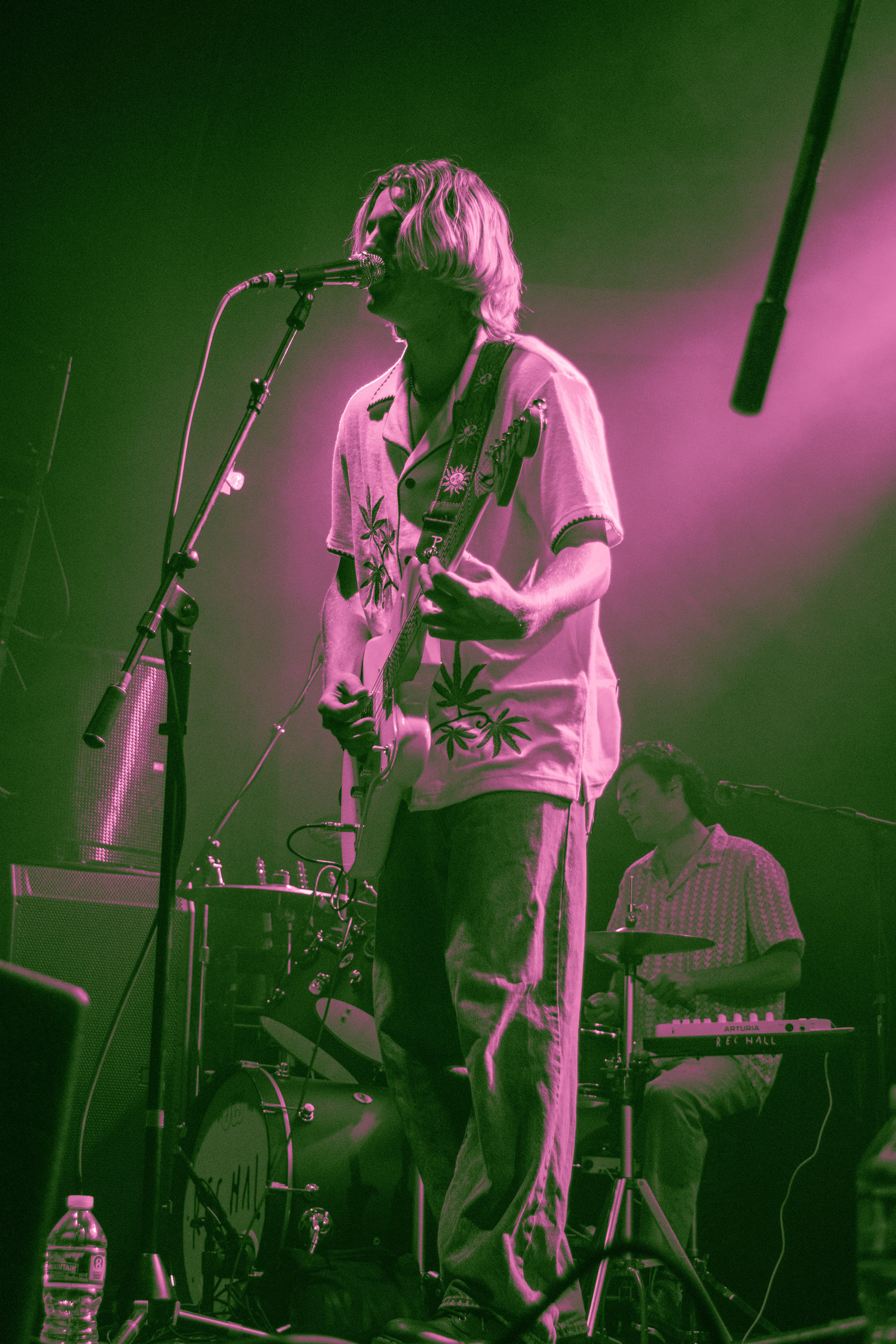
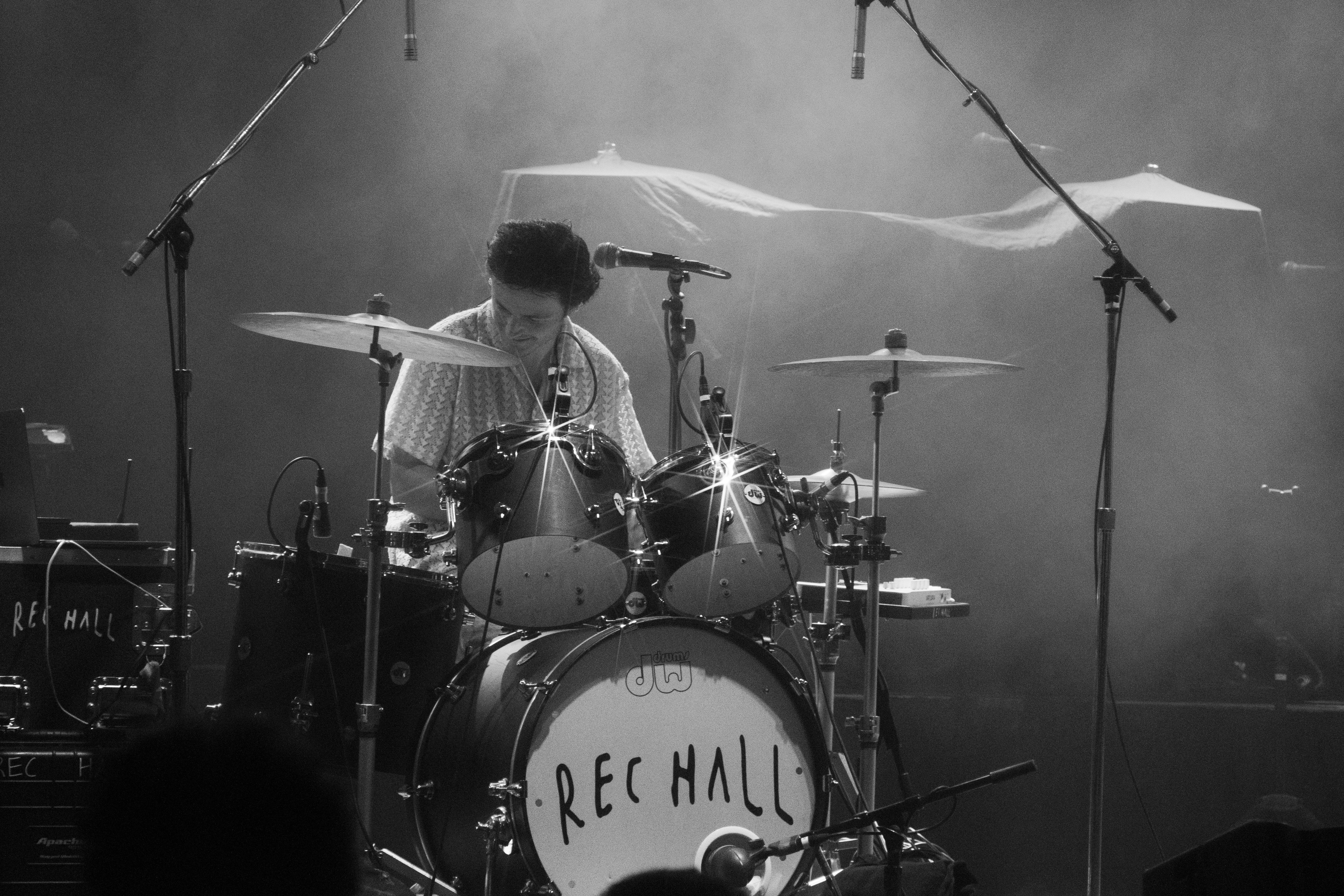
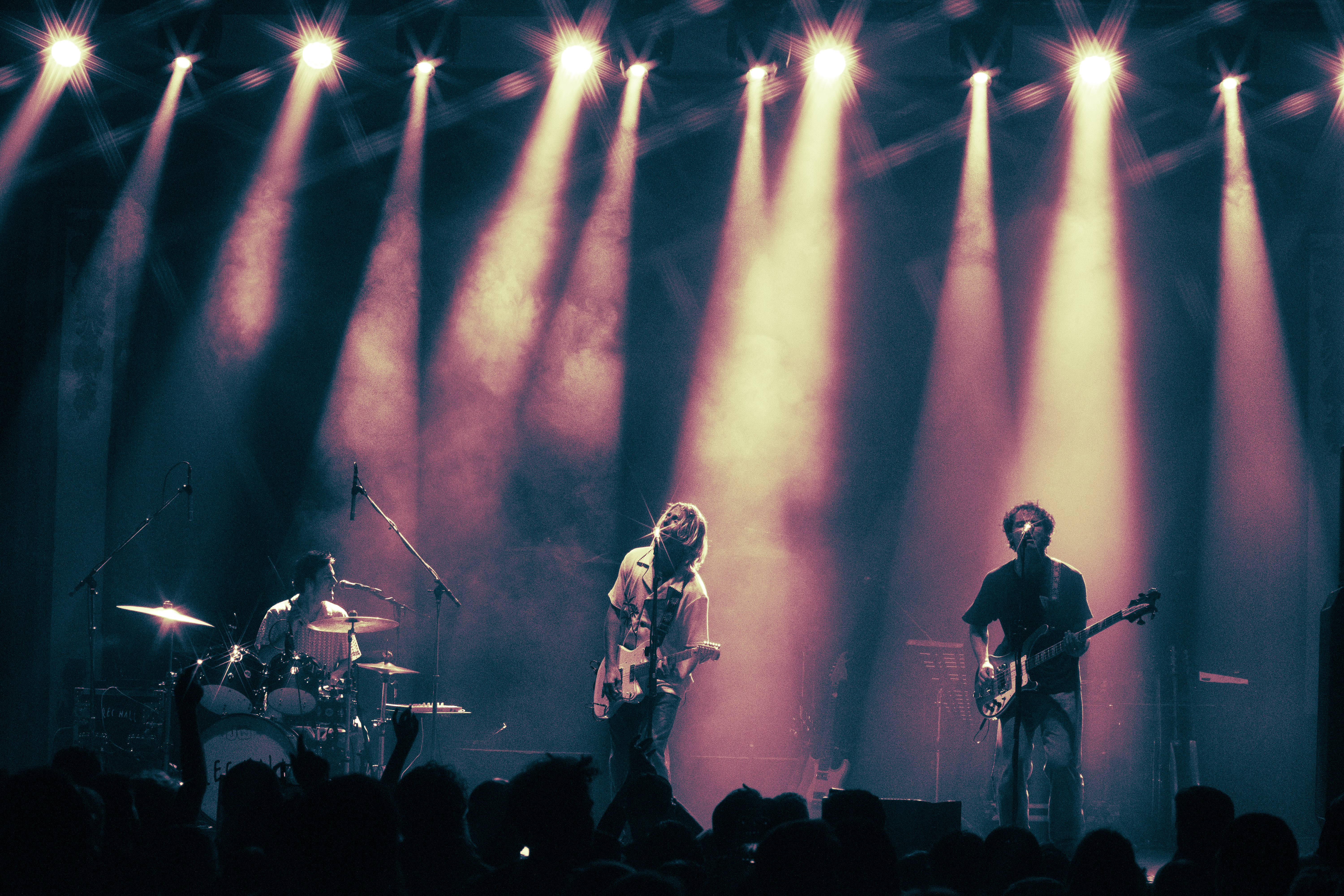
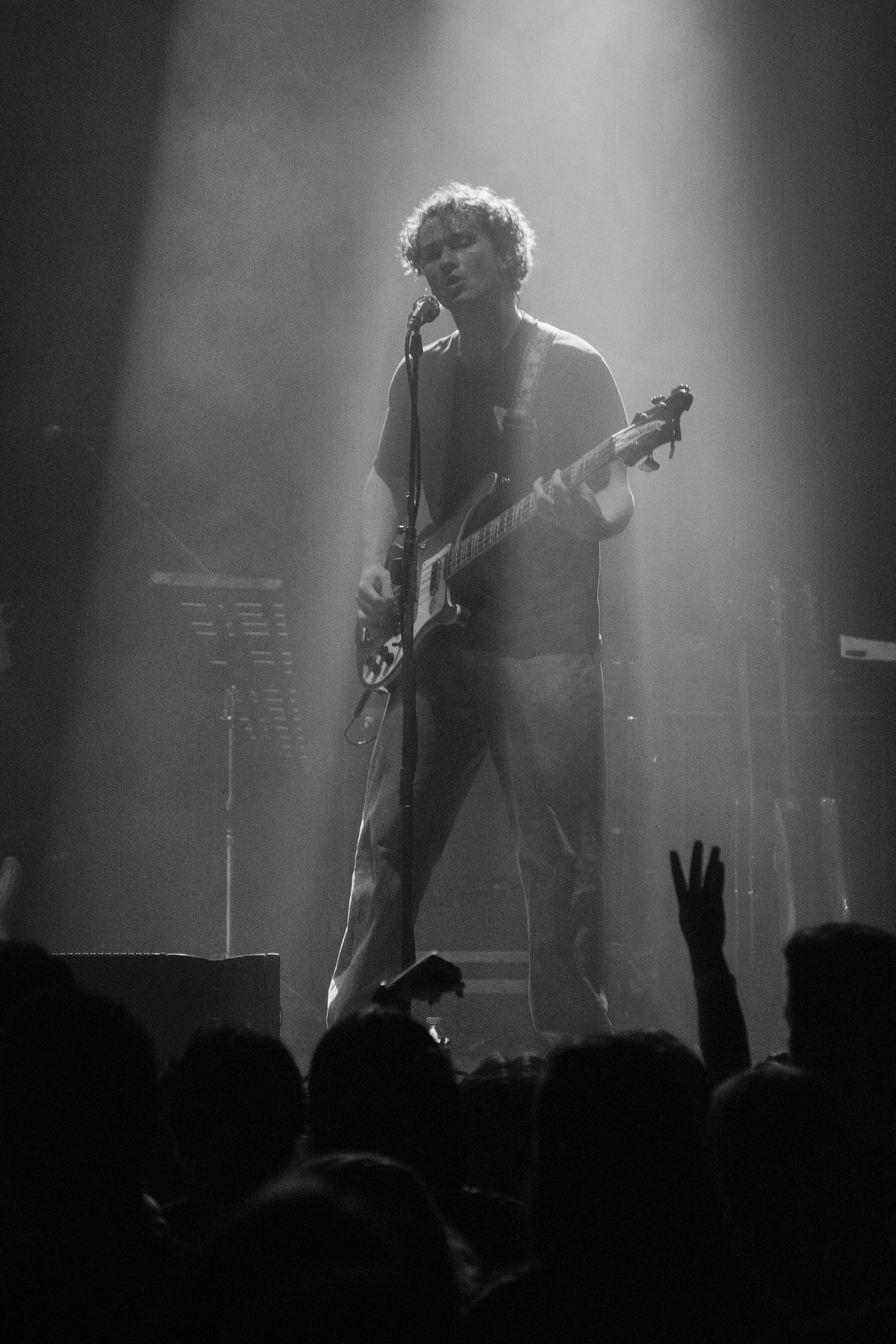
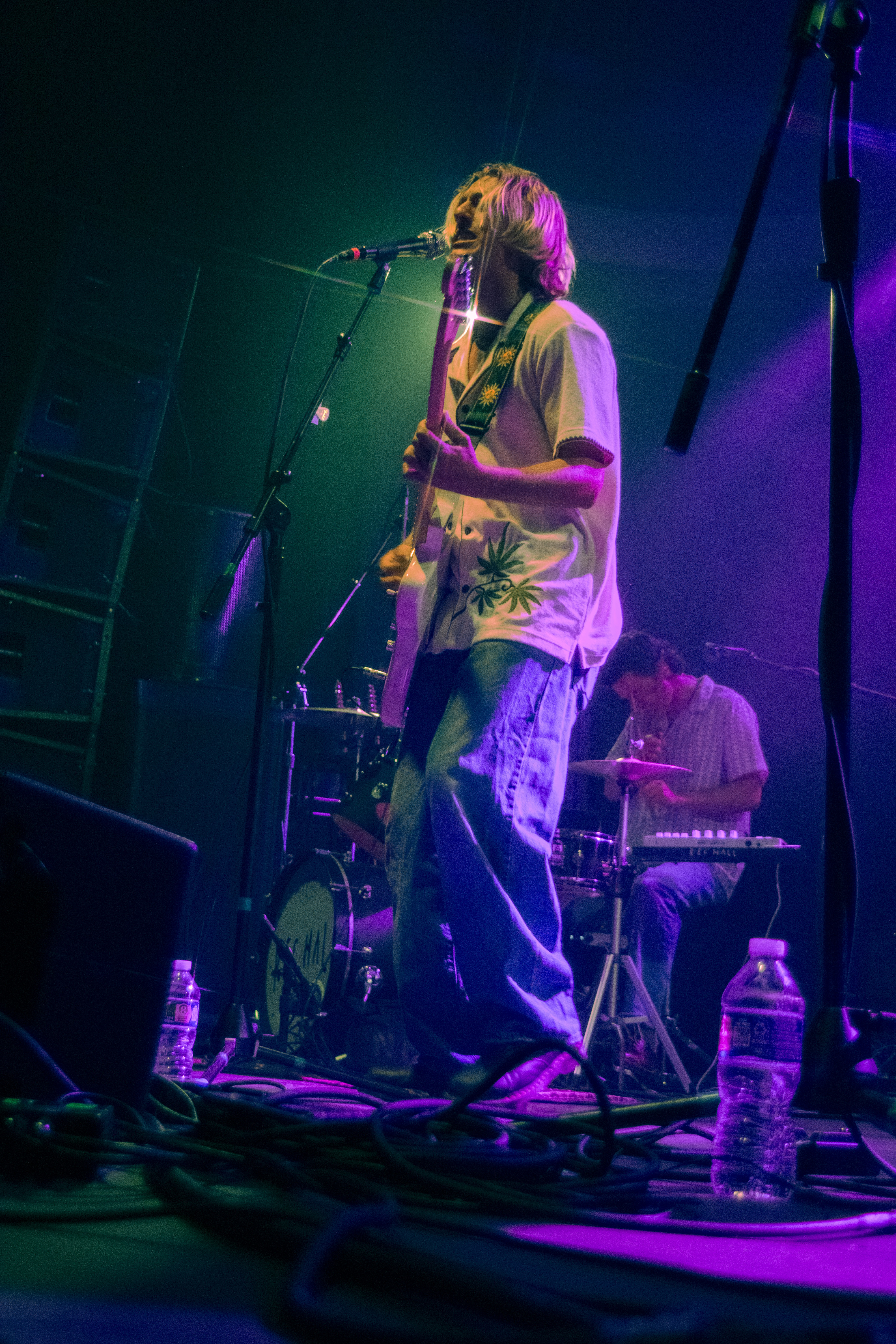
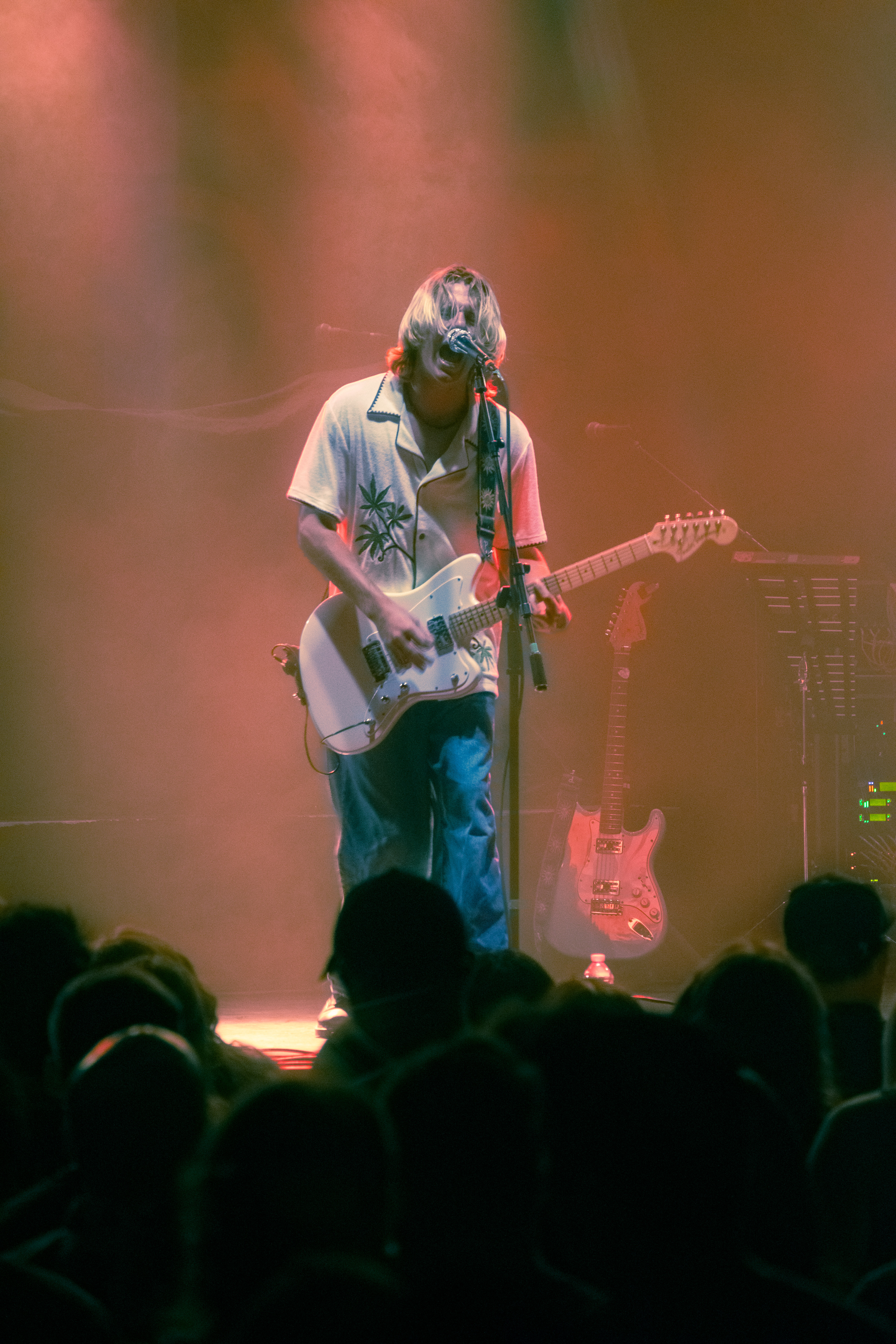
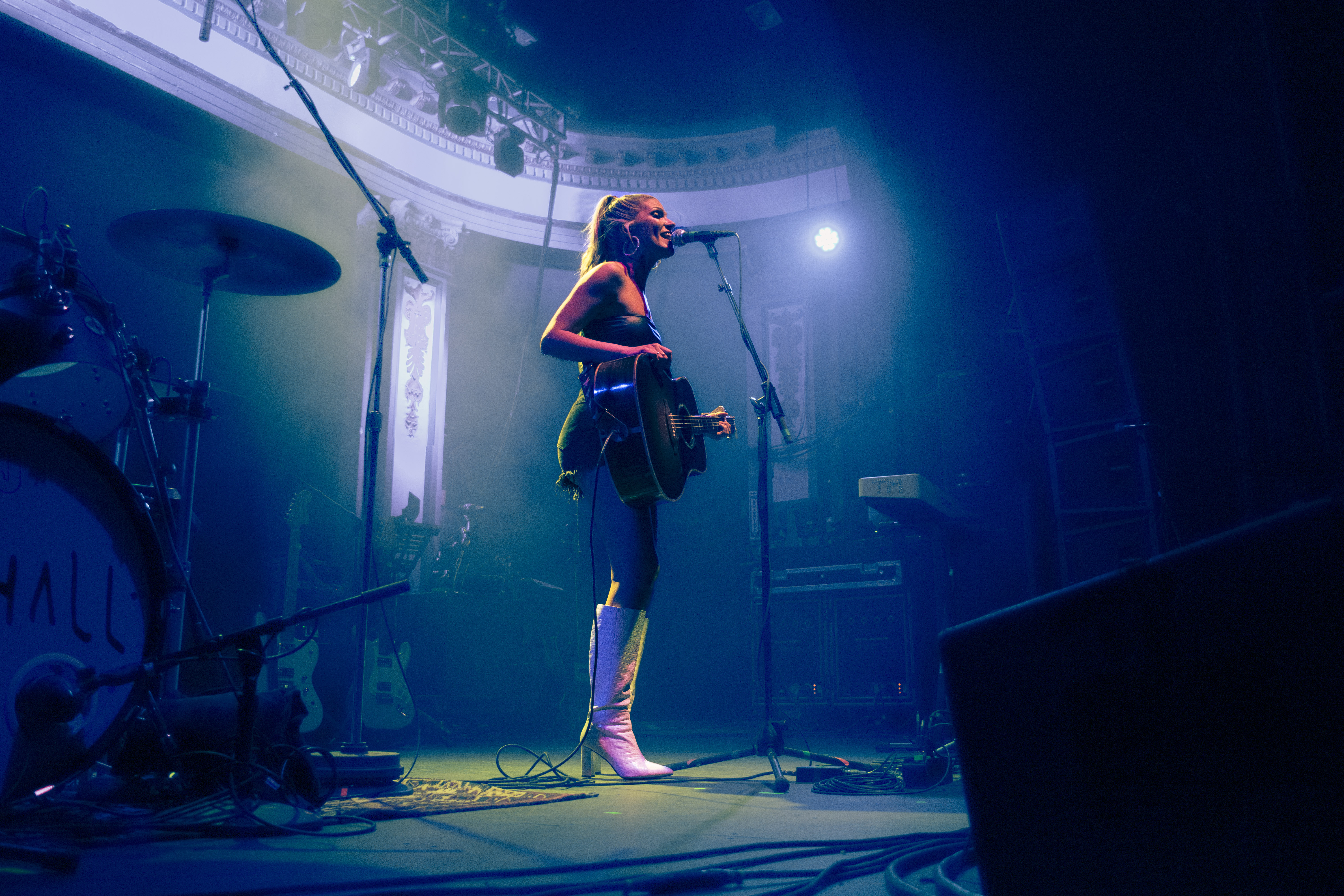
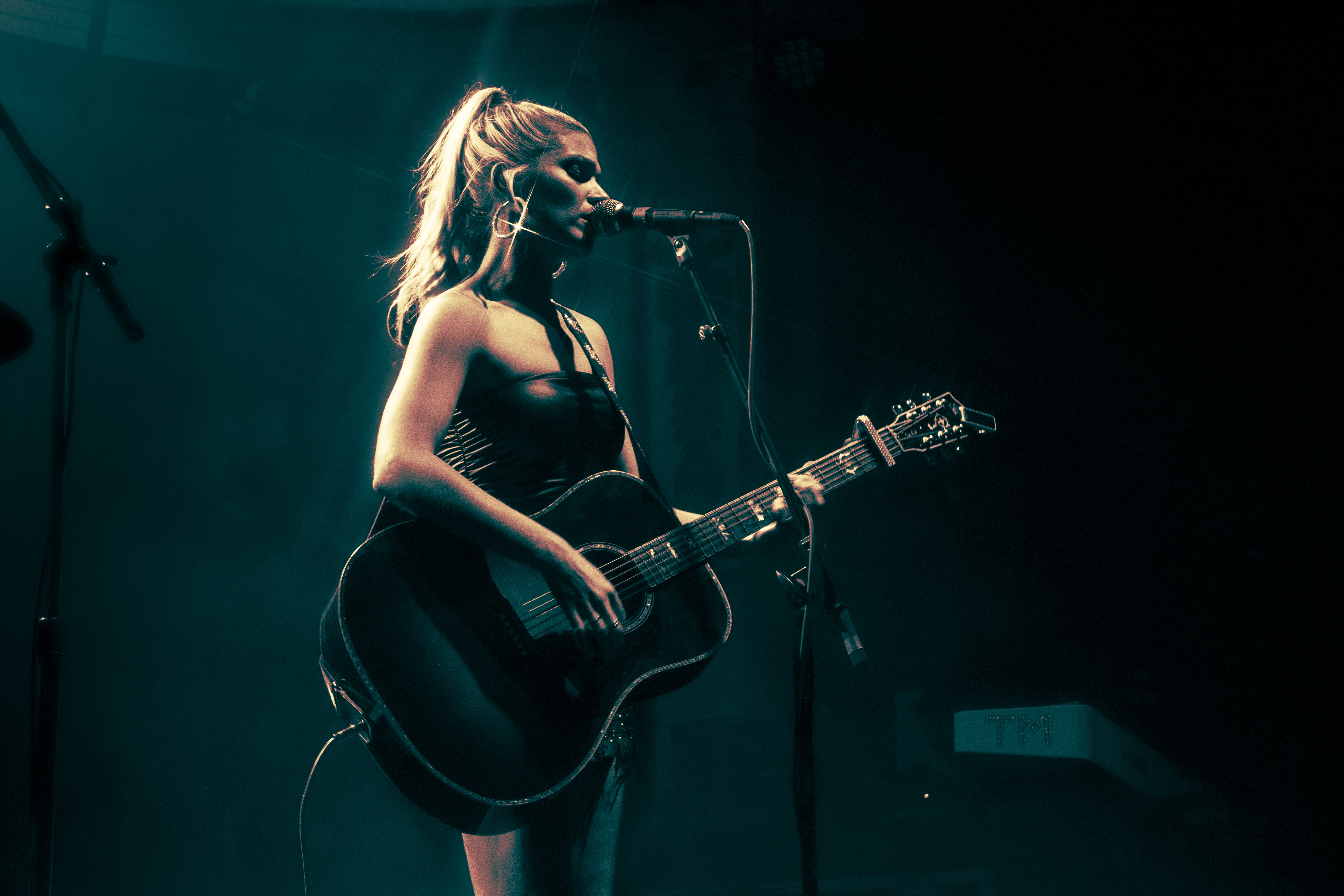
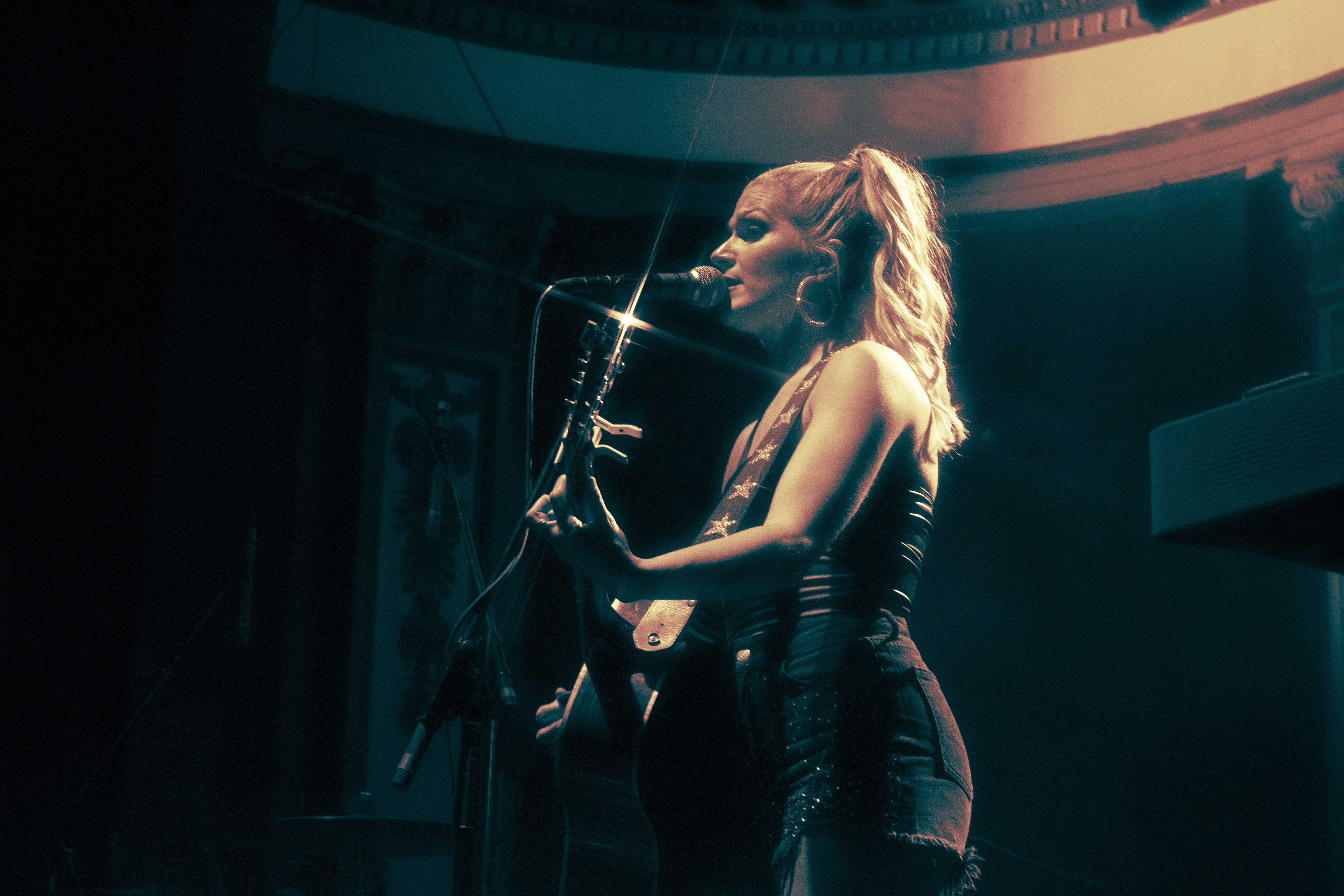
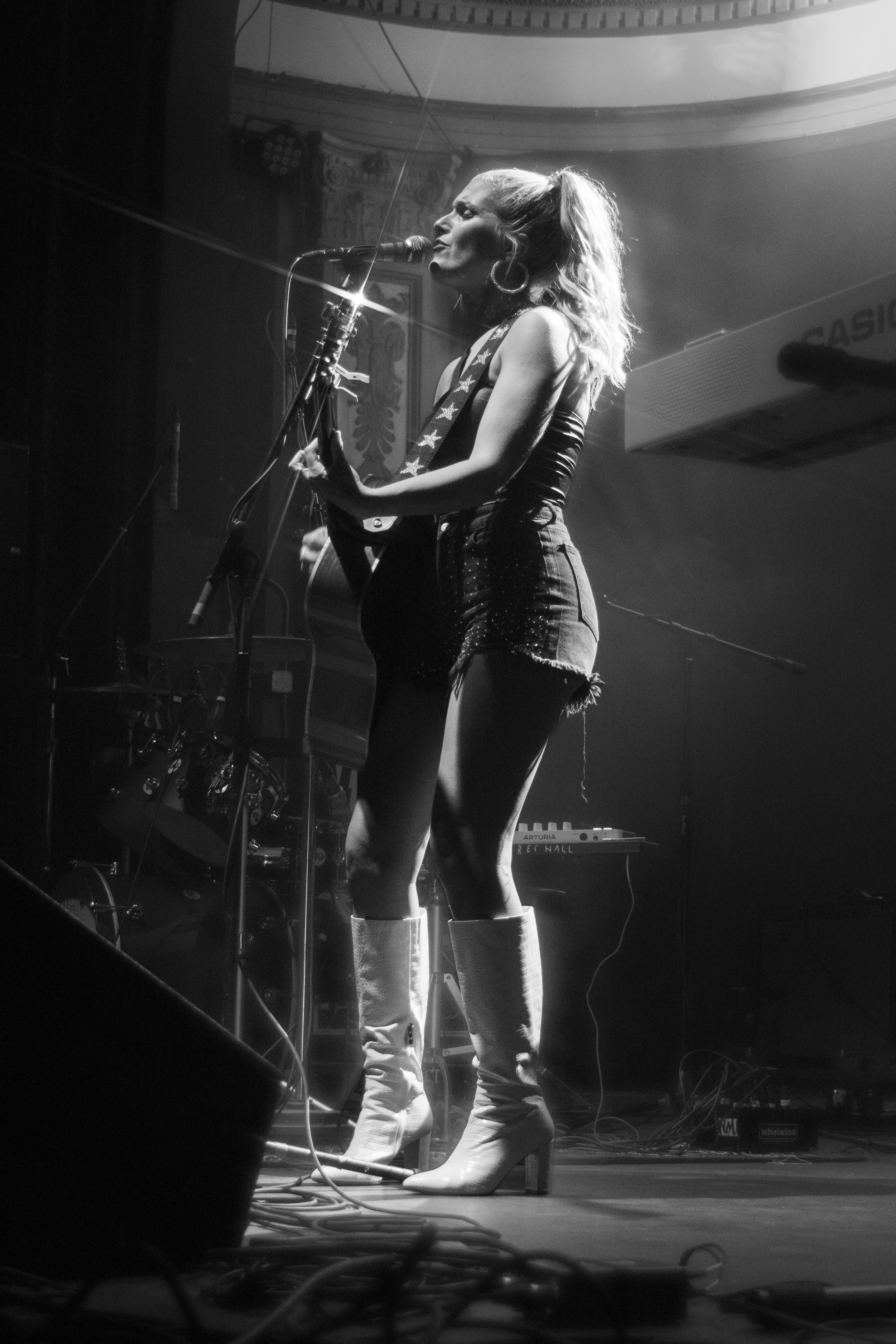
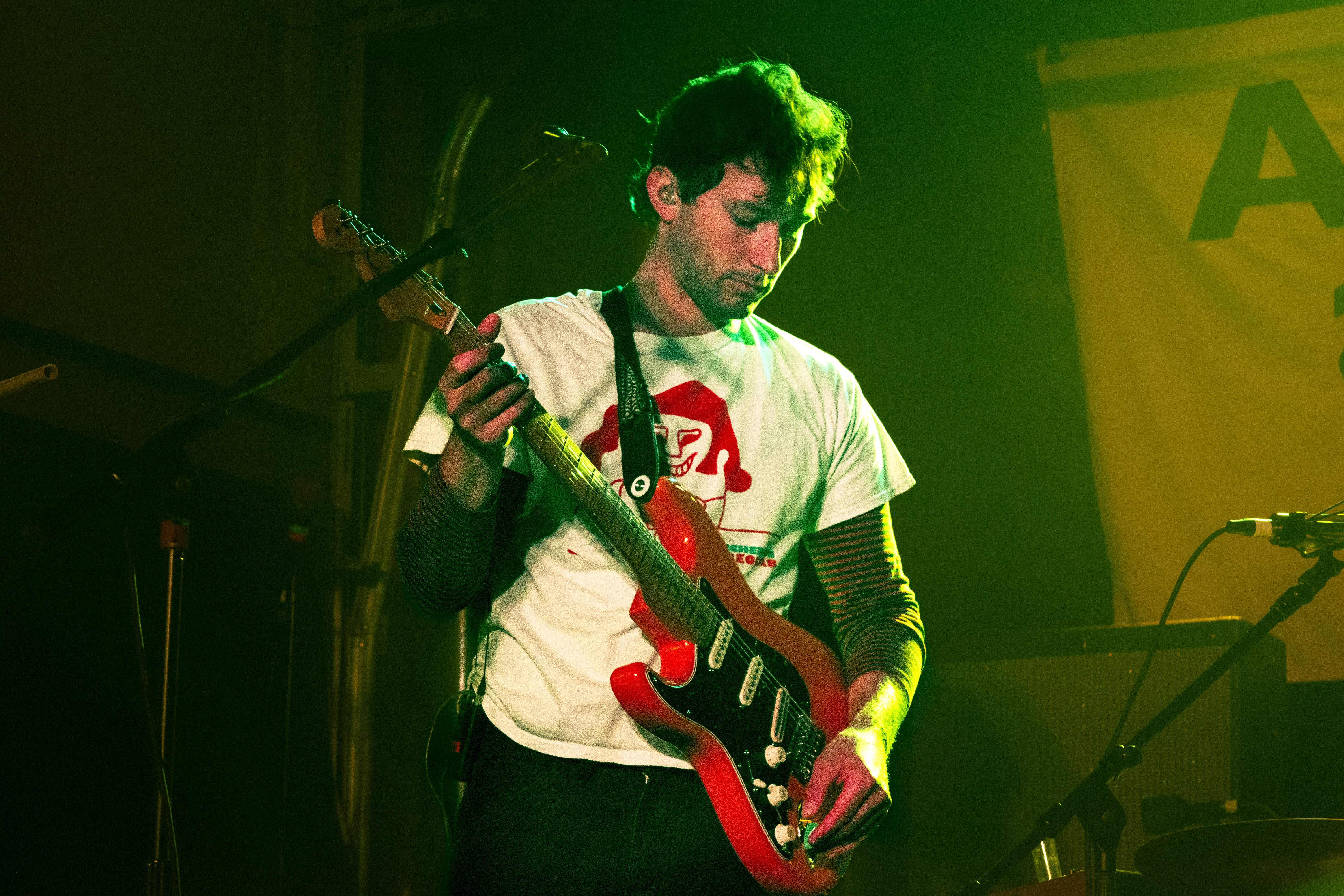
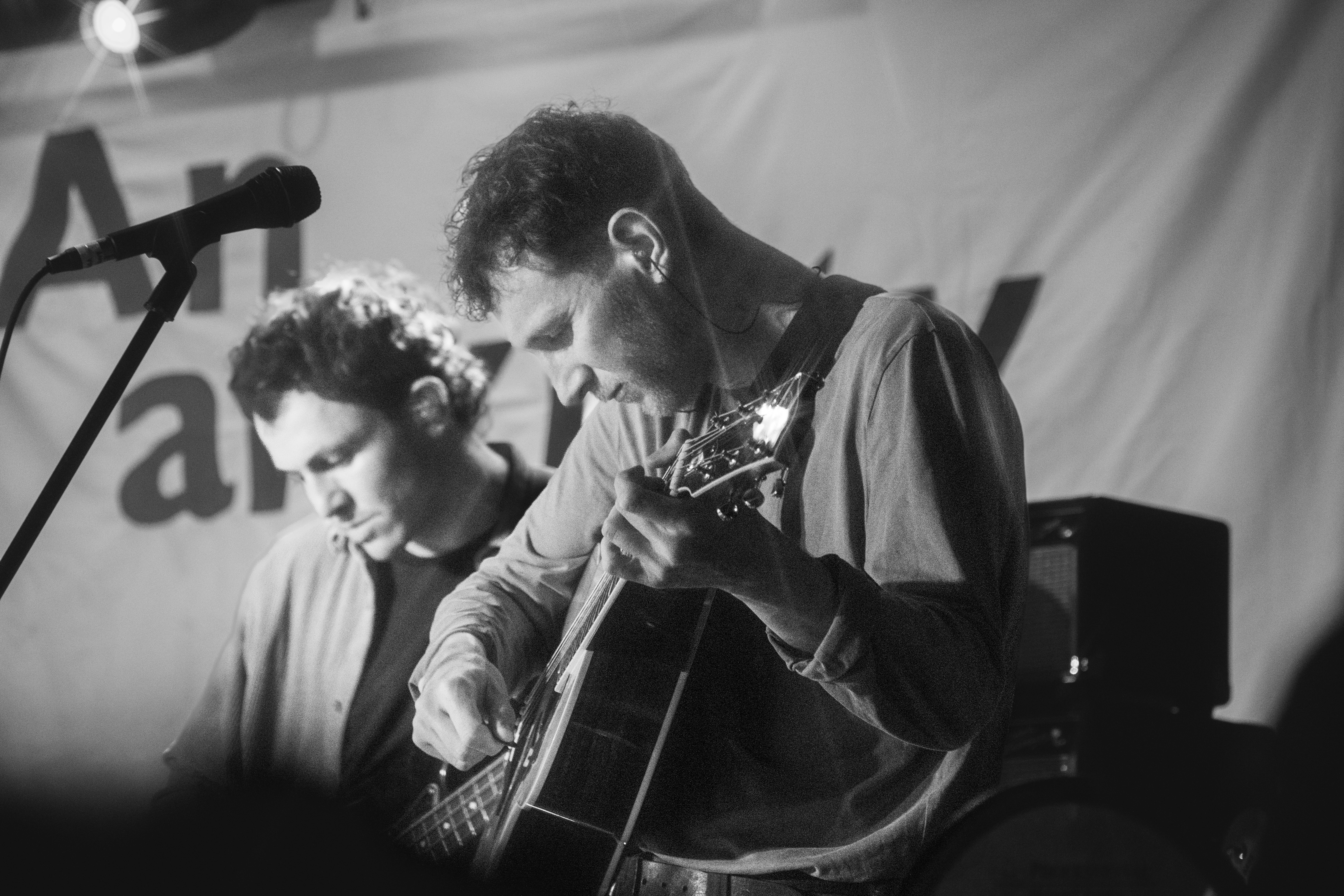
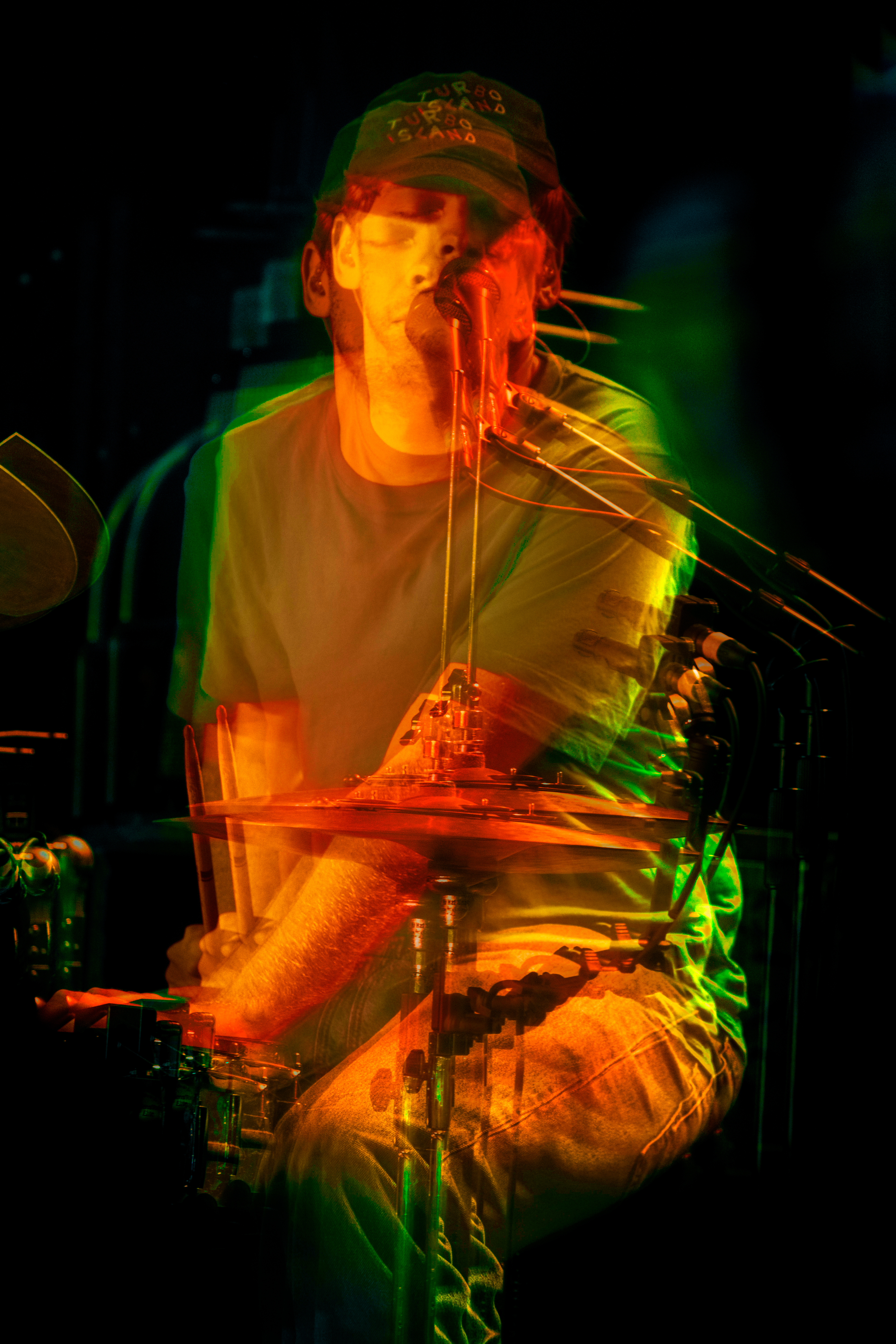
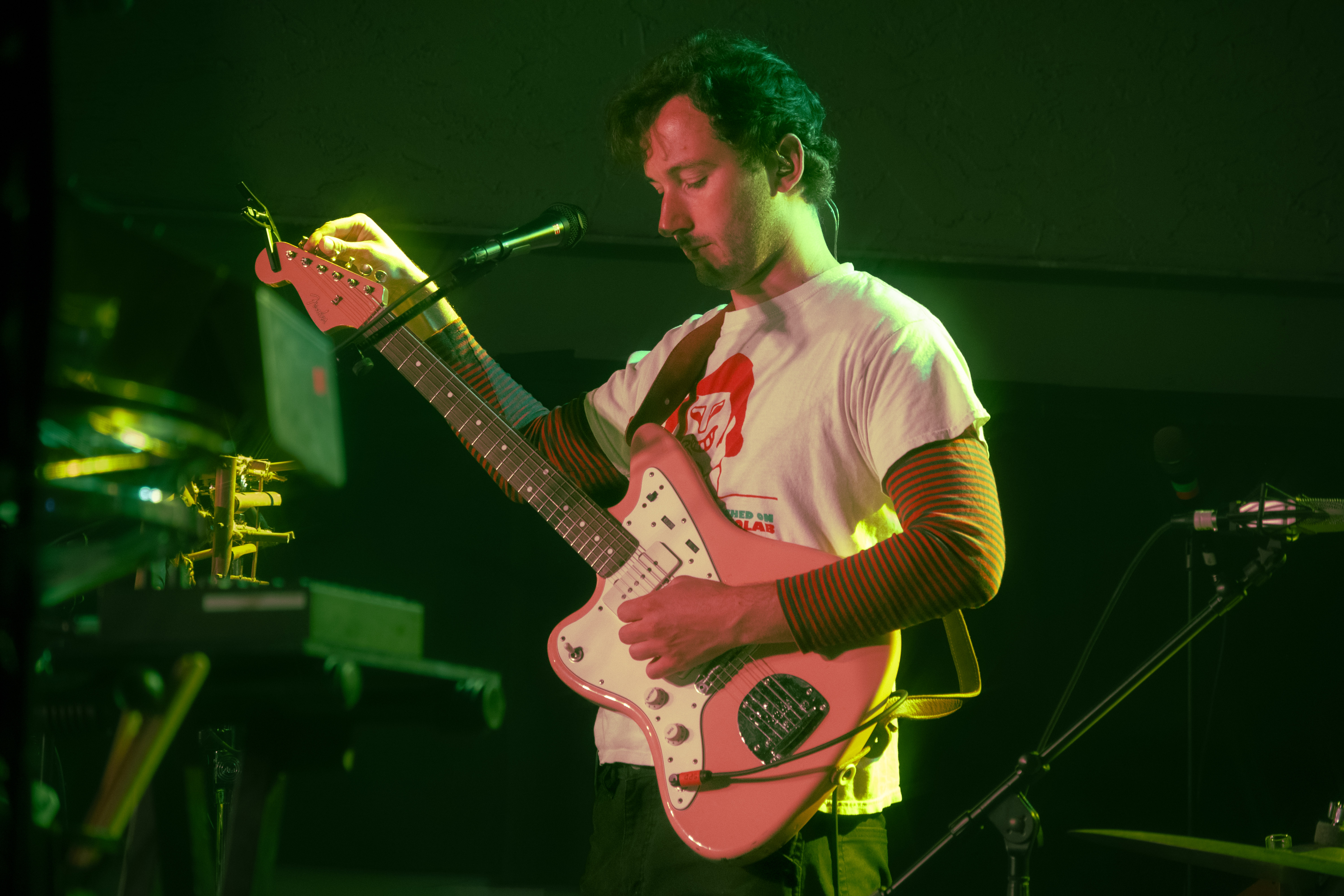
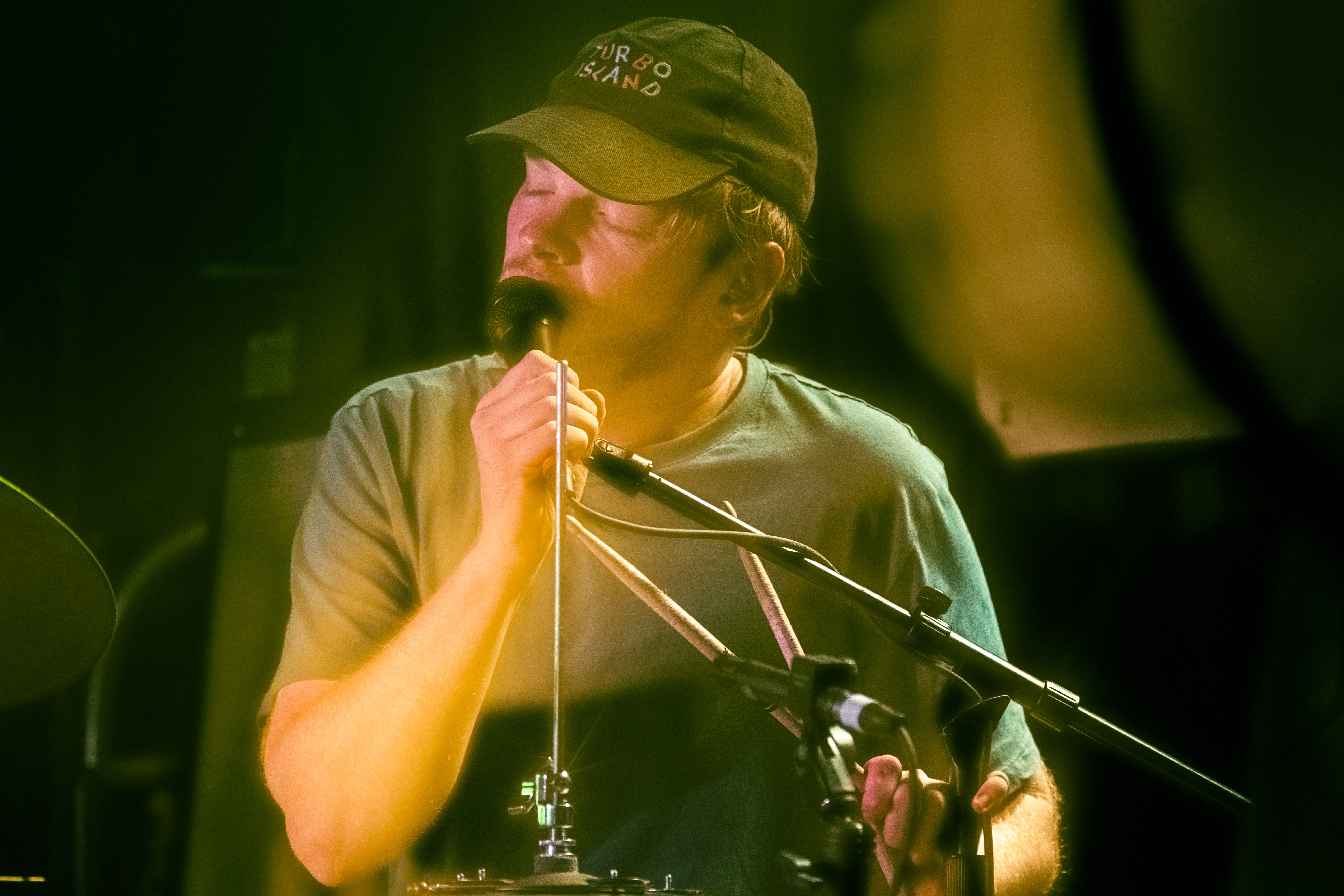
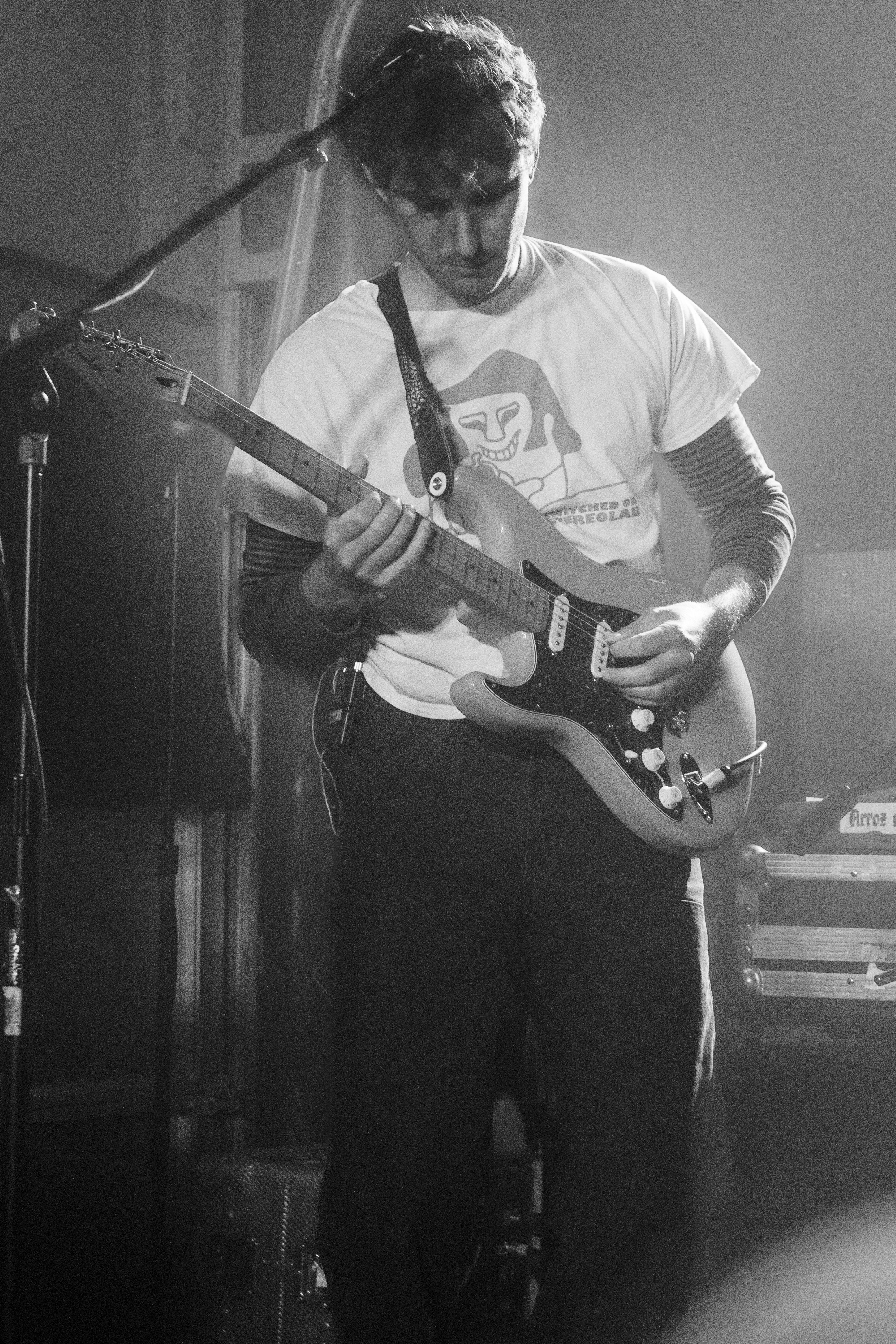
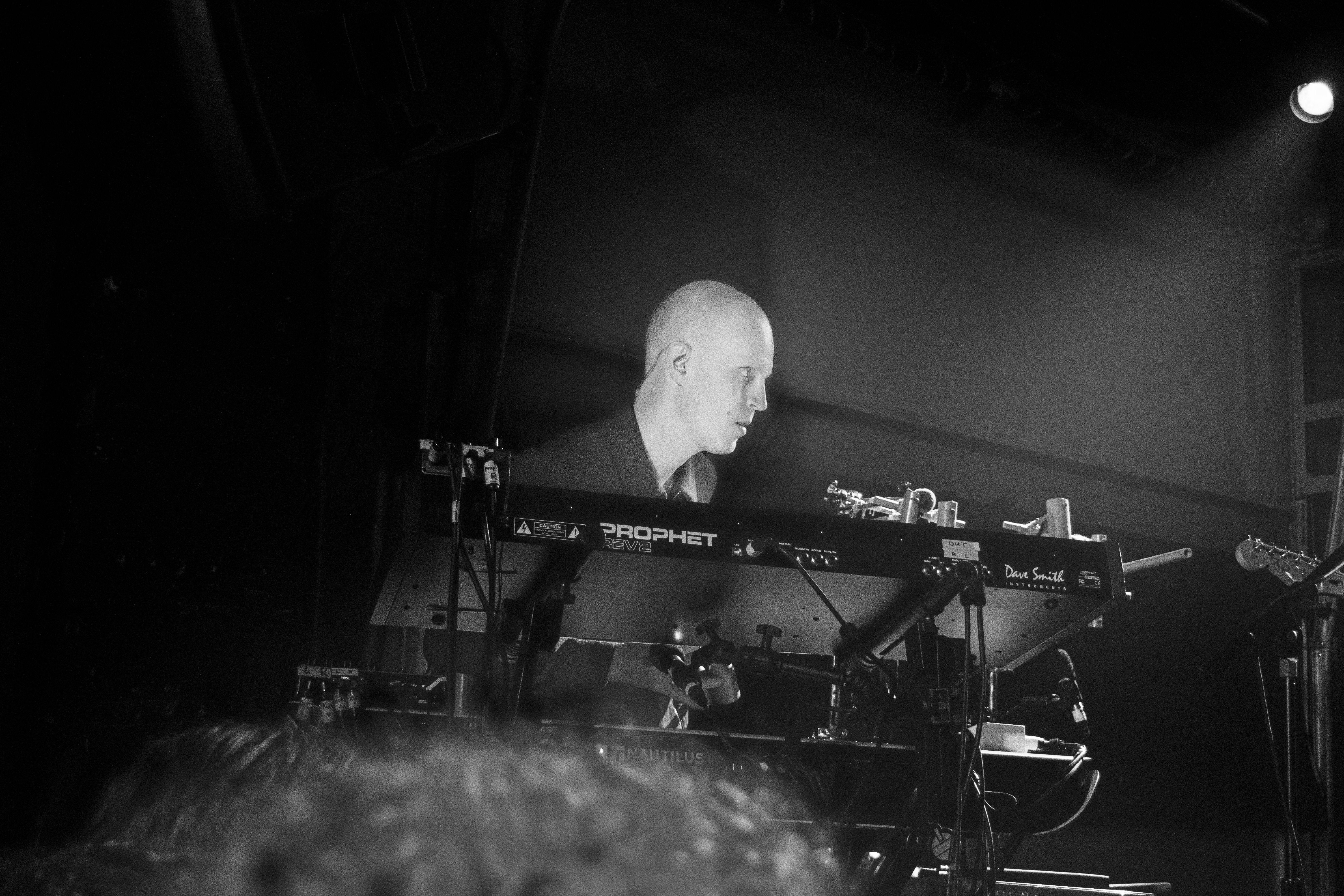
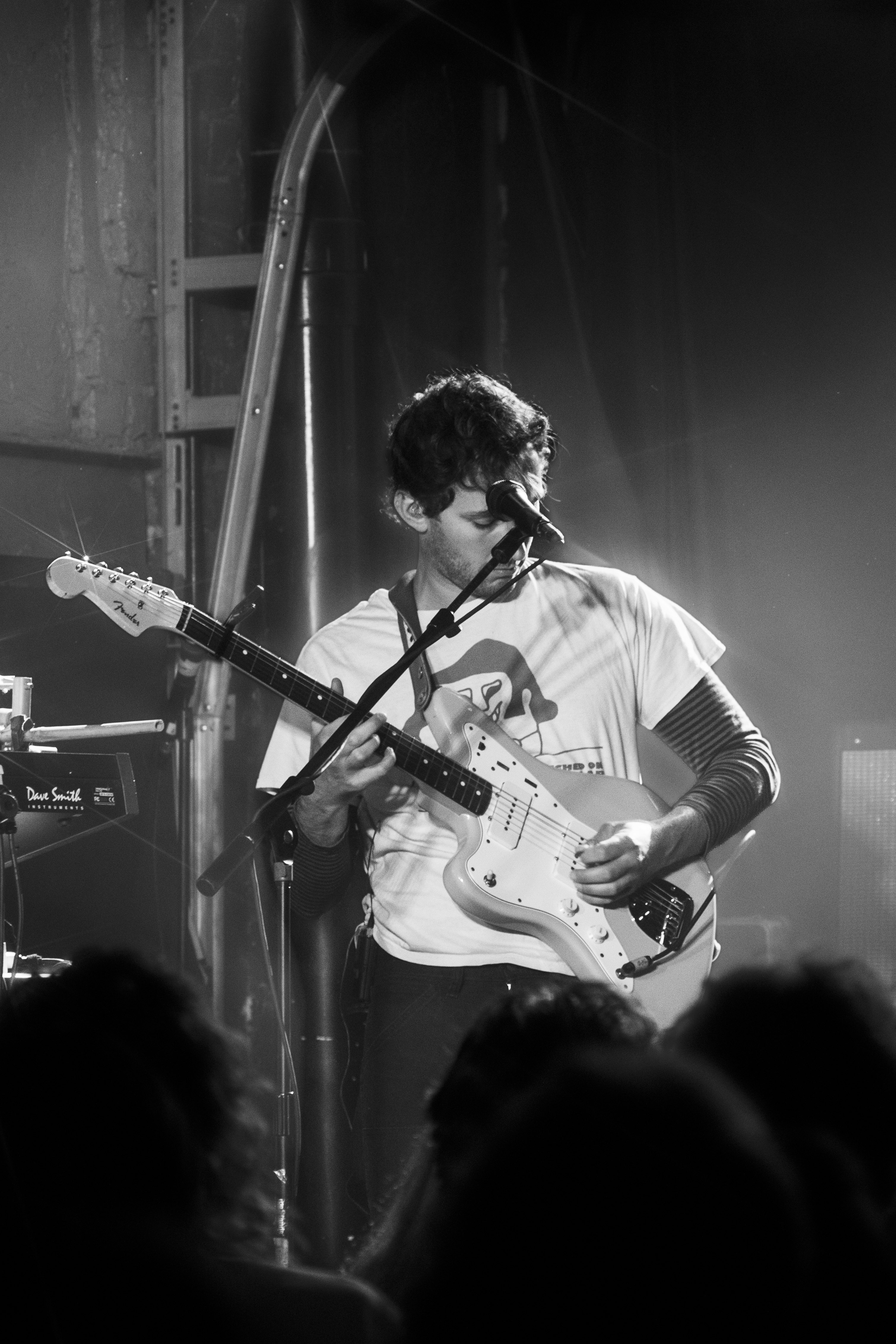
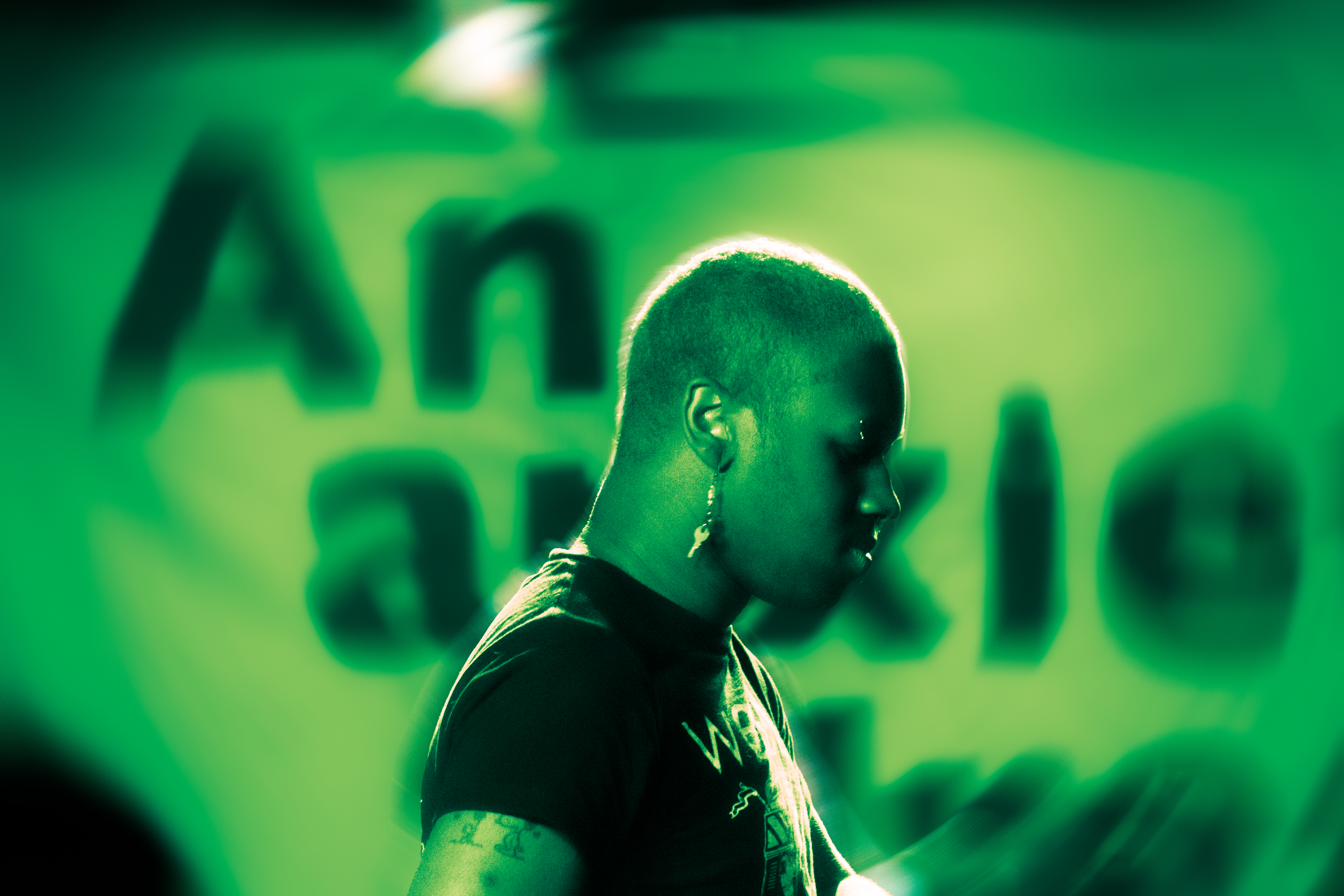
Photos from Nodes garage show, Columbus, OH, June 2025
Kodak Ektar 100, Ilford Delta 100
Nodes has been the focal point of several Polyvox features, and for good reason. The collective released their latest record, Laugh, and I cannot praise their musical prowess enough. Nodes is a revolving door of artists coming together for the common purpose of making incredible music, and their lineup changes from show to show. You truly never know what you are in for at one of their shows, but regardless, you’ll be blown away.
The record features seventeen (yes, 17) artists on instruments ranging from typical guitar, drums, and bass, to marimba, banjo, flute, clarinet, cello, and many others, layered and interleaved to create a psychedelic, noisy masterpiece that made me second-guess my sobriety. The nearly hour-long record is best enjoyed in a dark room, eyes closed, with good headphones or a stereo system. I was lucky enough to be invited to a private listening party at the Nodes house as my first listen, and the experience left me dumbfounded and overwhelmed by the ability of their production. Creating such a rich and intricate sound requires immense talent, and it’s clear that Nodes’ talent has overflowed into this album.
The record incorporates ambient recordings from several locations–street corners, parking garages, and other unconventional spaces. These recordings are layered and built upon in an oscillating, dynamic manner that waxes and wanes throughout the album. The musicianship and mixing on “Laugh” highlight the talent behind the project that dedicated countless hours to put this masterpiece together.
I lay on the floor, eyes closed, letting the music take me where it wants. I’m enveloped in a warm, droning, almost playful sound at points, that takes me back to my childhood bedroom. It’s 7:00 am on a cold autumn morning. The sun has just begun peering over the horizon, illuminating the grass, peppered with frost, the air crisp and heavy, yet invigorating. The window is open just enough to let the balmy breeze caress your hands. You crouch down, sharply breathing in air through your nostrils, exhaling as the warmth from your breath crystallizes on contact with the exchanging air currents. The geometry of the ice on your window catches the sun, just as your eyes dart in its direction, it’s gone, fleeting, yet it dances between your eyes. You are invincible, but at the same time, vulnerable, meek, and in awe at the fact you are present in this very moment–a one-in-a-trillion coincidence to exist in this exact situation. This is what “Laugh” feels like to me. I implore you to tune into this record with an open mind, and ideally, closed eyes. Let the music carry you around the sonic sea presented by Nodes in this incredible work of art.
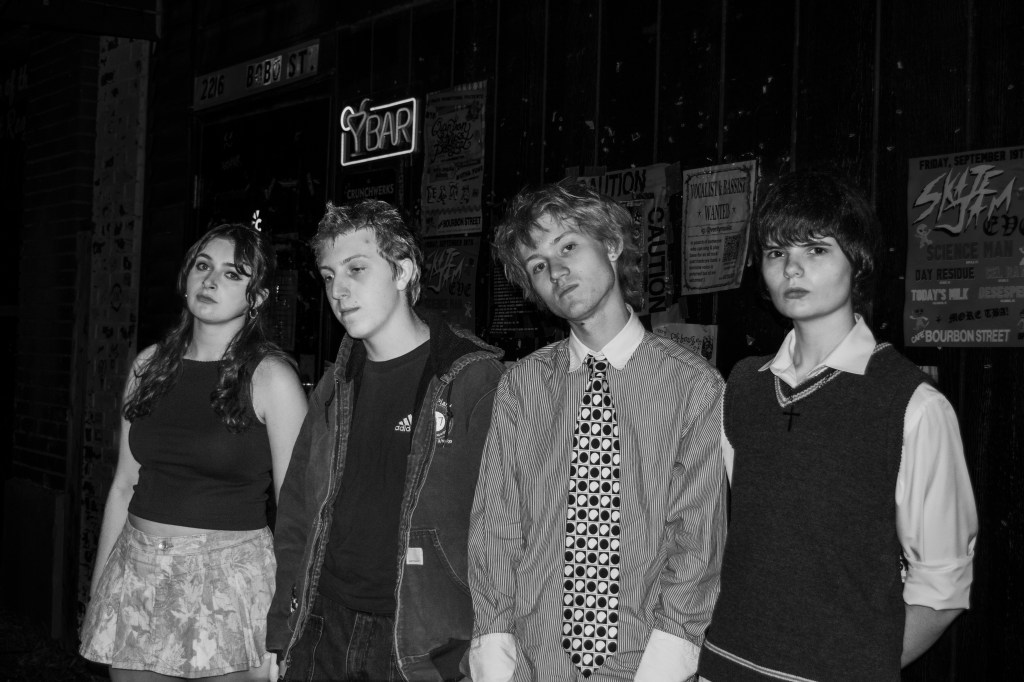
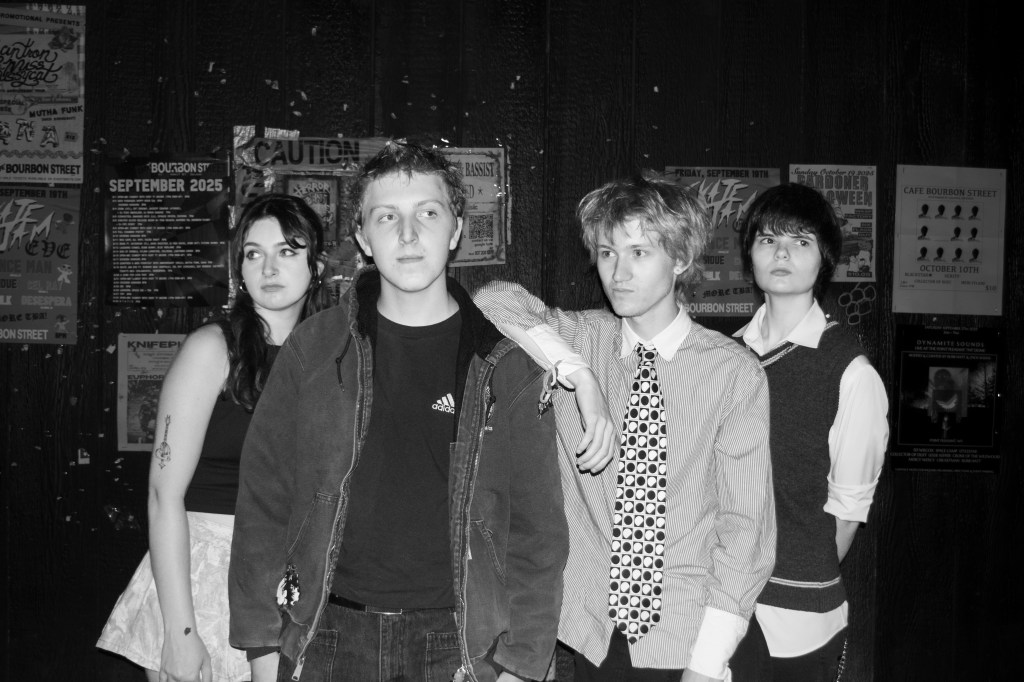
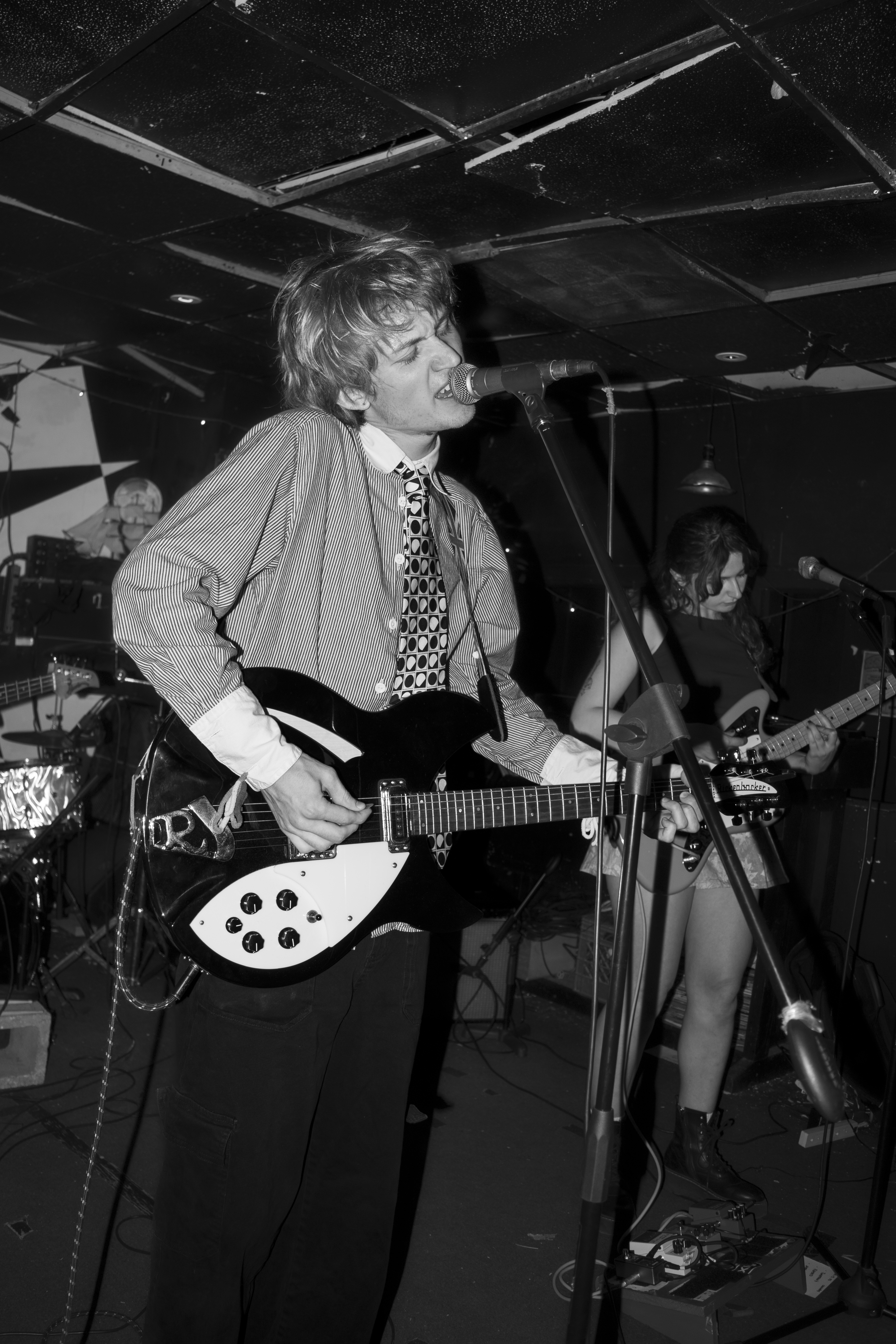
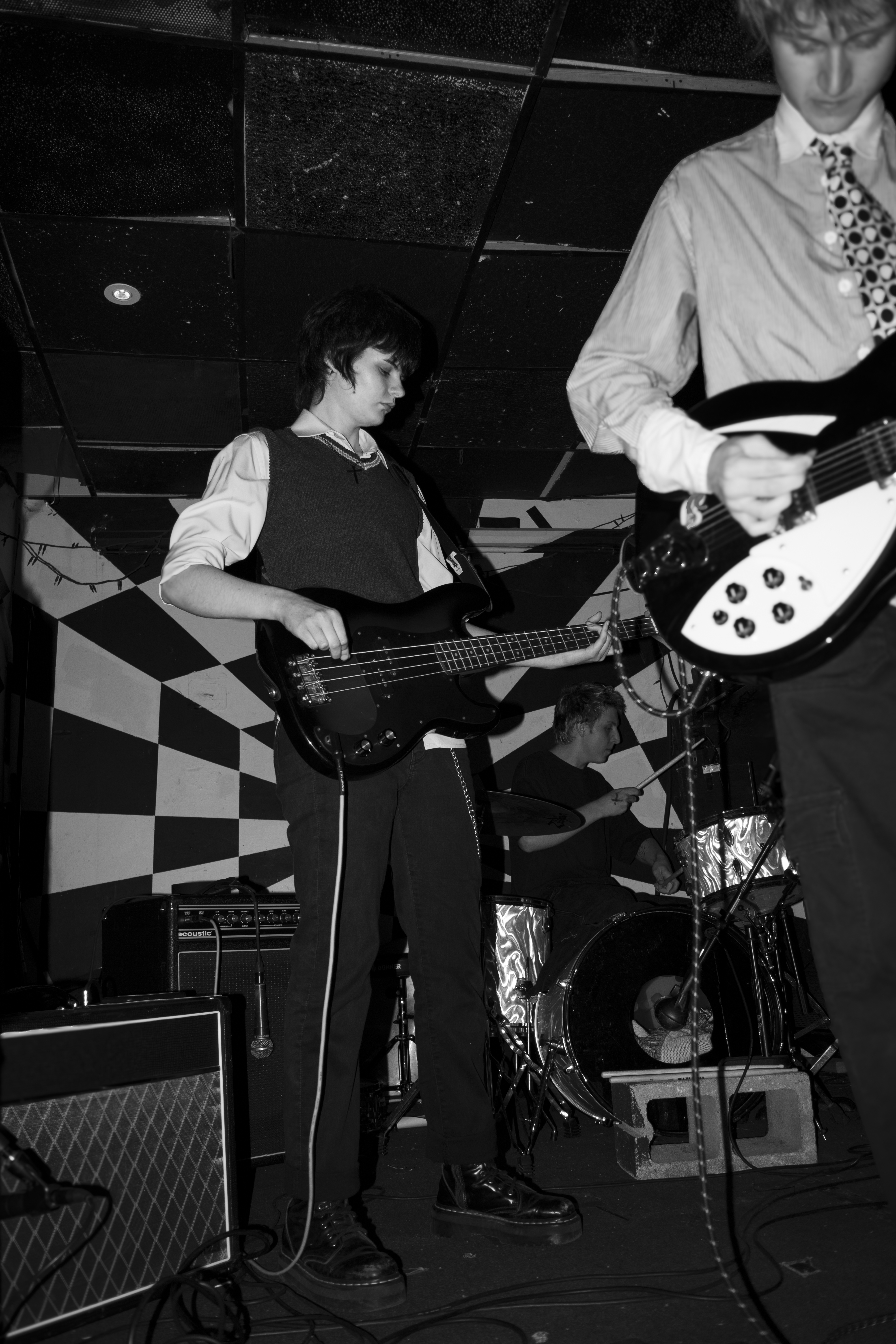
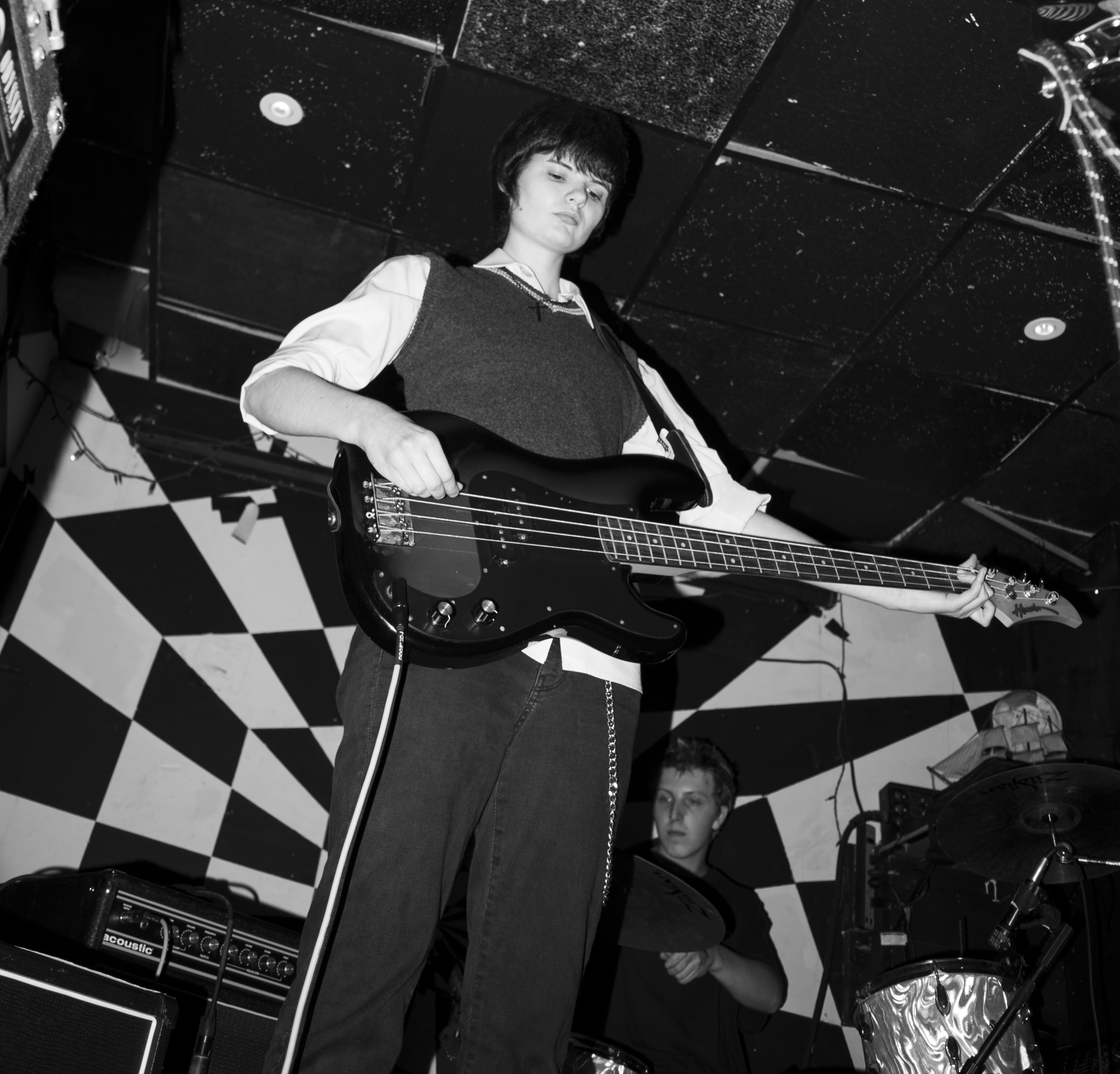
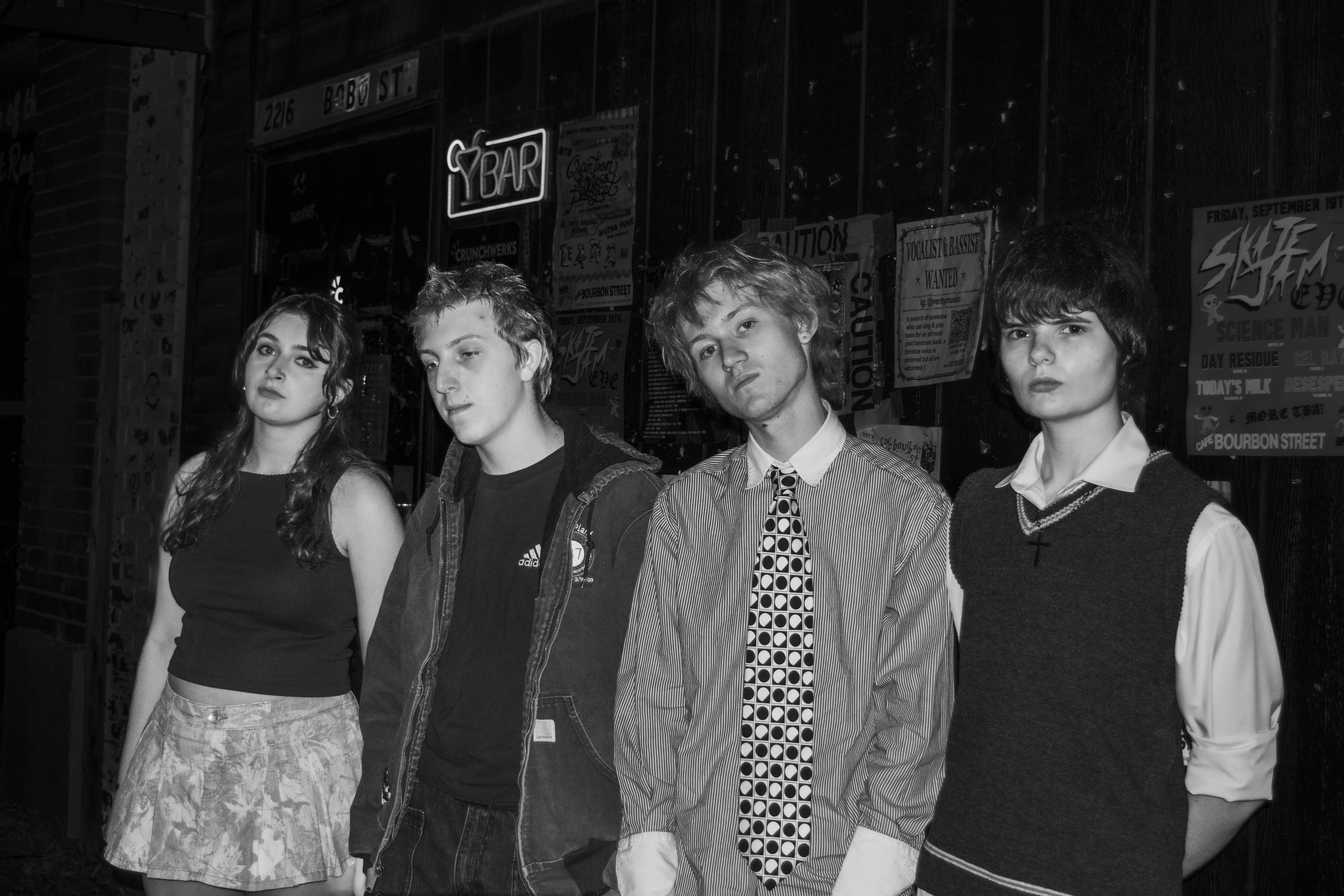
I caught the Laughing Chimes earlier this year, opening for the Chicago group Lifeguard at Ace of Cups. Their sound really caught my attention–it’s truly timeless, you could say it’s ripped off a cassette found in an old shoebox and I would fully believe you. It’s warm, nostalgic, and dripping in jangly angst. I caught up with the group at their latest performance in Columbus at Cafe Bourbon Street to chat about music.
Polyvox: How did The Laughing Chimes first come together?
Evan: Quinn and I are brothers, we started it back in 2020 just as a recording project out of our bedroom. From there we recorded a whole album worth of material, since that was, like, during COVID time and we couldn’t go out and play. But, I mean, playing live was always a goal. And yeah, once we got that first album done in 2021, we went from there and started playing live in 2022. We got Ella on board in late 2023, she plays guitar, and then I taught Kyle how to play bass over the summer.
Polyvox: So, would you say that being in and around the Southeast Ohio area has influenced the way that you’ve approached your music?
Evan: I think so, in terms of the vibe. I feel like we try to bring some of the atmosphere to the music. I don’t know if it’s influenced it in the way that, like, genre-wise, because obviously, where we’re from, there’s a lot of folk and stuff, which I like that stuff, but it’s just not what we play. But we try to bring some of that darker kind of atmosphere to it.
Polyvox: Yeah, definitely. That sort of gothic aesthetic.
Evan: Yeah, totally.
Polyvox: Describe your music in three words.
Evan: (Laughing) Ooh, not too bad, not too bad.
Polyvox: I know this is a super loaded question. I wouldn’t even know where to begin.
Evan: Dreamy, nostalgic, pop.
Polyvox: You can play on a bill with any three artists, defunct or active. Who is on that bill?
Evan: Number one would be R.E.M., number two would be The La’s, and number three would be Guided By Voices.
Quinn: Joy Division, Nation of Language, and Cocteau Twins.
Polyvox: Who are your greatest influences as a band?
Kyle: My goal is to become Simon Gallop of The Cure. That’s like my absolute goal.
Quinn: Keith Moon, Stephen Morris, and Jimmy Chamberlin.
Evan: If we’re going instrument-wise, Peter Buck, the guitar player for R.E.M. is definitely one of my big heroes. Obviously, Johnny Marr, too.
Ella: I’m going to be an outlier here for guitar and say Dean Ween. He’s amazing. He’s like my favorite guitarist ever.
What’s your biggest music hot take?
Evan: Quinn–you want to go for yours? Isn’t it something about Depeche Mode being like, the most overrated band ever?
Quinn: Oh, yeah. Depeche Mode is the most overrated band.
(everyone laughs)
Ella: I like Blur more than Oasis.
Polyvox: (laughing) Unfortunately, I am a huge fan of “Definitely Maybe,” but I see where you’re coming from. The Gallagher brothers are insufferable.
Kyle: I’m gonna have to be real, I think the entire genre of emo shouldn’t exist. Anyone who calls themself an emo should be ashamed.
Polyvox: Not even Midwest emo?
Kyle: No. (laughs)
Polyvox: Fair enough. Last question–what’s next for The Laughing Chimes?
Evan: Well, we’re working on some new demos right now. I kind of had, like, a little bit of a songwriting block over. I always have a songwriting block over the summer, and I was trying to kind of work my way through it, but we’re working on some new demos, trying to get that figured out. Since Ella and I are graduating from college soon, we’re just trying to figure out, like, where we’re gonna go after that, figure out what the move is from there.
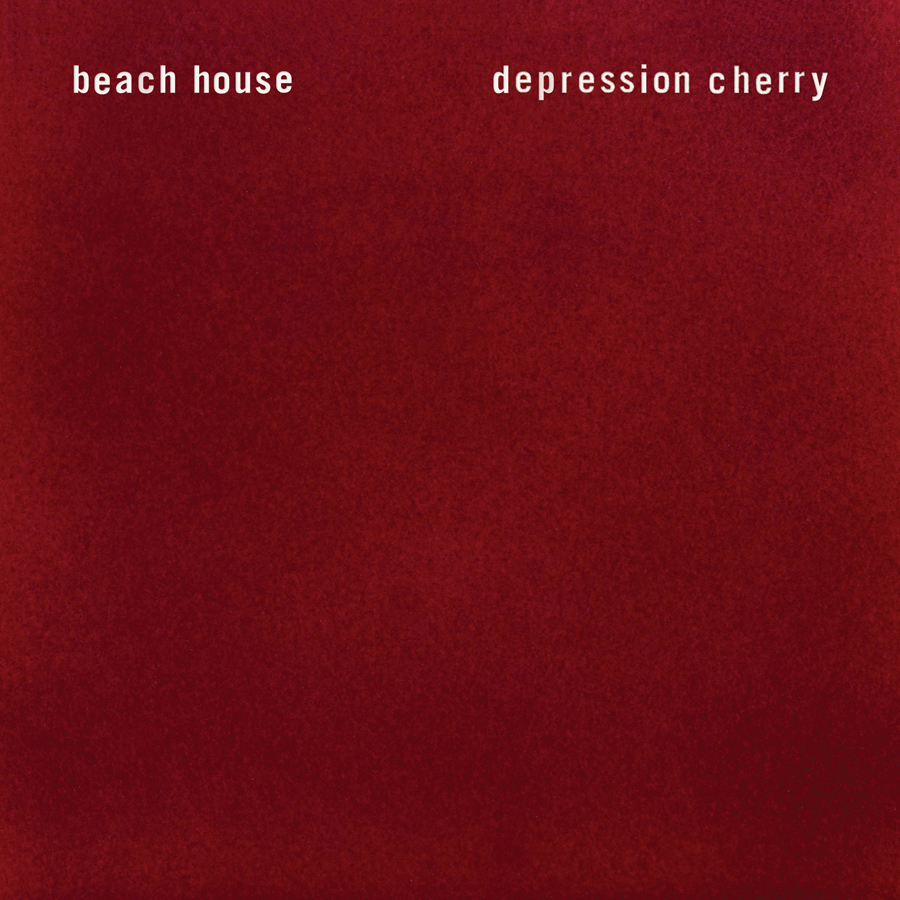
Beach House occupies a unique niche in the music world. Their sound can be gentle and ambient as Victoria Legrand’s synthesizers arpeggiate and drone into oblivion. On the contrary, it can be an emotional firestorm of Alex Scally’s crying slide guitar layered over Victoria’s vocals, sending chills down your spine. They’re something of an enigma in the music world; they have garnered significant attention and success, yet they have managed to maintain a certain air of mystery surrounding their story, lives, and inspiration behind their art. Beach House has always had a special place in my heart, and their music can be found somewhere in my rotation at all times. They are a band that I grew up with, and their sound defined many moments in both high school and college. I often find myself romanticizing driving around during the summers after 11th and 12th grade, listening to this record on windy Pennsylvania backroads, admiring the amber, lilac, and violet hues saturating the hazy sky as the sun begins to set and the cool breeze calls you home. It was an interesting transitional period of my life, and I often found solace in this record as I navigated my first year of adulthood in a pandemic. To celebrate the tenth anniversary of Depression Cherry, an album that dropped at the peak of the 2010s indie movement, let’s revisit the tracks that were central to my teenage experience.
Depression Cherry is the perfect description of Beach House’s 2015 release. It’s a warm blanket of sound interleaved with true poetry. Whenever I discuss this album with other people, I pull out my vinyl copy and show them the cover. The cover is made of red velvet, with “Depression Cherry” printed in the corner. The packaging is genius marketing, and I am lucky to have purchased it before the cover was changed to a simple gloss print. Enough fluff–let’s get into the music.
Levitation is a beautiful introduction to the record in all its darkness. The droning synth fade-in makes you feel like you could levitate, and just before you reach weightlessness, Victoria cuts in with her angelic vocals. The song, at face value, paints vignettes of a psychedelic experience. Weightlessness, levitation, and the experience of oblivion all point to a semi-religious experience. Deeper analysis and some digging on web forums reveals that I was completely wrong. The song depicts two people who perished in an accident involving a train, recounting their last moments. It’s an unfortunately true story, and Victoria’s lyrics perfectly capture what I can imagine the inevitability of death feels like–the sensation of leaving your body as you experience such incredible trauma and make peace with your own mortality. It’s a beautifully crafted, deeply poetic song that does not get the credit it deserves.
Sparks opens with a hypnotic vocal loop, which gets broken apart by a signature Alex Scally slide riff, caked in crunchy distortion. This song is the smell of a bonfire during a dramatic sunset with your closest friends. Beach House shows even more of their psychedelic side here, bringing life to a town seemingly crumbling and melting around them: “We drive around this town, houses melting down.” Further analysis shows that there may be more of a social commentary here that’s being viewed through the lens of hallucination. “A new development, wishing that it meant something natural, don’t we know it’s cruel,” can be interpreted in a handful of ways. Some have suggested a commentary on gentrification, ego death, and the profoundness of simply thinking abstractly, but the band themselves have said it’s about energy, specifically the moments where things “click,” and everything falls in line. Is it an allusion to overcoming writer’s block? Political Critique? Who knows. Nonetheless, the open-ended themes of Beach House songs are why I find them so enchanting–you can search for explicit meaning, but ultimately, your own lived experiences influence your interpretations.
Space Song is one of the band’s most famous songs, and rightfully so. The name tells you everything you need to know. The song begins with a haunting synth fade-in, and captures the essence of loneliness; “It was late at night, you held on tight. From an empty sea, a flash of light.” Accompanied by 8-bit octave arpeggios and corresponding eighth-note synth chords, the song takes what may be seen as a simplistic approach to music, but this is far from the truth. The layers are incredibly intricate, with vocal harmonies reverberating between your ears, a punchy, dirty bass tone, and the signature slide guitar that has roped in so many new fans, it’s hard to ignore the musical prowess of Beach House. As the song nears its conclusion, Victoria repeats “fall back into place” into the fadeout, leaving the listener with this experience of singularity–a reminder that we are all a blip on the timeline of the universe, and the vastness of our existence.
Beyond Love was a track that I have only really listened to when I spin my vinyl copy of the record; that being said, after going back and listening a few times, I wish I would have given it the time of day and tuned into the content. There’s something magical about the drum machine, coupled with Alex’s spacey, dissonant riffs. It’s timeless in a way. It’s a lot more reminiscent of some of their work from earlier records in its arrangement. Beyond Love tackles the experience of unrequited love, a relationship ended too soon. The protagonist expresses their frustration with the other party, ripping petals off the rose in their mouth, shutting the lights off on their relationship in the end. Victoria compares this person to “Elvis,” perhaps to highlight the protagonist’s idolization of this man despite his indifference. The abrupt end to their relationship and experience in the time shortly thereafter leads them to question what went wrong in a last-ditch effort to bargain with him; “all I know is what I see, and I can’t live without this. Could you ever believe beyond love?” The protagonist wants more than simply being “in love.” Anyone can have the capacity to love another person on a surface level, but believing in their connection on a deeper, more spiritual level is what he lacks. Perhaps he is scared of being alone and truly does care for the protagonist, but the fear of emotional intimacy sours the entire relationship in the end.
To be honest, I have no idea what 10:37 is about. But, there’s something about the cryptic title, lyrical content, and stripped-back production that just feels like brain food for a study session or late-night drive. Victoria’s sporadic vocal chimes and fluttering runs carry the song, backed by a simple linear drum pattern and synth. No intense layering, reverb, or delay needed. You feel as if you have achieved a state of bliss, levitating in the stratosphere above the clouds. The clearest lyric is, as the title suggests, “10:37.” I like to think that the ambiguous nature of much of Beach House’s catalog is intentional–sometimes having everything spelled out ruins the magic. Needless to say, I catch the time 10:37 more frequently, or at least I notice it with more intent. Perhaps the purpose is to make us stop and notice the little things and embrace the joy of nothingness.
PPP has always been one of my favorite Beach House songs since I first listened. It’s ambiguous; its title was a placeholder that came into a meaning of its own. PPP could mean anything, but to me, it is human emotion in its most raw, unadulterated form. PPP is the orange and purple sunset illuminating the car with your windows down while you leave your hometown for one last time. Alex’s vocals make a rare appearance, accompanied by an arpeggiated, twinkly Stratocaster sound. This is one of Victoria’s strongest performances on the album from a vocal standpoint, and her endurance shines throughout.
“Did you see it coming? It happened so fast. Timing was perfect, water on glass” emphasizes the uncertainty of life. Just like that, opportunities come and go. One small decision can alter the trajectory of your life, for better or for worse. Like raindrops on your car window, things pass by in an instant before you can process what happened. Victoria leans into the conflicting emotions she faces, “like tracing figure eights on ice in skates, oh well, and if this ice should break, it would be my mistake.” It’s easy to let fleeting joy shove rose-colored glasses in your face, persuading you that the highs will last forever in the moment, but inevitably, there will be a corresponding low. Viewing this from a retrospective position makes your own humanity more prominent, and the realization that everyone has regrets can be comforting. As the verses blend, the pre-chorus repeats “yet, I’m tracing figure eights on ice in skates.” Despite the signs that your optimism may cause things to go awry, it can be painful and borderline impossible to force yourself to be rational in the throes of hope. It can be easier to go in circles pretending everything is fine than to face the dismal reality. Alex’s slide guitar wails and harmonizes in a melancholy chord progression that still gives me chills every single time. Victoria’s vocals swoop in, forming layers upon layers of cries into the void. This is an aural manifestation of what can only be described as a profound experience, the realization that the memories you have loved are just that. The first time I listened to this song, I had to replay this section several times before I could even begin to find words to describe how it made me feel. I’m not often deeply affected by a song, but it’s tough to hear this genius composition without getting misty-eyed from the sheer weight of the progression. It’s the perfect sonic crescendo to depict the pain of loss, regret, and yearning for what was. Nostalgia is a powerful force to be reckoned with, akin to a drug; it can be the most beautiful, raw experience, yet it’s laden with a heaviness that leaves you with a lump in your throat. Some have critiqued the nearly three-minute outro as unnecessary and drawn-out, but I think this is an incredibly dull take. The extended outro is the culmination of an extended period of doubt, introspection, and emotional pain into an explosive crescendo that is arguably the peak of this record.
Wildflower was the first song from Depression Cherry that I ever listened to. On my bus ride to school during one of the first days of freshman year, I noticed the person in front of me playing this song over and over during the 45-minute commute. I figured there must be something to it if someone can loop a song so many times without skipping. I was immediately hooked. It’s a dreamy cacophony of swirling, chorused guitars and synths supporting Victoria’s gentle, comforting vocals. “No better color, looked everywhere…you built a city, all in your head.” Beauty is in everything, even the times when our minds feel like the constant flow of stimuli is going to be the tipping point into insanity.
I feel that Bluebird was placed strategically as a segue between Wildflower and Days of Candy. It’s just a slight bump in the energy before the incredible closer. But it’s completely unfair to treat it like a filler. Bluebirds are held in high regard in many cultures as signs of good fortune and love. Victoria uses the bluebird as a physical manifestation of her own emotions; she questions “bluebird, where you gonna go now” as a reference to the fleeting nature of consciousness throughout any period of time. Victoria knows that, as someone with deep emotions, “I should not try to capture you” and suppress or control her feelings, even if at times it may be to her detriment, “lead me to the gallows, where out of the corner of my eye, there’s something, it’s pulling me back from nothing.” Anxiety can feel like a vice grip around your mind and body, holding you back from living life as intended. Realizing that these bursts of adrenaline and questioning your sanity are nothing more than a chemical reaction is a liberating feeling, so much so that you could fly away.
Days of Candy is just that. Nostalgia is a prevalent theme in this record, and it’s easy to look back on even the worst of times positively in a stupor of depression. The Fondness for the past and romanticization of moments of ecstasy are the days of candy that we often turn to in times of turmoil. The track features a 24-part chorus that repeats throughout the song. The first B-flat note is layered upon by additional voices, creating one of the most beautiful harmonies I have heard. Victoria begins gently singing, almost with a quiver, as flanging synths and bass notes begin to build up momentum. “These days of candy live in your mind, those violet lines, white fenced in miles, across my eyes.” Victoria has an incredible ability to perfectly capture the essence of regret. “I know it comes too soon, the universe is riding off with you” cuts into your soul like a dagger. Everyone can relate to this feeling, whether it be someone you burned bridges with or reminiscing about wasted youth; we all feel the weight of regret. Victoria emphasizes her longing and feelings of loss, all while clinging to the energy of the past, hoping to manifest a recurrence in the future “I know it comes too soon, I know it stays for nobody, I want to know you there, the universe is riding off with you.” I recommend listening to the live performance of Days of Candy and PPP from Pitchfork Music Festival, 2015. It will blow your mind. I burned these on a cassette in 2019, and the warmth of a wobbly tape machine adds to the ambiance. Raw emotion flows through Victoria like a waterfall to a cliff on the edge of the world, and this record is the perfect reset for those days when you need to let yourself feel everything you have been neglecting. Here’s to many more days of Beach House, who have always been a spark of cherry-colored beauty in an otherwise grey world.
Lifeguard is, in my opinion, one of the greatest underground rock bands of the 2020s so far. The Chicago-based trio first caught my attention when preparing to cover Pitchfork Music Festival (which did not end up happening) and going through the pre-fest coverage lists. I saw the name on the lineup and could not seem to deduce what type of music it could be. On a long road trip, I couldn’t stop thinking about the band name, and I decided to play their EPs, “Dressed In Trenches,” and “Crowd Can Talk.” I was immediately blown away by what I heard. Soon thereafter learning that these kids had yet to finish high school made it all the more impressive–their sound was developed and centered, and their confidence shone through the speakers.
Songs like “17-18 Lovesong,” “New Age (I’ve Got A),” and “Ten Canisters (O.F.B.)” became regular tracks in my rotation. I managed to find a 12” dual copy of both EPs, and since then, I have patiently waited for new music. Lifeguard released a single “It Will Get Worse” ahead of their new album, “Ripped and Torn,” and it showed a maturation in sound, straying from the heavy reverb-laden vocals and twangy guitars. Their sound has developed into a pure-70s early punk tone–think Buzzcocks on tracks “Everybody’s Happy Nowadays” and “Why Can’t I Touch It?” The new record is somewhere at the nexus of art punk and lo-fi garage rock. The record is mixed with intent–drums muted, high mids, little to no reverb, and an overall tight sound. The record is notably recorded in mono, and I have a feeling they either dubbed it on tape or recorded straight analog. Seriously though–give it a listen. Give their entire catalogue a listen, it’s worth it.
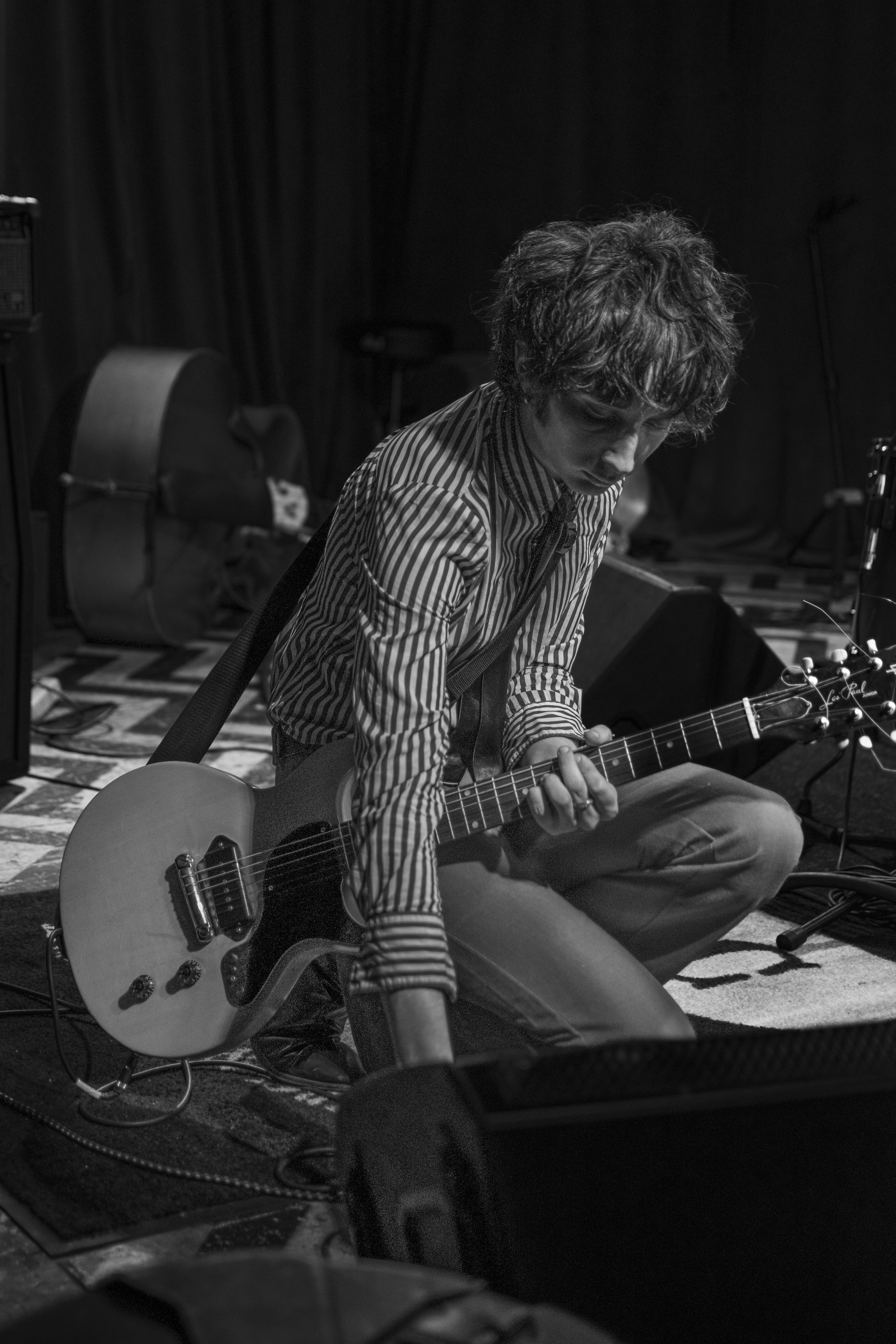
The Laughing Chimes
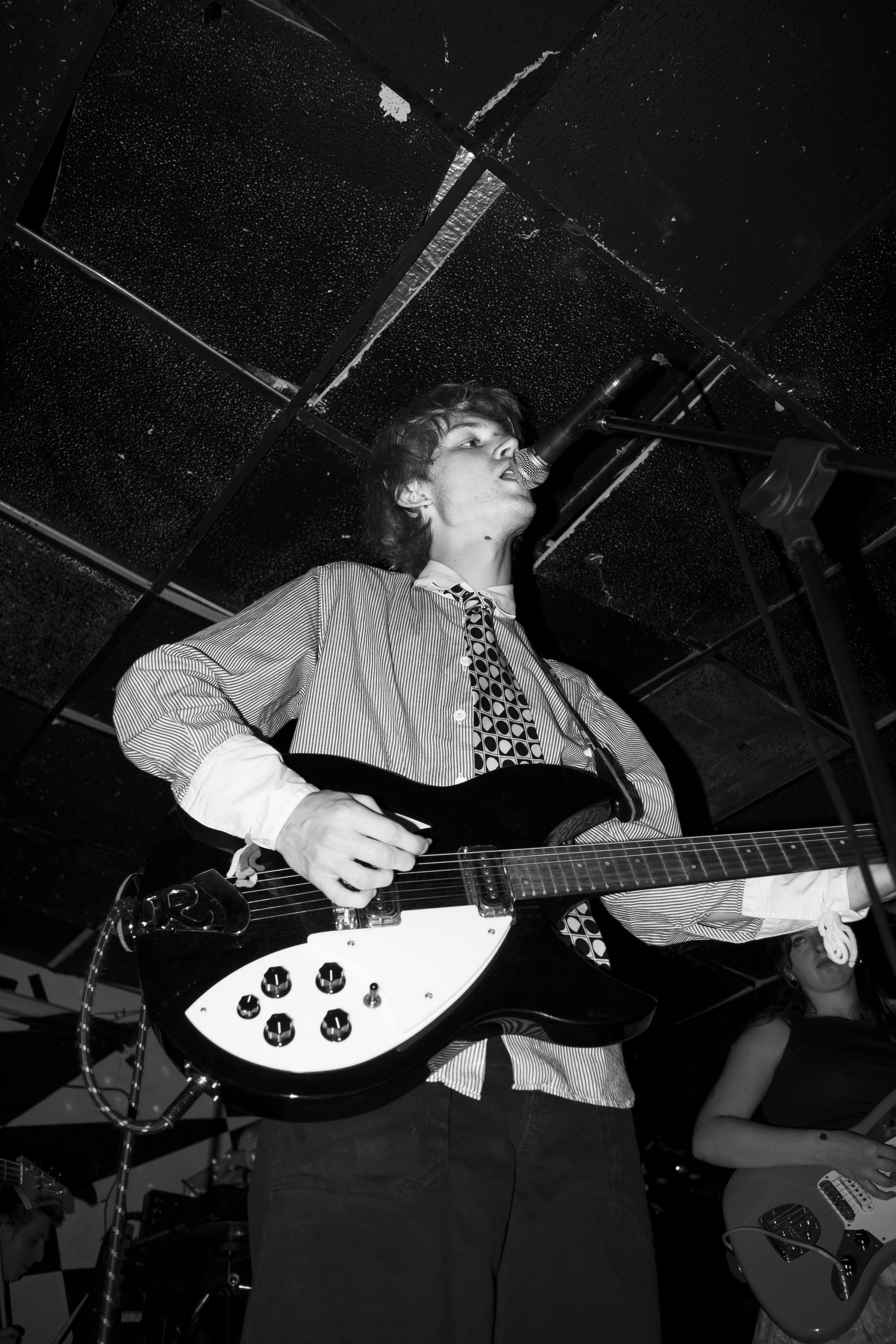
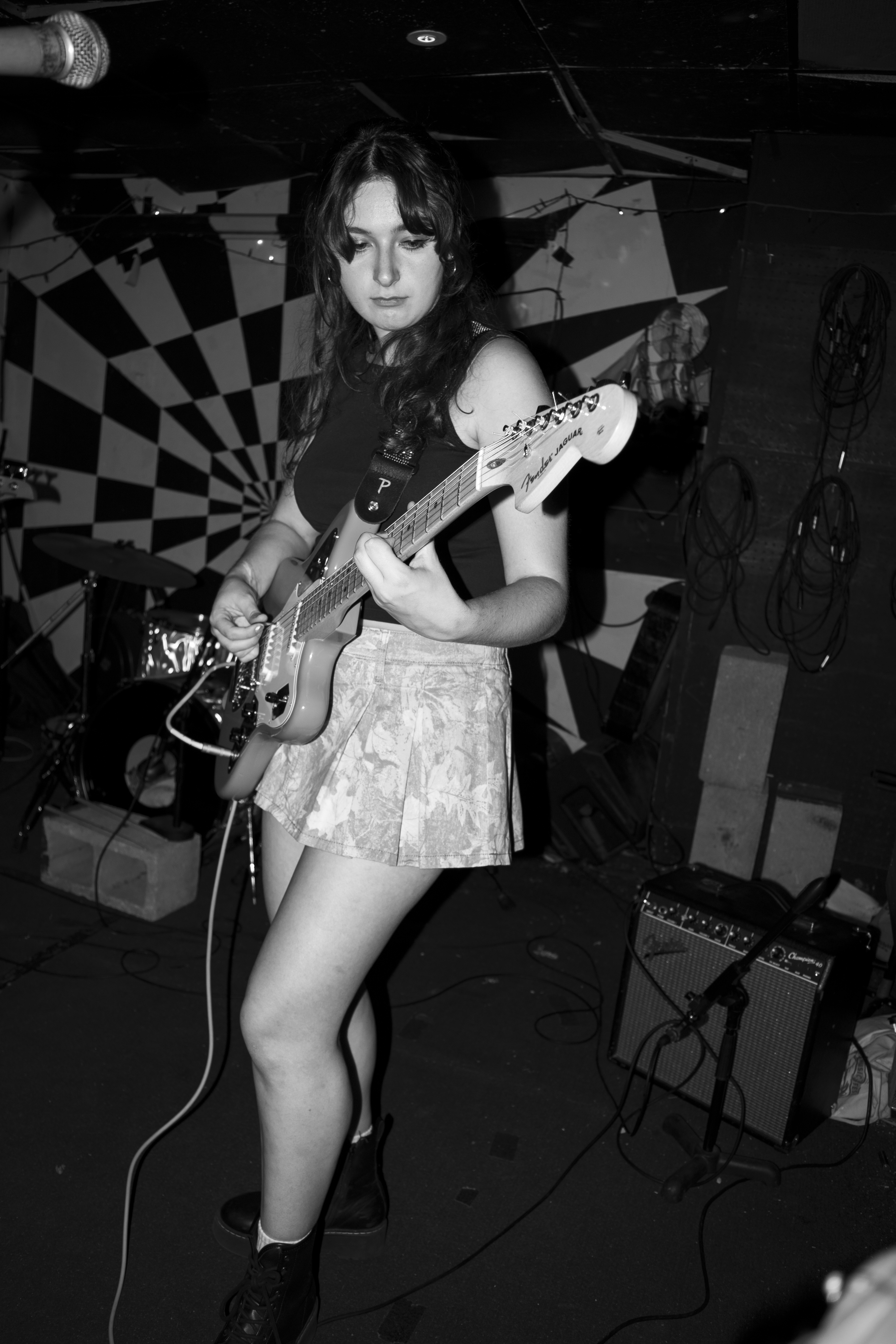
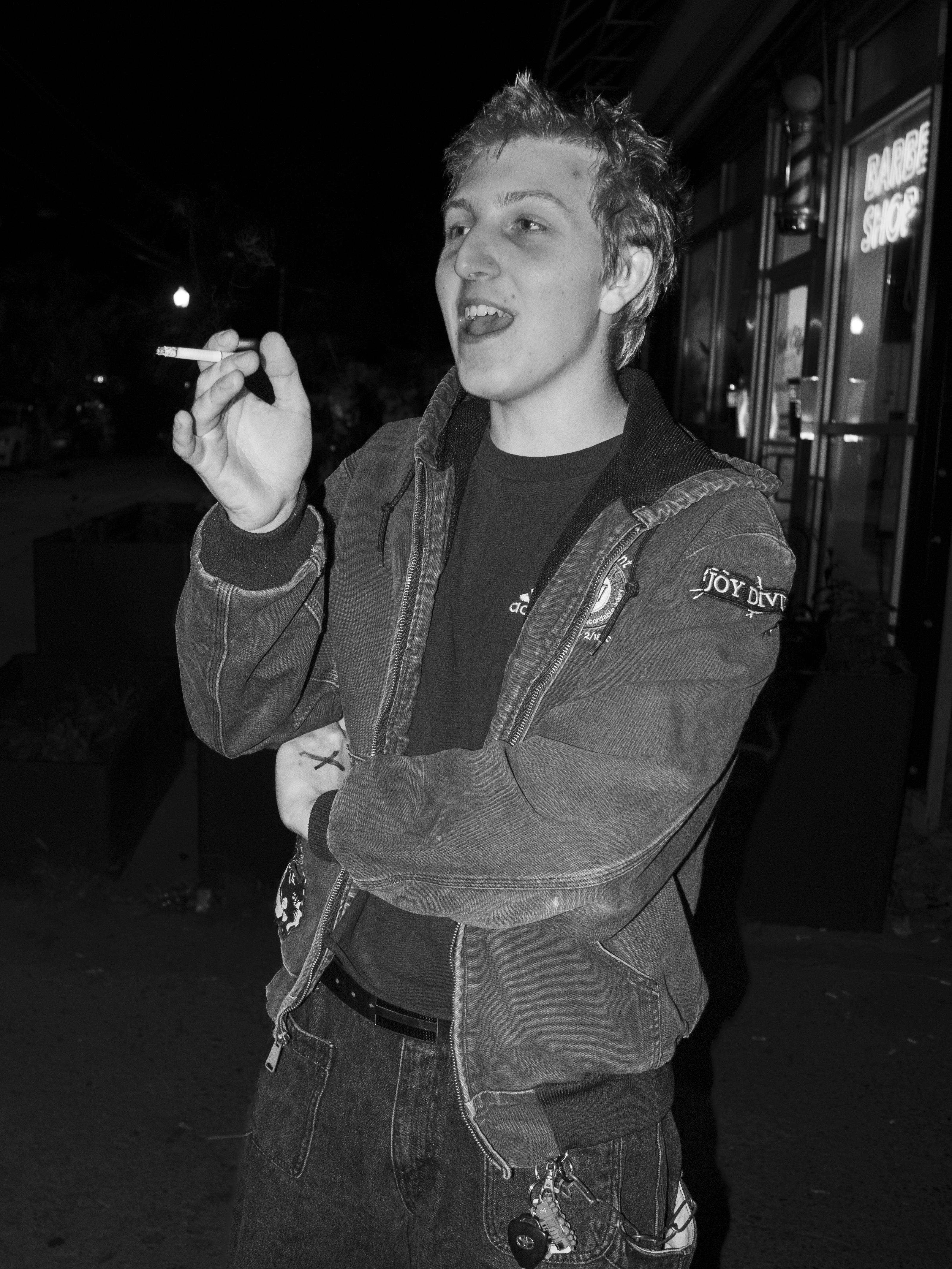
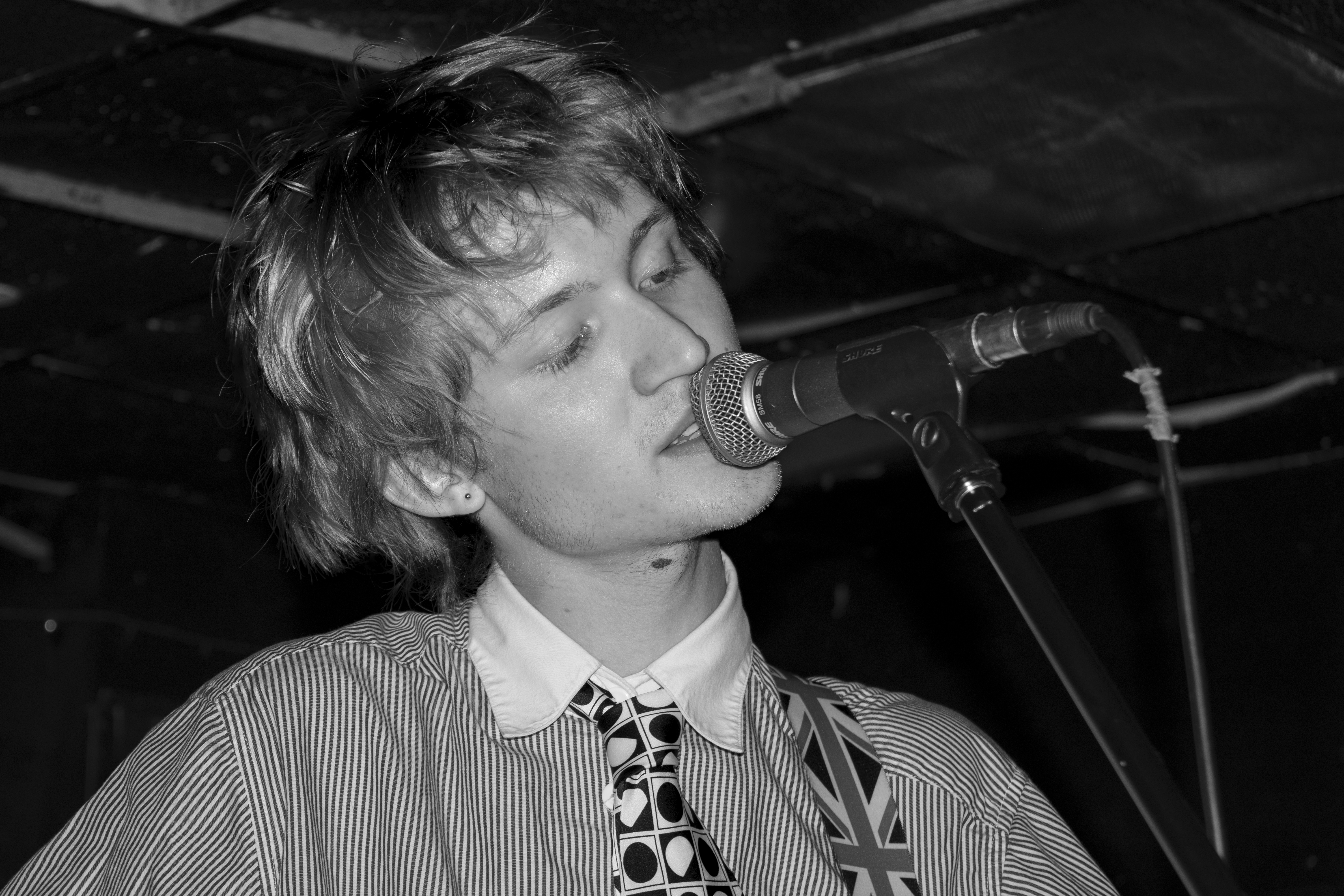
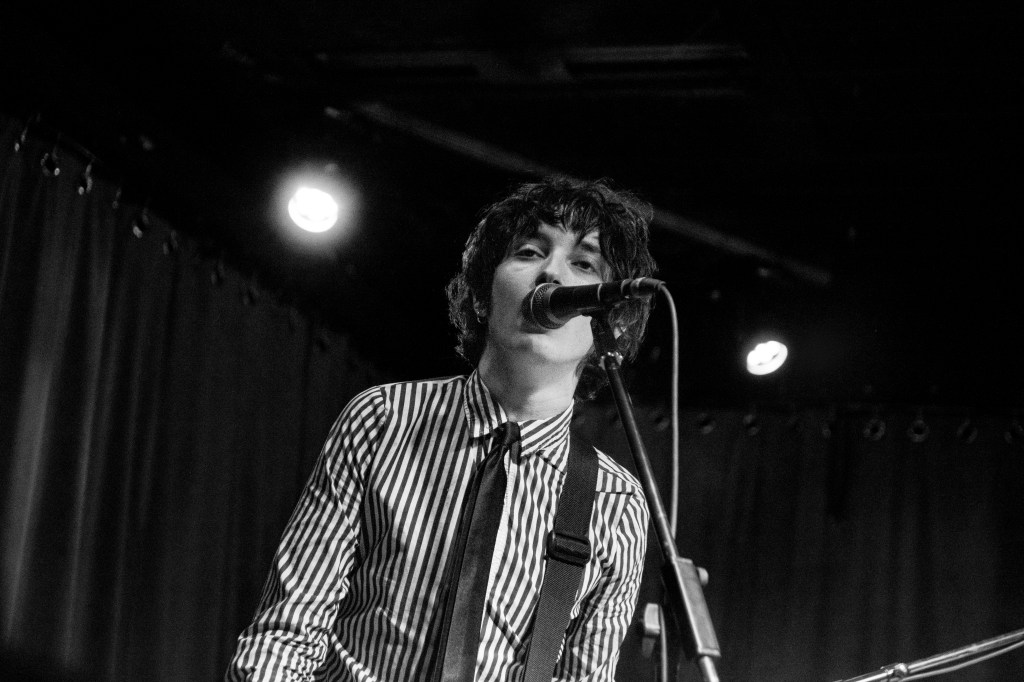
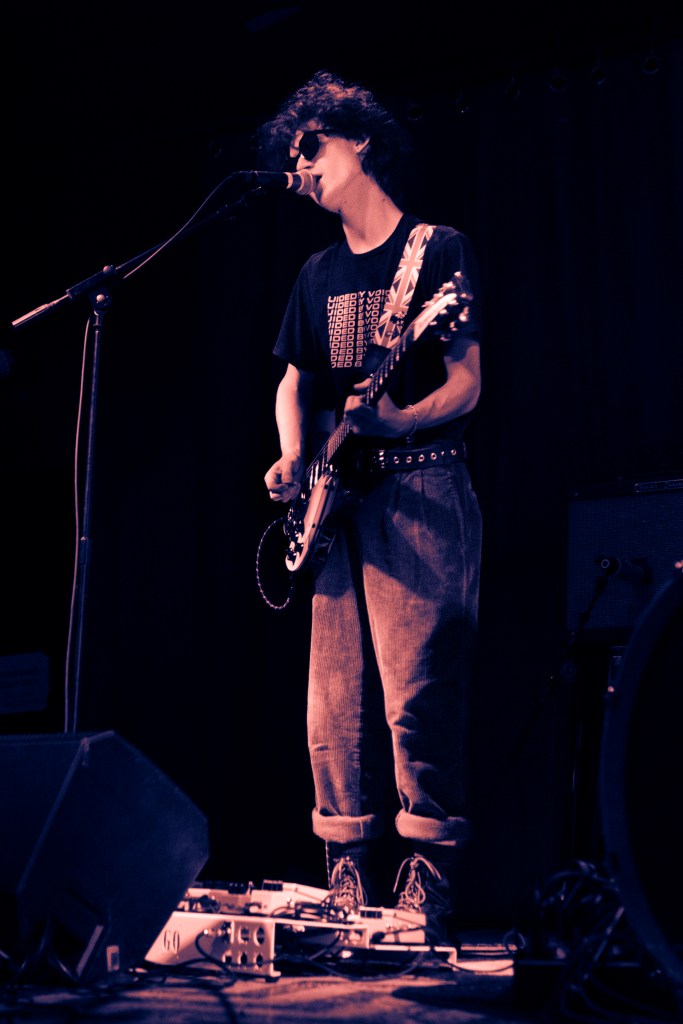
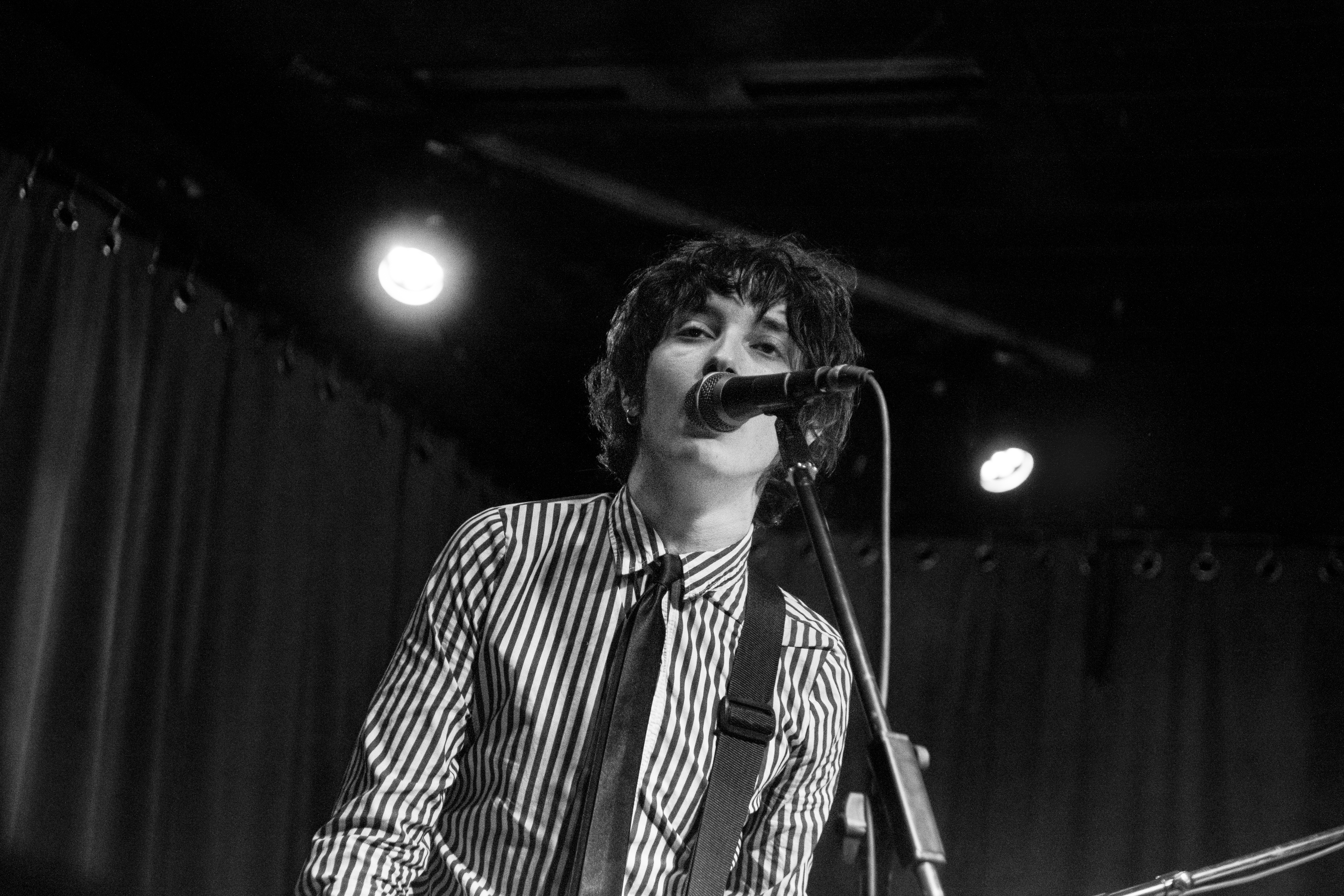
The Laughing Chimes are a local Ohio band that, until today, I regrettably had not heard of. Needless to say, they were amazing. As someone who spent much of my teen years listening to 80s post-punk and ruminating while driving my mom’s old minivan, they are exactly what the soundtrack to my junior year of high school sounded like. Their sound is gothic, melancholic, and jangly. Somewhere along the lines of The Smiths, The Cure, and Joy Division/New Order. It makes me so happy to see others my age inspired by this era of music.
Since the show, I have listened to some of their recordings, and they’re just as incredible as I remember them being live. “High Beams” sports a very Smiths-esque sound reminiscent of “Some Girls Are Bigger Than Others.” “Cats Go Car Watching” could be ripped straight off an 80s post-punk compilation, it’s a wonderful, dreamy, jangly track mixed to perfection such that it truly has the 80s sound. “Atrophy” is another great one, and these are sure to be in my rotation going into autumn 2025. If you ever get the chance, take a listen to their tracks, or catch them live–you won’t regret it. I will surely be catching them next time they are playing in the area.
PARKiNG
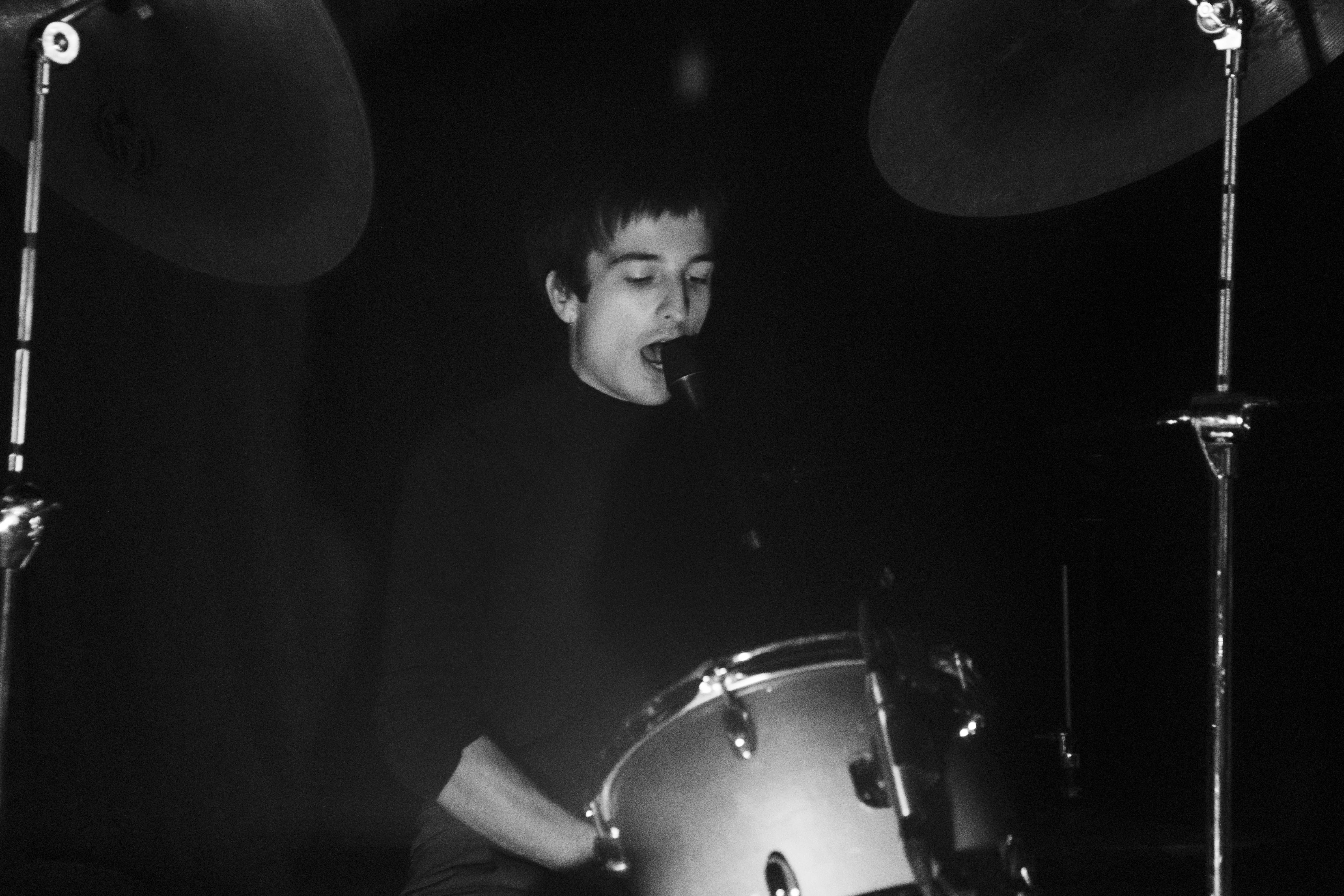
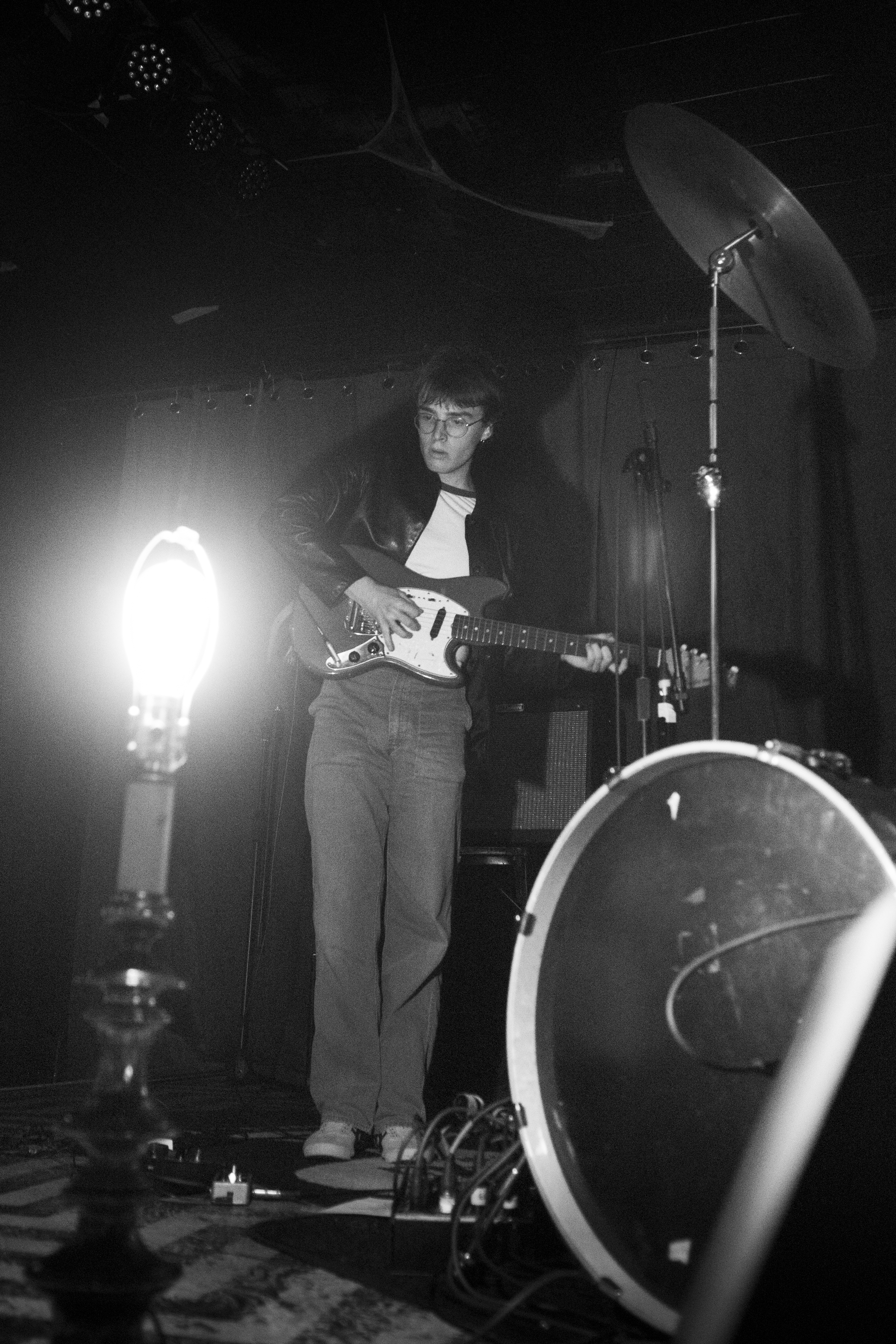
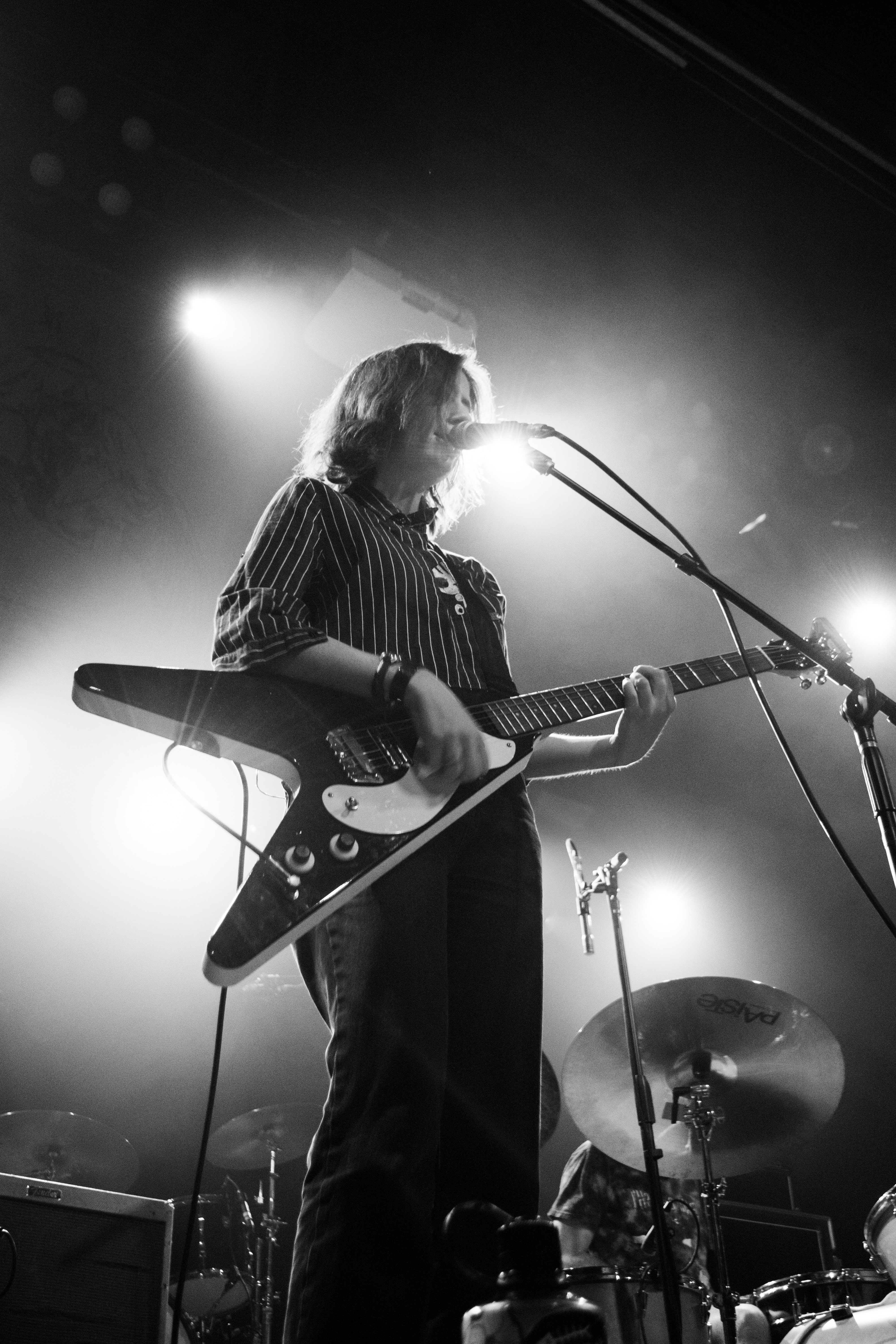
PARKiNG took me by surprise. After a brief break on the Ace of Cups patio, I came back in to a dimly-lit scene. A singular incandescent lightbulb illuminates the entire room, and the band dives into their impeccable set. They sound like if someone took the band Slint and crossed them with Dry Cleaning, and some of the aesthetics of Black Country, New Road’s album “For The First Time.” Once you see that a drummer doubles as a vocalist, you know the show is about to be killer. The post-punk sound seems to be a common theme here, and I could not be more thrilled. The band plays with dynamics and sound in such an interesting way–the bass is punchy and metallic, drums unwavering and full of might, guitar providing the perfect phrasing and complementation to the sound. The vocals oscillate between a seemingly pissed-off monotone monologue, to frantic, almost chilling shrills. An unexpected upright bass interlude really tied the artistic expression together. I have found myself listening to their new record over and over, and I highly suggest you give it a listen, you’ll be blown away.
Tracks of note include “Siren,” “Thirds,” and my personal favorite off the new record, “Mike Johnson Is A Mechanic.” If you took a break and listened to The Laughing Chimes and enjoyed it, I really think you’re going to unlock a whole new level of underground post-punk that will give you hope for the future of alternative music.
Lifeguard
Lifeguard, as expected, delivered with an incredible set featuring a plethora of songs from their new record. The band played many of these tracks, including “It Will Get Worse,” “A Tightwire,” and “(I Wanna) Break Out.” Of course, other tracks from their previous work such as “New Age (I’ve Got A)” were performed, and were as great as I expected them to be. Their live sound is just as refined as the recordings, and this makes their vision even more clear; Lifeguard doesn’t rely on post-processing and effects to make great music, they’re able to translate the unique timbre of “Ripped and Torn” to the stage with ease.
Kai, Asher, and Isaac have great chemistry on stage, and I have a feeling that their trajectory is going to be exponential if they continue working at this rate. I have been consistently impressed by Lifeguard, and I cannot wait to see where their sound goes next. If their first full-length record is any indication, big things are coming, and they are certainly a band to keep your eye on. The Chicago youth music scene is producing a lot of truly impeccable art, and Lifeguard is just the tip of the iceberg.
My only qualm of the show was with the audience rather than any of the artists. This is the type of music you can’t resist moving to, yet, somehow, the largely older audience seemed to be more keen on standing as still as possible. All of the bands that performed on this bill deserved a lot more energy from the crowd, and I wish that the younger demographic would have shown out. The youth music scene in Columbus is thriving, but often times weeknight shows can be difficult for turnout. Still, there was plenty of dancing and movement in the crowd from those that did attend, and between photo bursts I was sure to partake.
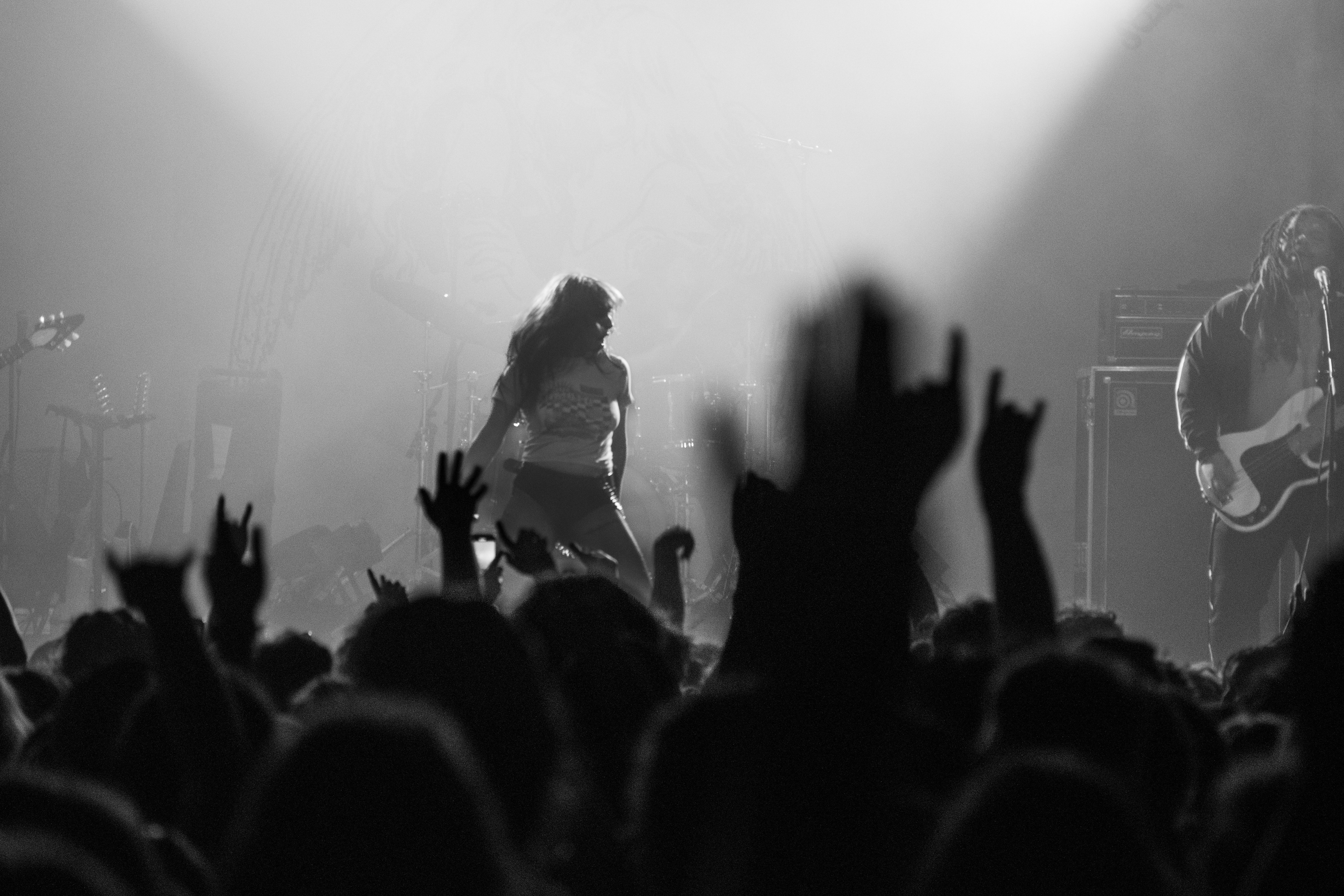
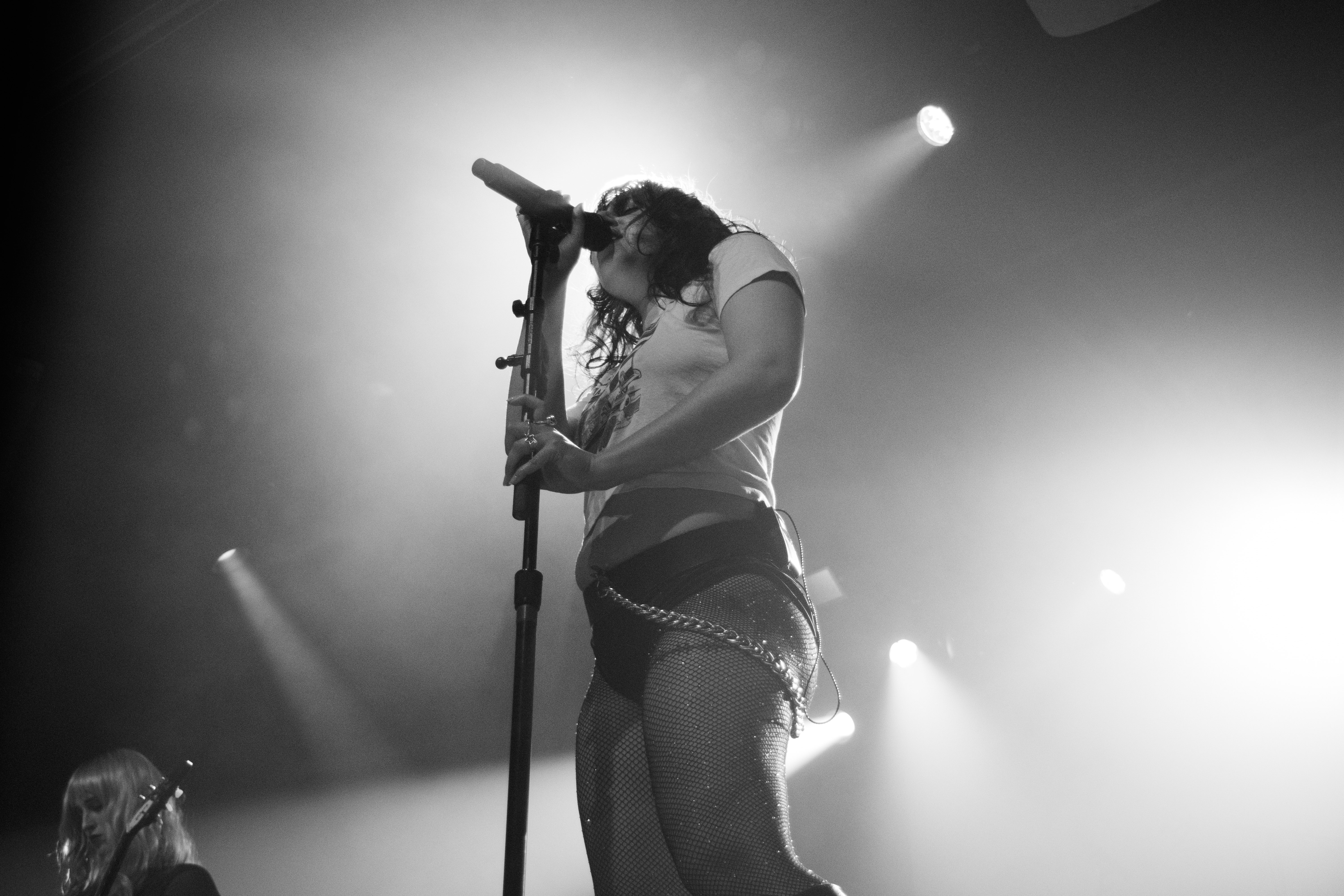
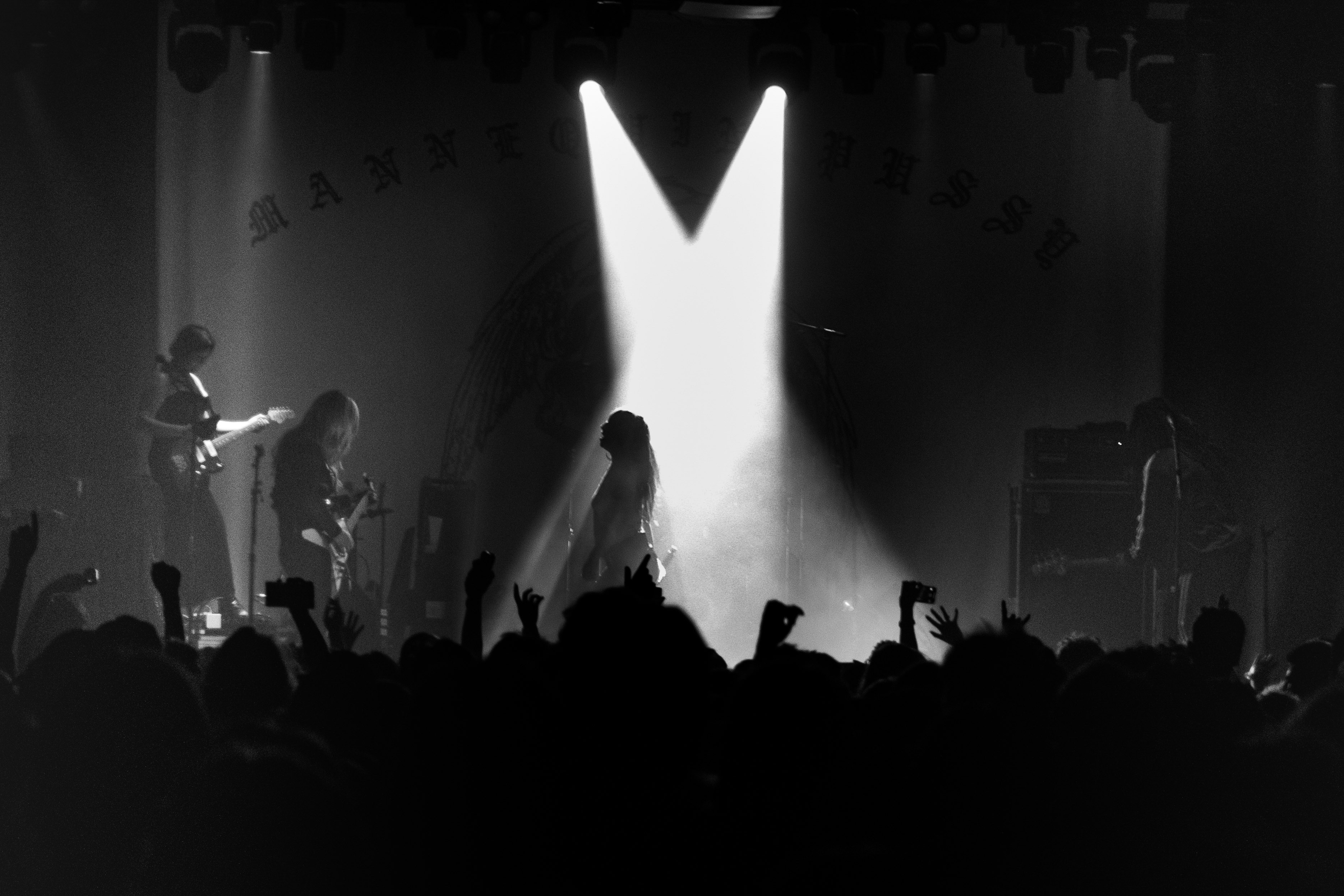
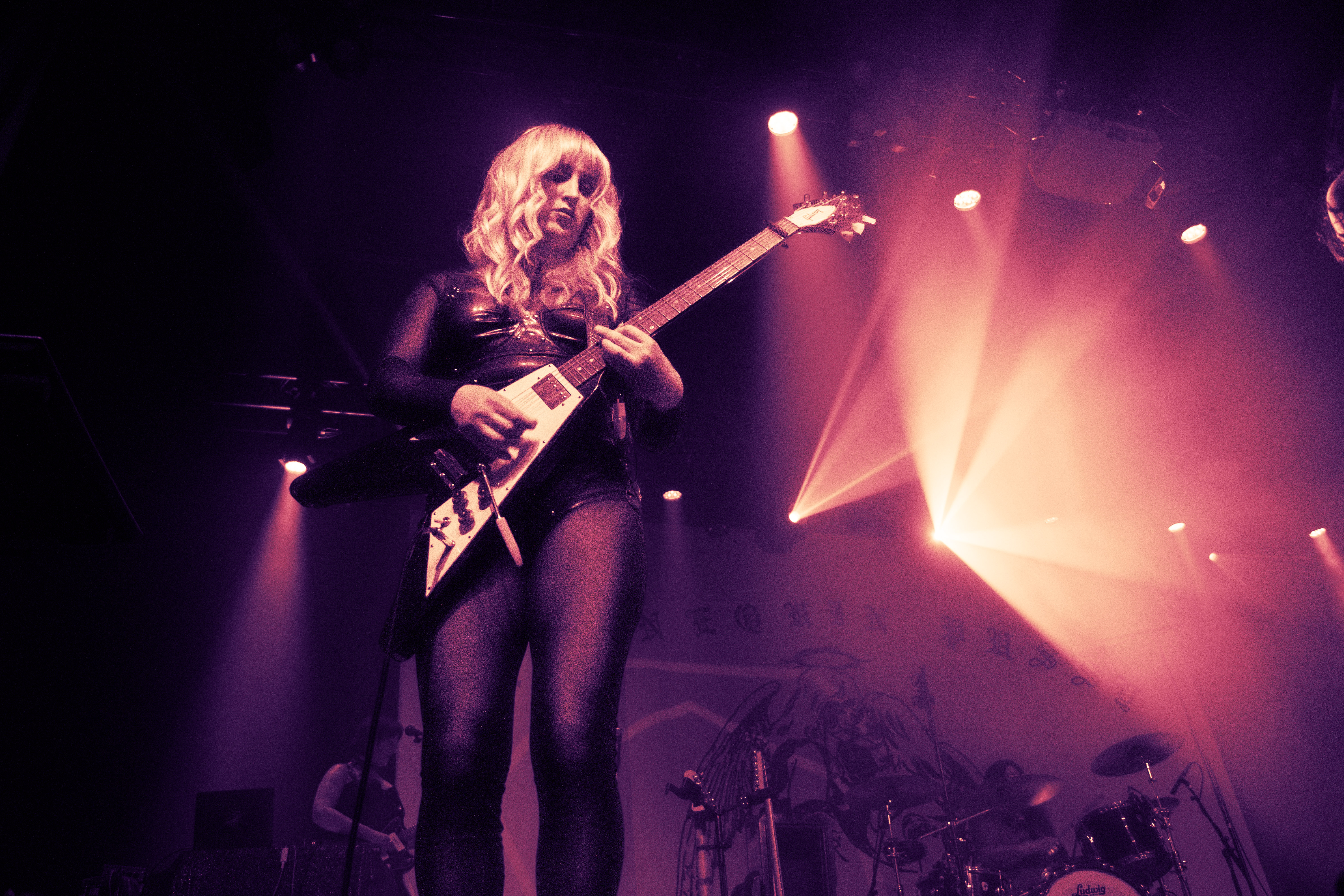
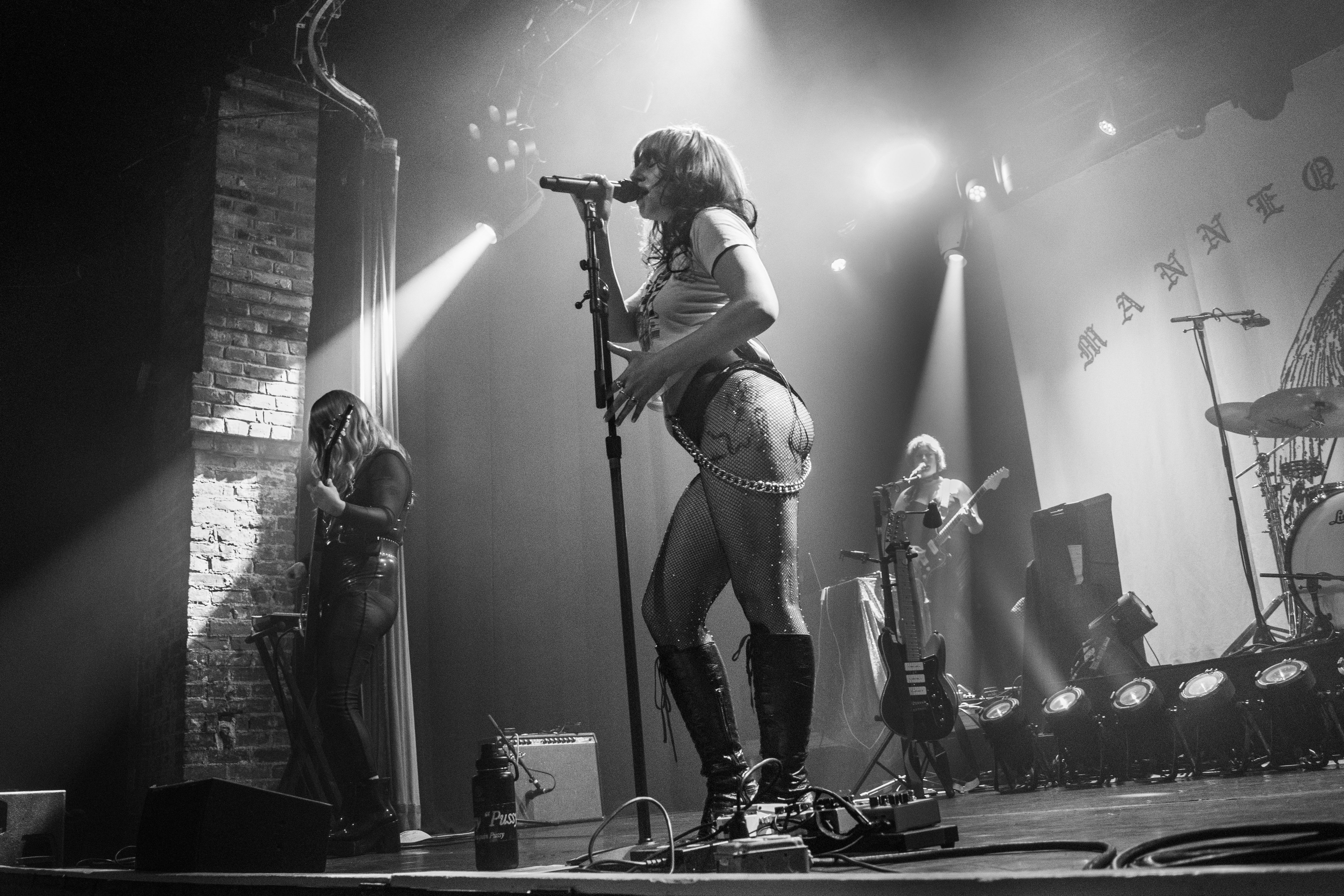
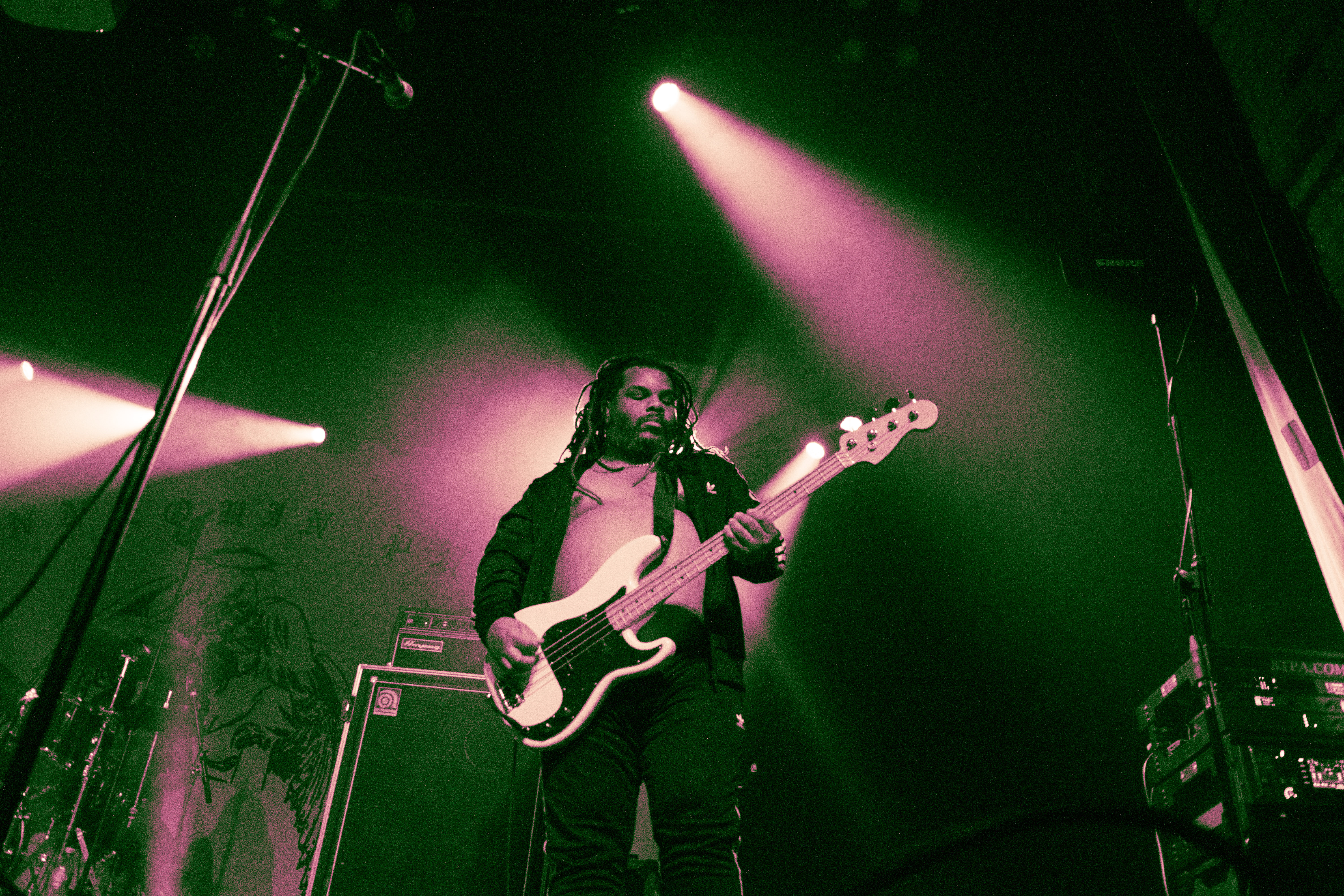
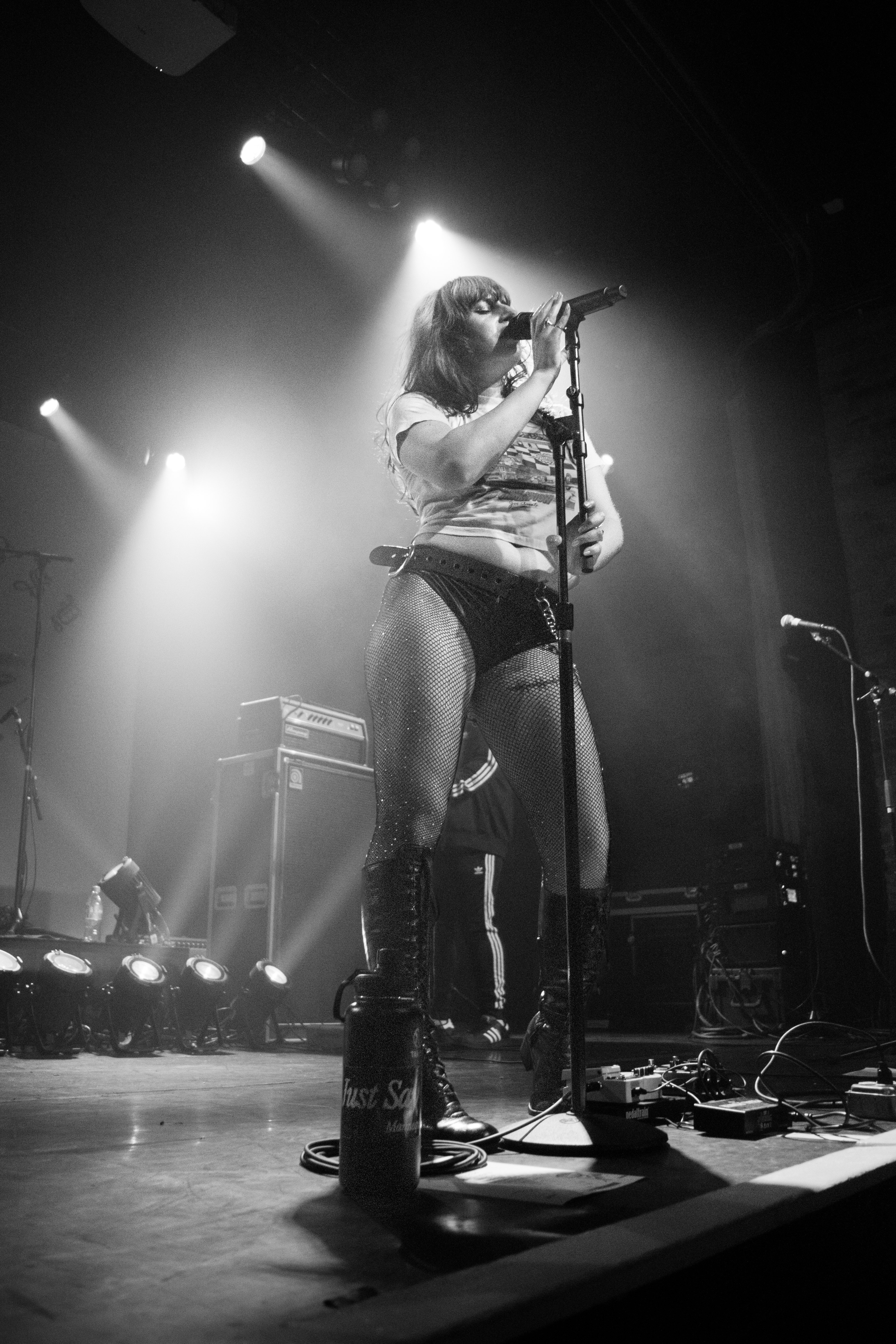
Mannequin Pussy is arguably one of the greatest band names. It’s everything a punk band aspires to be–it’s shocking, it captures your attention, and simply put, it’s badass. From the controversy behind their name, to the theft of some $50,000 worth of gear while on tour in 2021, Mannequin Pussy, despite the odds, never threw in the towel, and have since managed to take larger stages as each year passes. I was thankful to have the opportunity to finally catch them on tour in Cincinnati at Bogart’s, and they did not disappoint.
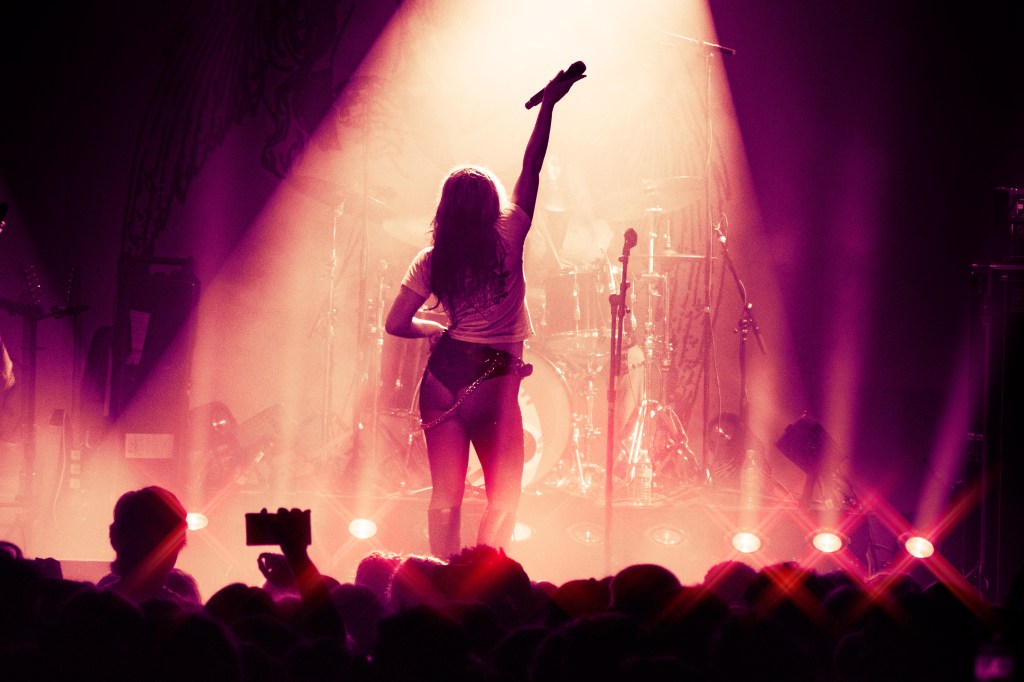
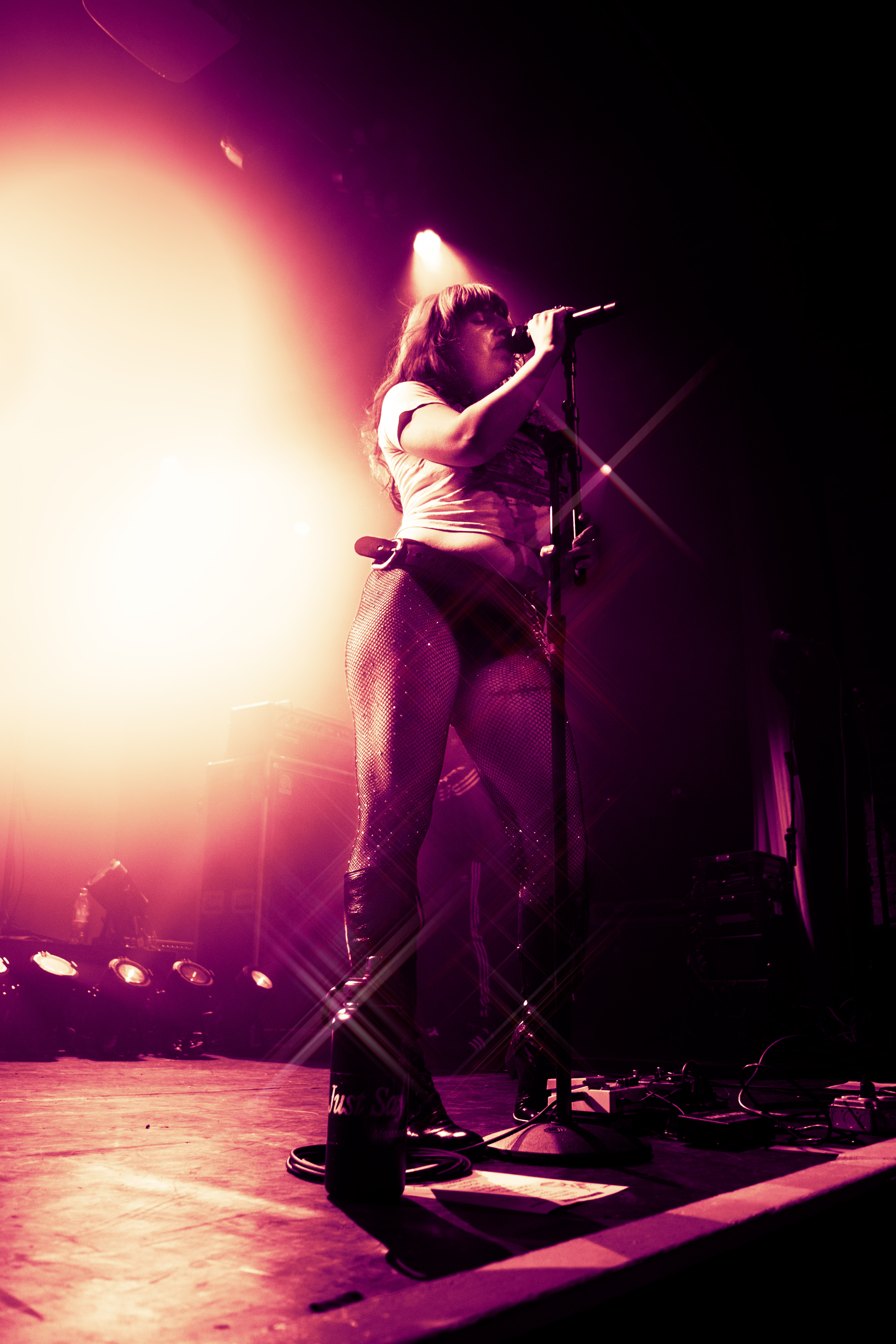
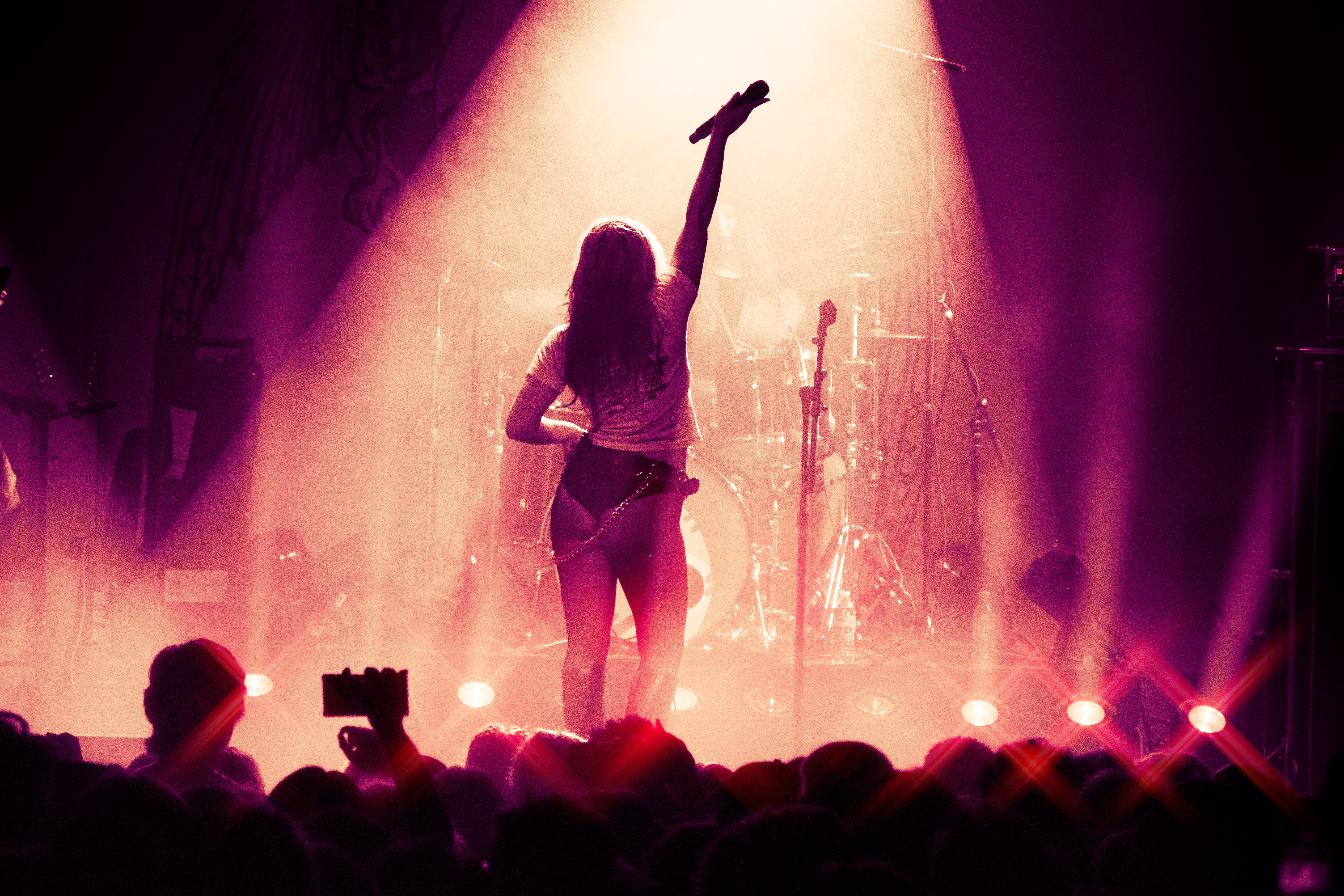
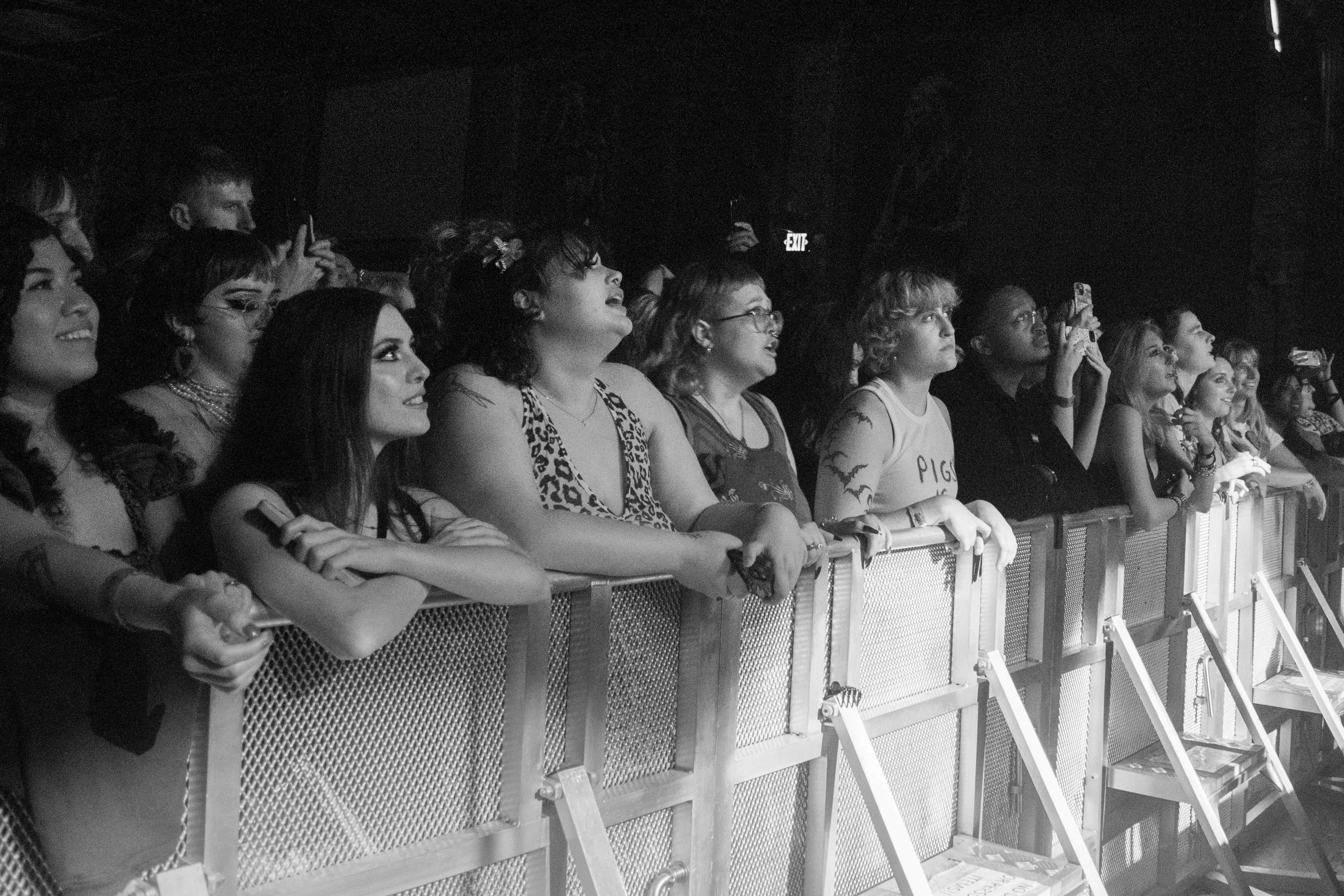
Missy is an incredible performer, and Mannequin Pussy is what America needs right now. In a time where so much is uncertain and so much collective pain is festering, releasing this energy is important to maintain an iota of sanity. The stage is Missy’s outlet, and it’s easy to see why the band has grown a significant fanbase. During one of her monologues, Missy made several notable statements surrounding the current political climate, the band, and the collective anger of living in a society that devalues those outside who aren’t straight, white men. “I think you all have suffered from the rage that lives in your body every fucking day of your lives. Like us, you too feel sometimes and don’t know what the fuck to do with it. You feel the anger and rage pulsate in your body, because every single day, especially in this country, especially under capitalism, they try to disconnect us from our empathy…They infantilize our rage and tell us it’s something you’ll grow out of when you grow older. But, the truth is, my rage has grown every fucking year I have been alive.” Missy raises her microphone, and the audience erupts into cheers. Seeing such a receptive audience of nearly 1500 people cheer gives me hope for the future. Despite the attempts to make us feel helpless through legislating hate, resistance is everywhere. Personally, I enjoyed the primal scream–it felt good to let out a guttural, throat-irritating yell that nearly triggered my gag reflex.
Mannequin Pussy put on an incredible performance and did what many artists are afraid to do–speak up. In the words of Missy herself, “if you’re the type of person who doesn’t think politics belong in entertainment, you’re gonna fucking hate this.” The show was full of positive energy, and most importantly, people of all ages and backgrounds letting go and embracing the beauty of live music. Their musicianship was impeccable on all fronts, and they are a group that you do not want to miss. My favorite songs from the night included “Drunk II,” “Loud Bark,” and “Romantic.” The setlist covered most of their discography and gave a stellar synopsis of the band’s dynamic, eclectic sound.
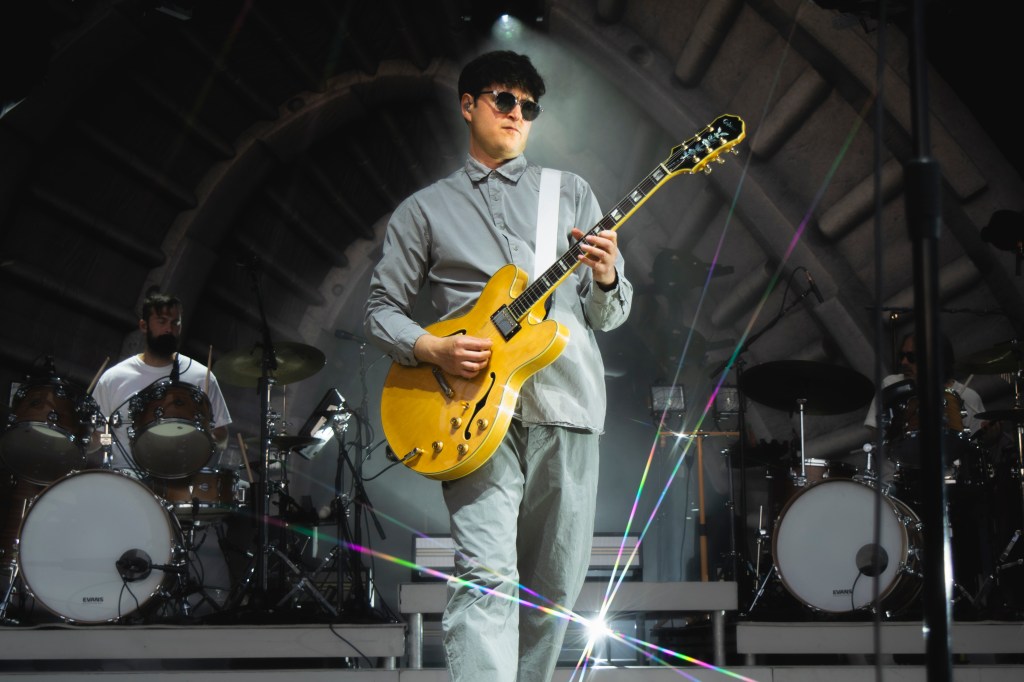
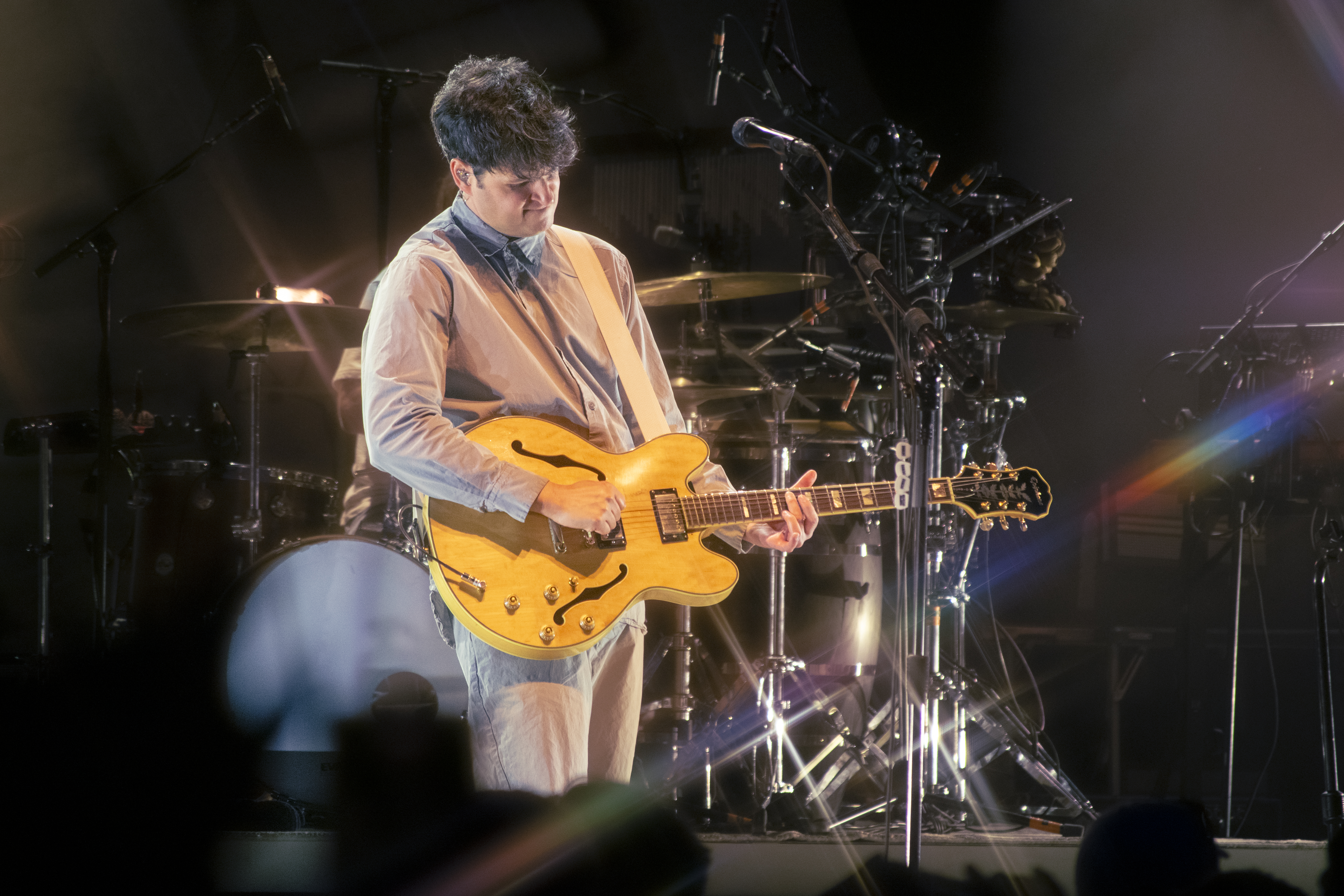
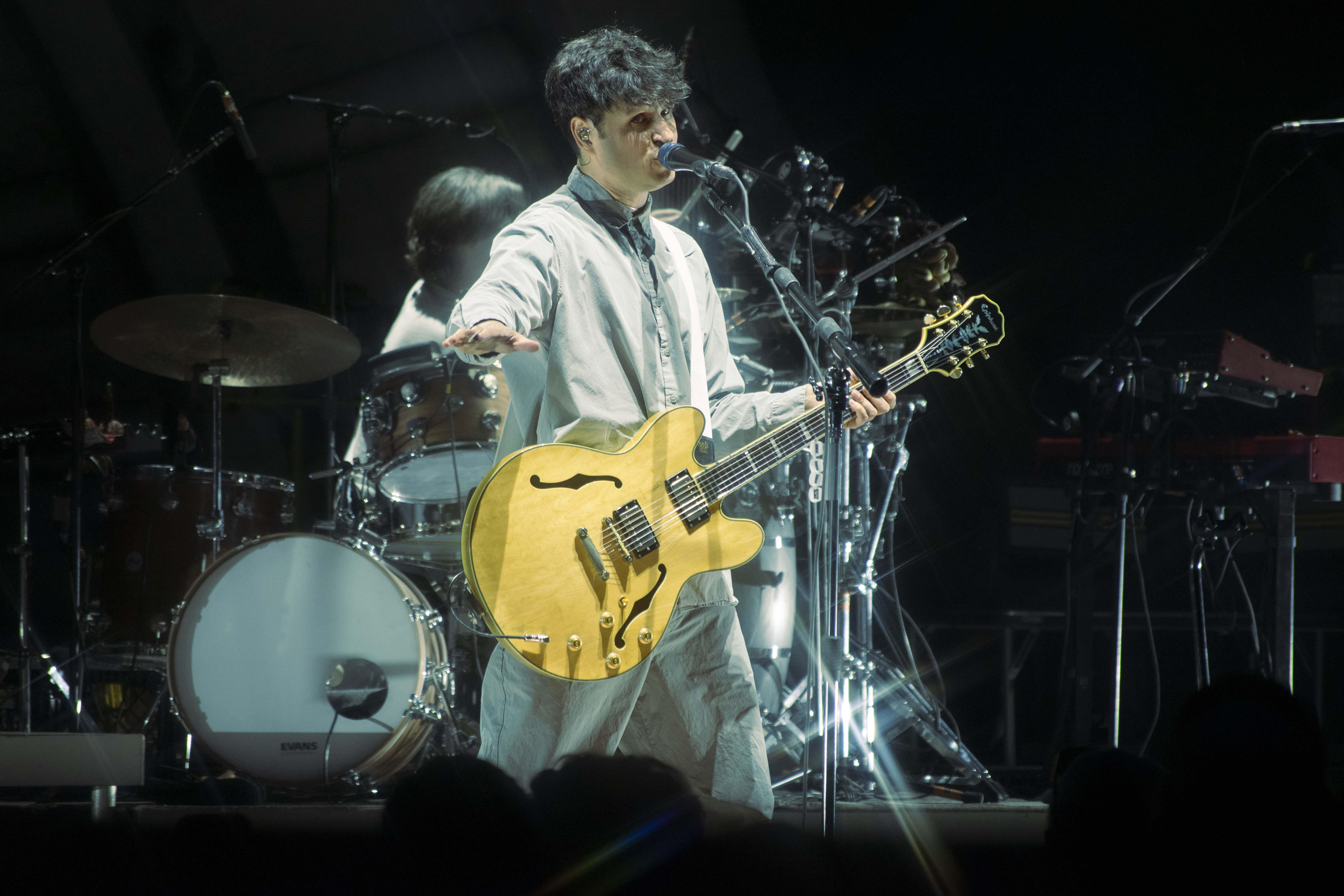
For the first time in over a decade, Vampire Weekend returned to Columbus on the second leg of the Only God Was Above Us Tour, corresponding to the title of their latest LP. The band was joined by the incredibly talented Brooklyn-based post-punk outfit Geese, whom I had the pleasure of photographing last year during a performance at A&R Music Bar here in Columbus.
Geese’s live performances often outshine their already impeccable studio recordings. The group knows how to work a stage, and seeing them at a much larger venue really showcased their abilities. The group performed most of their popular tracks, such as “2122” and “3D Country,” which were well-received by the crowd. Frontman Cameron Winter hinted at an upcoming release by the band, which I anticipate will likely be one of my top albums for 2026. Of the nine songs performed, four were unreleased. From what I heard of their new work, Geese is showing no signs of slowing down anytime soon, and we cannot wait to see what they have in store for us next. Geese has grown substantially in popularity since I last covered them, and their success is much deserved.
Vampire Weekend have always been one of my favorite bands–one of my first physical records in my collection was Modern Vampires of the City, which I played endlessly on my Crosley suitcase record player. I had the poster of the album cover on my wall until I left for college. I have wanted to see the group for a very long time, but have always been unable to make it happen. What better time to see them than now?
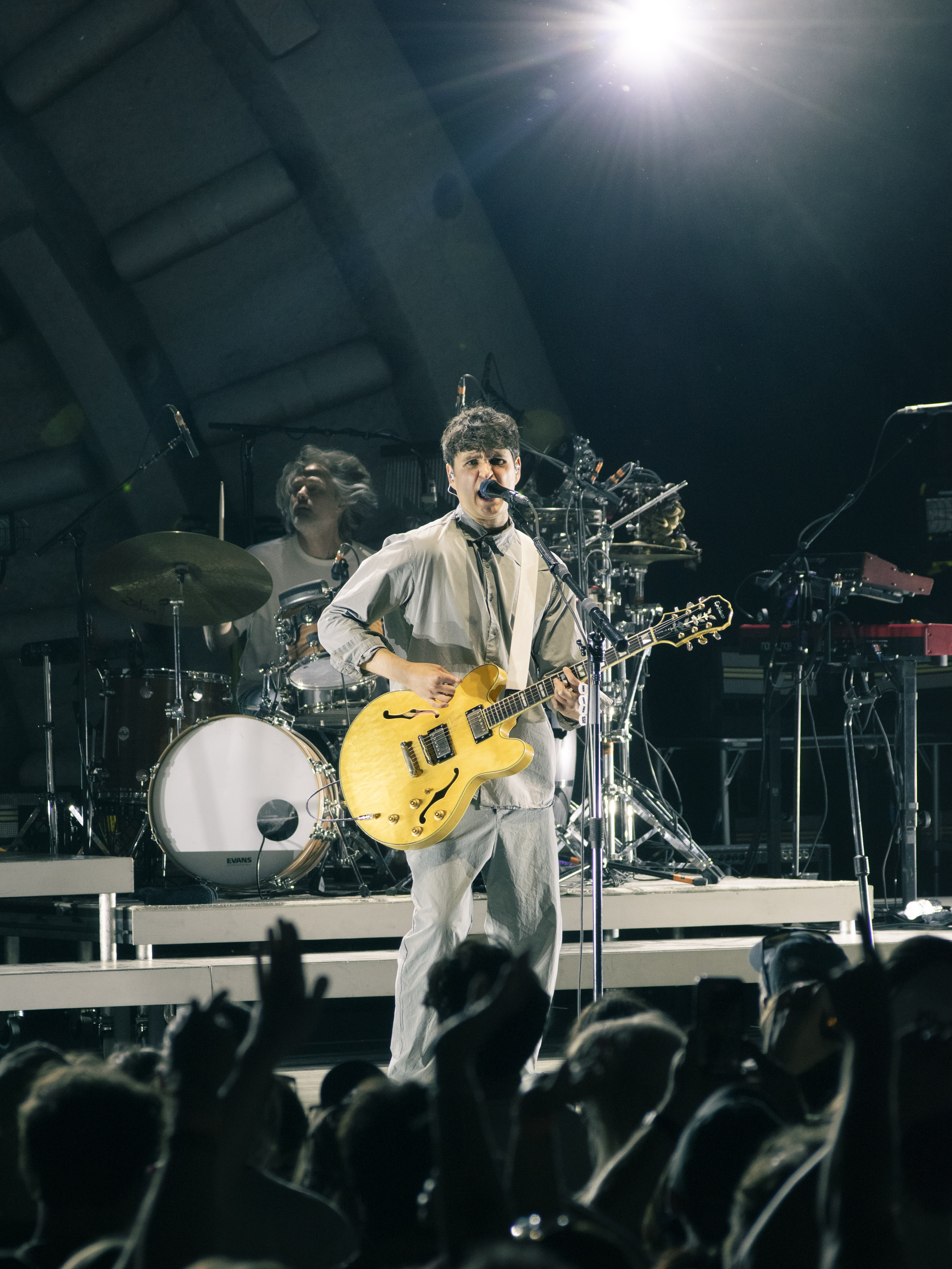
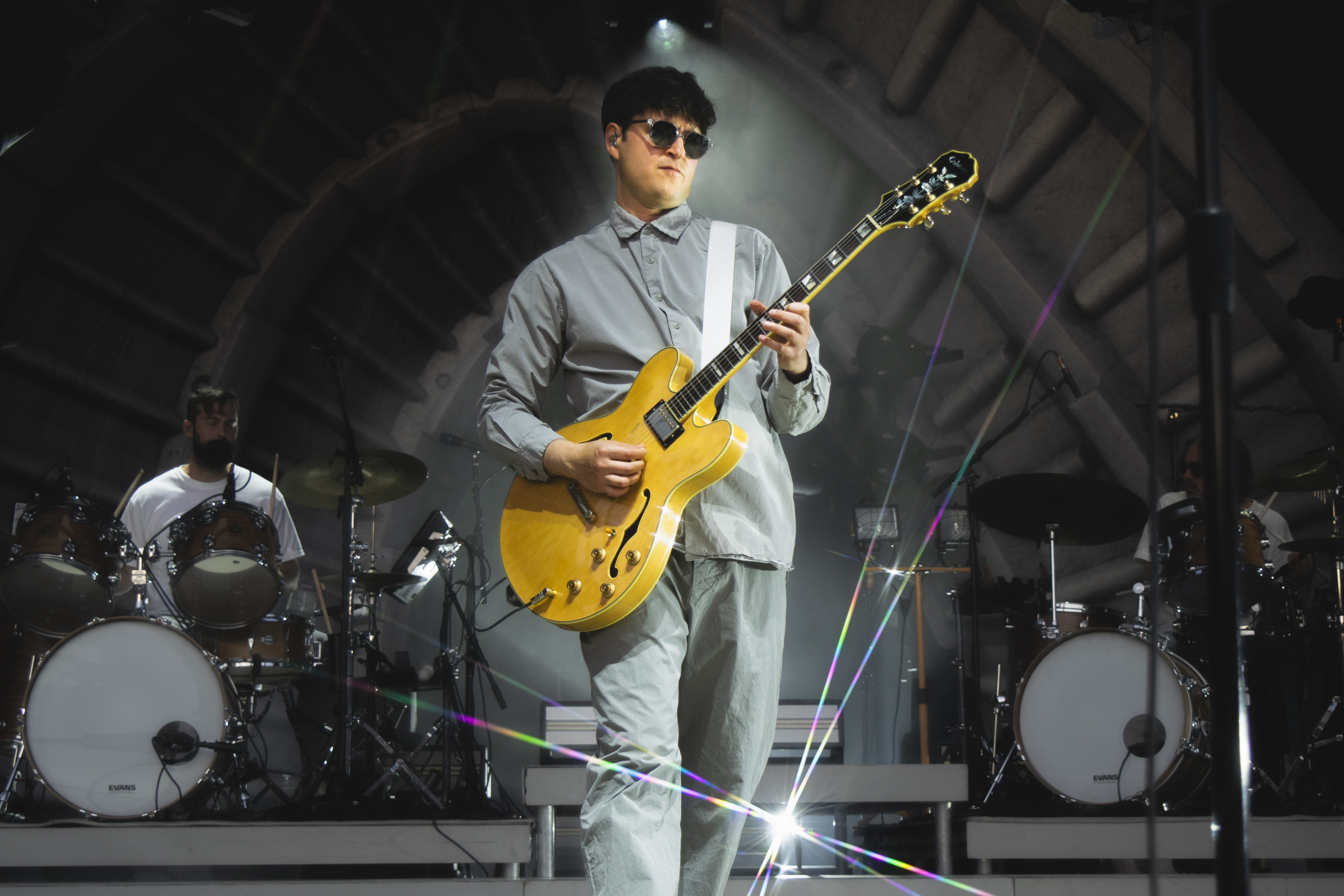
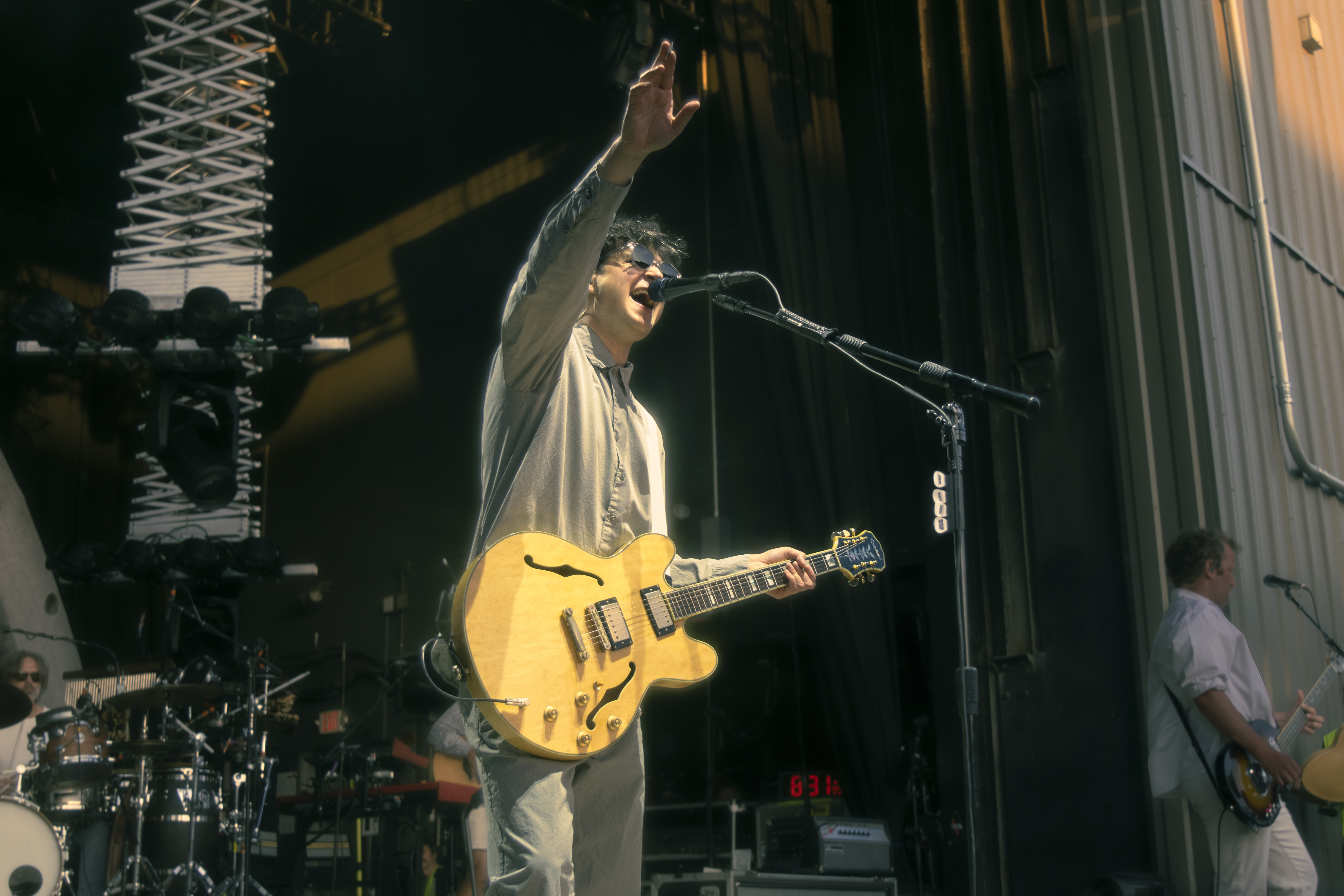
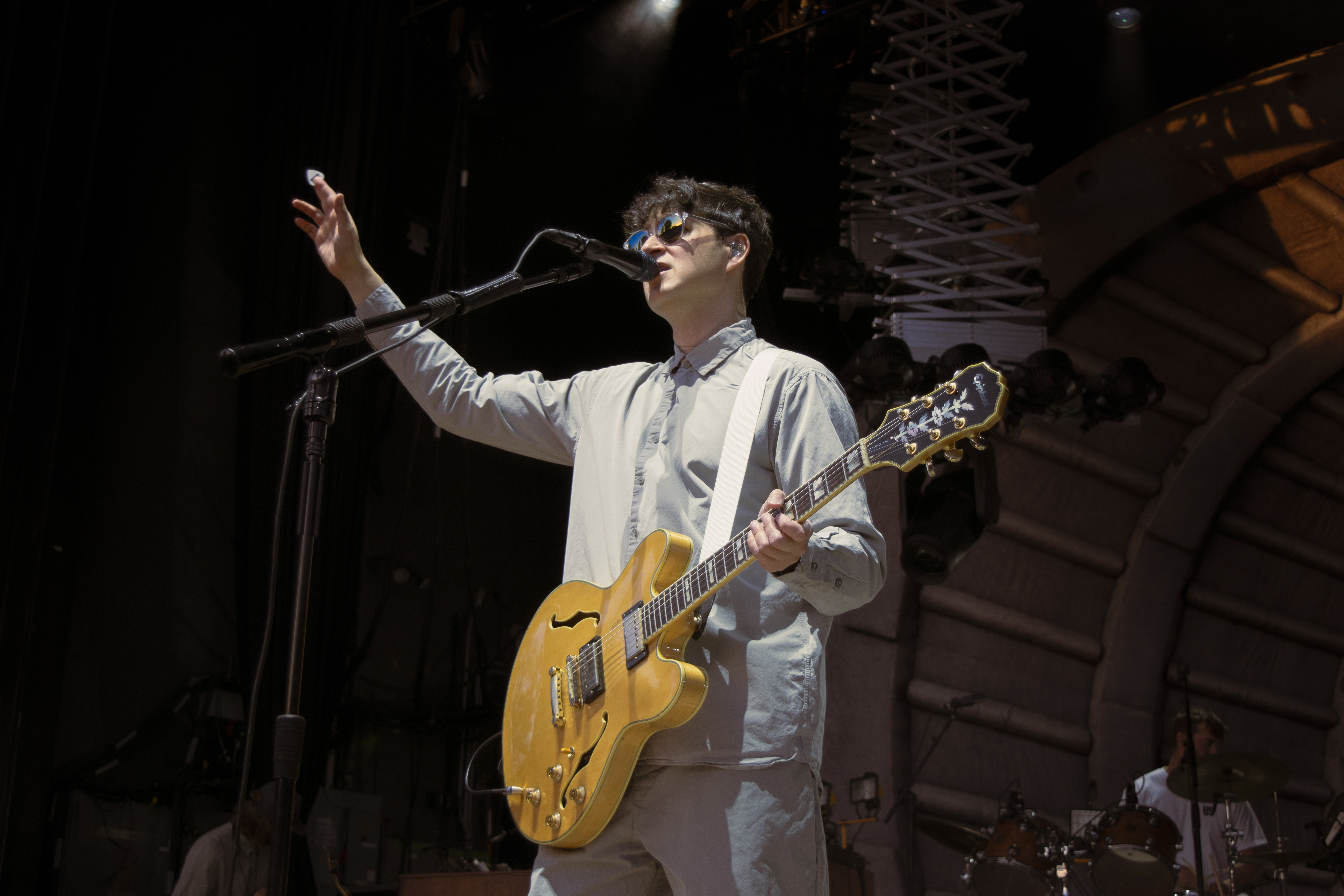
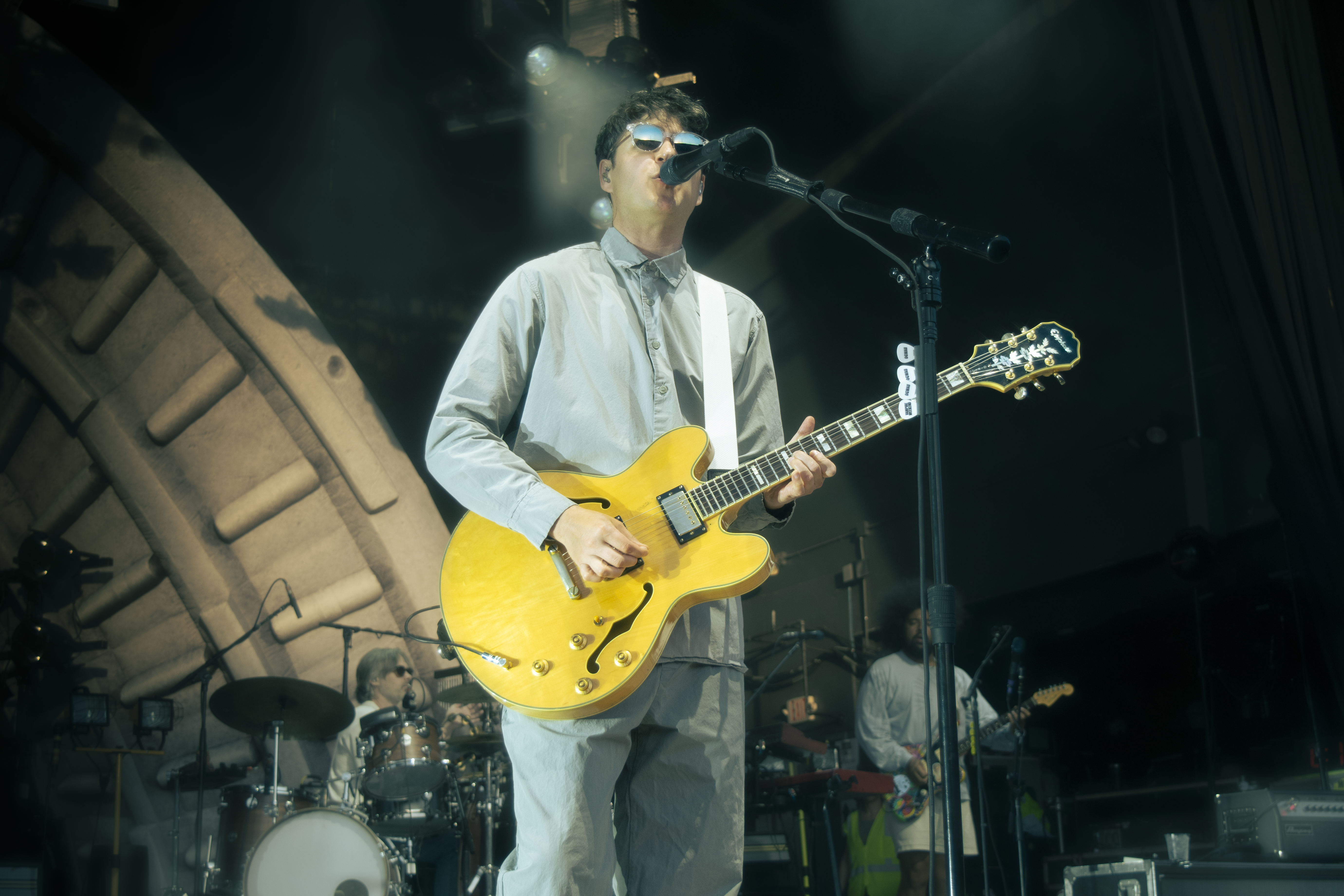
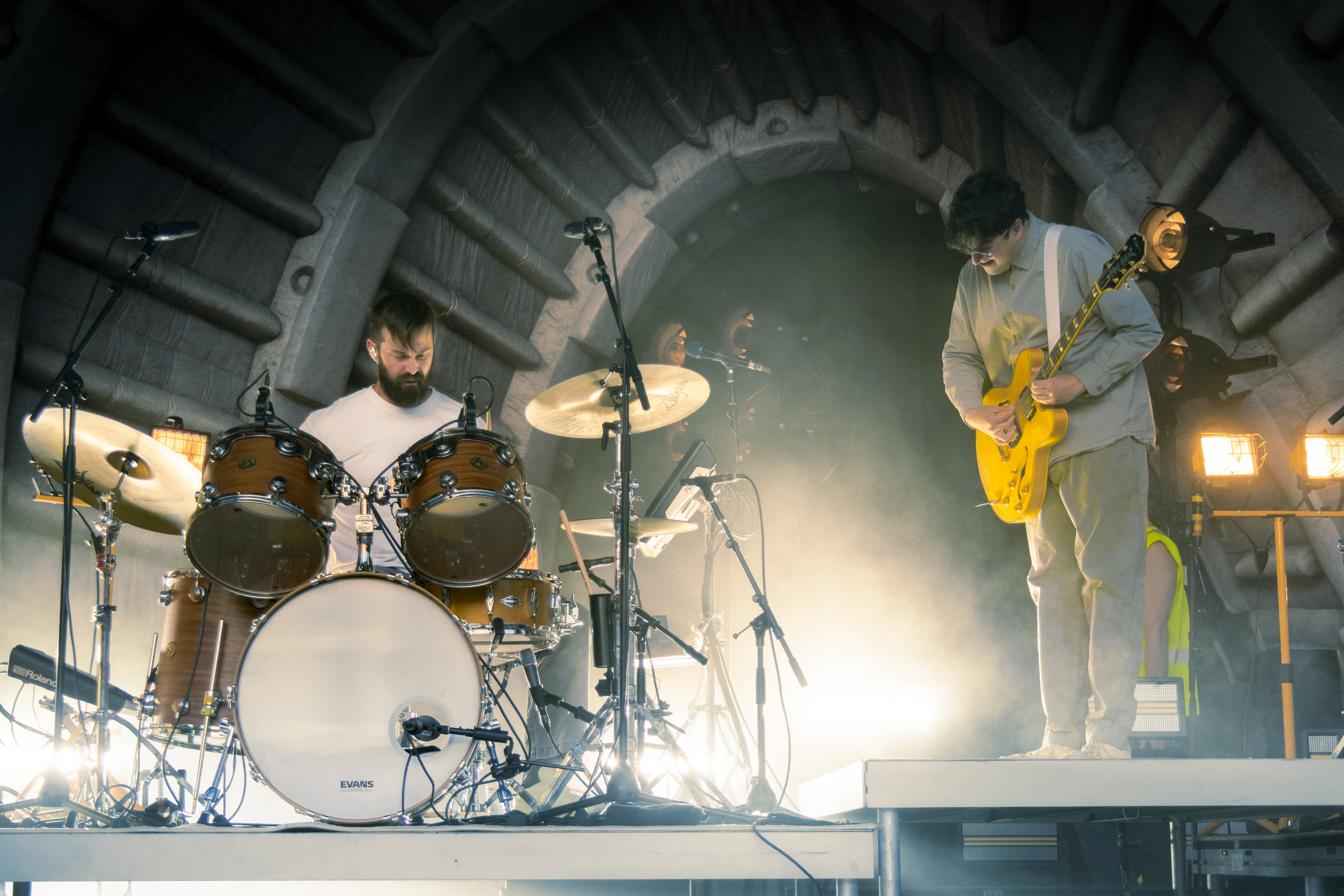
The band opens with “Campus” off their self-titled record, setting the energy for the rest of the show. Chris Baio’s bass tone is great, his dance moves quirked-up as ever. Immediately, I am blown away by the band’s performance. They sound almost identical to the recordings, and maintaining this throughout a 90-minute performance is quite the feat. The only other time I have seen two drum kits live was during local Columbus band Nodes’ performances. Vampire Weekend incorporates the industrial aesthetic everywhere from the stage props to the high-vis vests worn by the crew, which I found to be a great touch to the atmosphere.
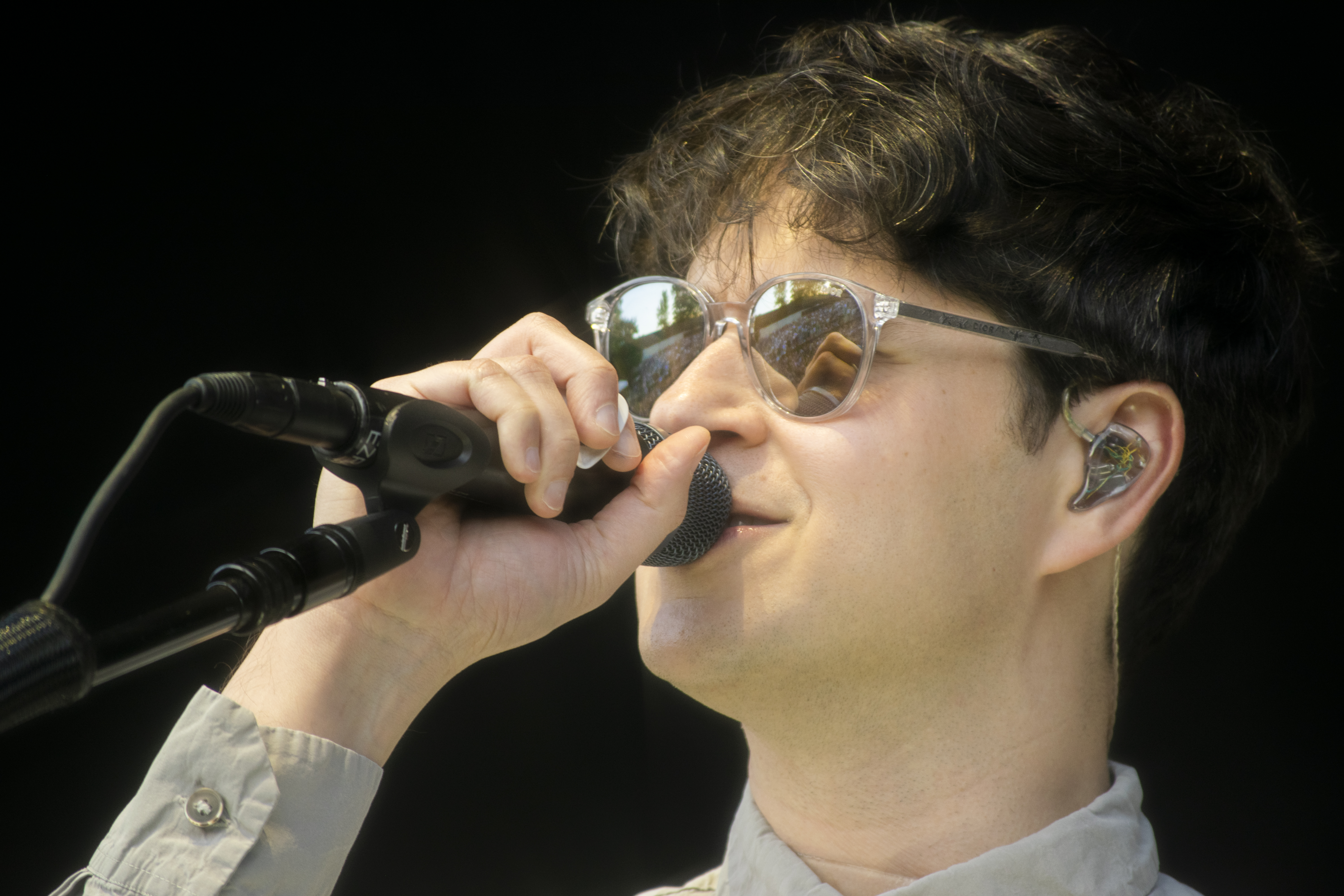
Baio’s fingers somehow aren’t cramping after “Holiday;” the bassline is unwavering and perfectly intonated. The set continues, arriving at “White Sky,” which admittedly, I thought Ezra Koenig would have to alter the song with the high notes in the chorus. I was completely wrong. He hit those notes with perfect pitch, and this was arguably one of my favorite songs of the evening. Other notable tracks of the night were “Cousins,” “Diane Young,” and everyone’s autoplay favorite, “A-Punk.”
I feel like I may have slept on OGWAU as a record. The live performance of songs such as “Prep School Gangsters” and “Pravda” encouraged me to put this back in my rotation, and now I’m kicking myself for not blaring it in my car sooner. It’s perfect summer driving music, the light, effervescent melodies and choruses are unmistakably Vampire Weekend. If you haven’t given it a listen yet, I recommend it. The song titles are almost painful to say out loud when discussing the album with other people, but if you can get past that, you are in for a wonderful listen.
Vampire Weekend uses their encore slot to attempt cover songs requested by the audience. As soon as the band comes back on, fans raise homemade signs with requests everywhere from “Gary Come Home” to “Steely Dan.” Notable attempts include B52’s “Rock Lobster,” Jane’s Addiction’s “Been Caught Stealing,” and A-Ha’s “Take On Me.” Of course, no VW show would be complete without “Walcott” to close out a night of incredible music.
Vampire Weekend has been on my concert bucket list for well over a decade now, and I can say confidently that any post-concert depression is overshadowed by the incredible performance put on by both Geese and Vampire Weekend. This is not a show you want to miss, and if you can’t make it this time around, I promise, it is well worth the wait.
Alabama Shakes reunited in December 2024 for a surprise performance for the first time since the announcement of their hiatus in 2018. As the group prepares to release new music and embark on their first tour in nearly a decade, we have decided to revisit the group’s sophomore album, “Sound and Color,” released ten years ago to critical acclaim.
Truly, it’s hard to believe it’s been this long since this record came out. I remember the day it came out, seeing it plastered on the front of the iTunes store. Now, after several years of lead vocalist, Brittany Howard, pursuing a solo career, Alabama Shakes have chosen to return to the scene, and we could not be any more thrilled.
Title track, “Sound and Color,” opens with this hypnotic vibraphone introduction, slowly painting the foundation of the record, adding in shuffled drums and keys. “Sound and Color” repeats through the outro, with Howard’s impeccable harmonies synergizing with emotive expression, “I want to touch a human being…ain’t life just awful strange?” It has been previously said that the track is about an astronaut that has been frozen in time, coming back to life and seeing how much things have changed. I think this can be applied as a metaphor for experiencing loneliness and isolation, which Howard is all-too-familiar with through her experiences as a black, queer woman growing up in the South, and as someone who has experienced significant loss from a young age. The track lays the groundwork for the rest of the album, with sound painting brushstrokes of deep, velvety mauves through spinning sound. Maybe it’s just the power of suggestion through the album title, but it’s hard to refrain from associating color with the various tracks on the record.
“Don’t Wanna Fight,” opens with a twangy, syncopated guitar duet that brings out this light green hue from the background, reworking the feel from the first track. It’s effervescent and refreshing, contrasting with the lyrical content depicting a relationship marred by incompatibility. It’s easy to understand why this was chosen as the lead single ahead of the full album release. Howard’s jagged “ooh” heading into the first verse is sharp as a razor, cutting through the music and putting her presence at center stage.
“Dunes” occupies a space somewhere at the crossroad of Led Zeppelin and MC5 with a dash of Aretha Franklin. Initially, the production leaves me feeling like I have water in my ears from the equalization of Howard’s vocals. I can look past this for the artistic effect it adds, especially in stereo, and I think this is an underrated song from the Shakes’ discography. It’s pure 70s in its sound; the dry, muffled drums and dirty fuzz complement Howard’s magnificently-blended harmonies.
“Future People” proves to me that Alabama Shakes songs hit their stride after their intro. The jagged bass, synth, or whatever it may be, adds such a garage lo-fi component that makes it feel like I could be listening to a record I found in a long-forgotten bin at a record shop just waiting for someone to give it the time of day.
“Gimme All Your Love” plays with dynamics in a manner that really showcases the band’s musical abilities. The opening guitar and snare hits will jolt anyone unfamiliar with the track. This grandiose entrance oscillates between punchy guitar and clean, sizzly ride pings. This song is gentle, soulful, and romantic, but comes in blazing with the chorus. In my opinion, as unpopular as this may be, the bridge is the best part. The walking, booming, muted bass line coupled with syncopated keys and sloshy open-hat drums leading into a pre chorus call-and-response of the guitar between right and left channels is impeccable. “Gimme All Your Love” is undoubtedly the highlight of the album, and in an album full of incredible musicianship, this says a lot.
“This Feeling” completely changes the vibe, embracing minimalism and stripping down all of the fanfare and fuzz, while still making it clear who is behind this song. The nylon string guitar, upright bass, and hand drum keep things moving along, no big muff necessary. “Guess Who” keeps things chill, embracing the lo-fi, homemade aesthetic that takes over the middle of this record.
“Gemini” is the longest track on the record, clocking in at 6:35. This is a song that warrants a few listens. I find myself oscillating attention from the phasing keys dancing between my right and left ear, and Howard’s hypnotic, echoing vocals. The drums feel like they’re on the back end of the beat, which builds that tension in the song; the drums take the backseat here, but their presence is not lost on me. I love the way the album plays with stereo sound, it feels like the song is flossing my brain. The incorporation of auxiliary percussion contrasts the crying bit-crushed guitar.
“Gemini” is the longest track on the record, clocking in at 6:35. This is a song that warrants a few listens. I find myself oscillating attention from the phasing keys dancing between my right and left ear, and Howard’s hypnotic, echoing vocals. The drums feel like they’re on the back end of the beat, which builds that tension in the song; the drums take the backseat here, but their presence is not lost on me. I love the way the album plays with stereo sound, it feels like the song is flossing my brain. Additionally, the incorporation of auxiliary percussion contrasts the crying bit-crushed guitar tone with incredible complementation.
“Over My Head” closes out the album, it feels almost like a requiem for “Sound and Color,” Howard proclaims “loving so deeply, I’m in over my head” over and over again, contrasting the feelings of loneliness in the beginning of the album. Love and relationships can be complicated; human interaction is often a strange push-pull relationship beyond what we will ever be able to understand.
Brittany Howard may have ended Alabama Shakes’ last album with emotions over her head, but her time as a solo artist has allowed her to grow significantly as an artist. The group has announced their return with the pending release of their first record in a decade, and I cannot wait to see what the future holds for this incredible group of artists, including catching them on tour this summer.
Black Country, New Road has been through a lot together as a group. Lead guitarist and vocalist, Isaac Wood, left the group in 2022 at the advent of their sophomore album release, “Ants From Up There,” making much of their catalogue unperformable live. BC,NR have adapted to their new lineup, and released their first record since Isaac left the band. In celebration of new beginnings, I want to revisit their first LP, “For The First Time.” Released in 2021, For The First Time is raw and experimental, but refined compared to their early single releases of some of the same tracks. This is an incredibly underrated album, I believe this record is somewhere near the pinnacle of experimental post-punk coming out of the UK. It has everything–synths, saxophones, jazz influences, tongue-in-cheek references to niche content, and men who look like they would sell Jean-Michel Basquiat clones on the TikTok Shop.
Track 1, “Instrumental,” is just as it sounds. The track is likely one of the last things you would expect to hear coming from a post-punk record, yet, somehow it fits well. The track is tense, grandiose, and jazzy with its swung-time feel. This is a statement to set the scene for the remainder of the album. The uneasiness and tension built by this track flows perfectly into the next track, “Athens, France.”
“Athens, France” draws back the heat, but maintains a flickering flame of tension. The song opens with this guitar, drum, bass, minor key syncopated feel with a slower tempo. The mix is tight, and Isaac’s almost frantic vocals tie the atmosphere together. Just as you think the song is about to explode, the buildup of swirling saxophones and chaos cuts, resting on a single F chord. A light ostinato on drums, barely audible, joins, synth droning. A sense of clarity comes out of this, a stoic saxophone accompaniment. The song is reflective, pensive, and introspective. “It’s a one-size-fits-all hardcore cyberfetish, early noughties zine, she sells matcha shots to pay for printing costs and a PR team. She’s recently enlightened, somehow that fazes me…” depicts a critique of upper-class, posh characters who fantasize about being working class, so much so they would rather LARP than be admit their rent is financed by their trust fund. Isaac’s lyrics are incredibly clever, and his lyrical prowess facilitates a world that is easy to step into.
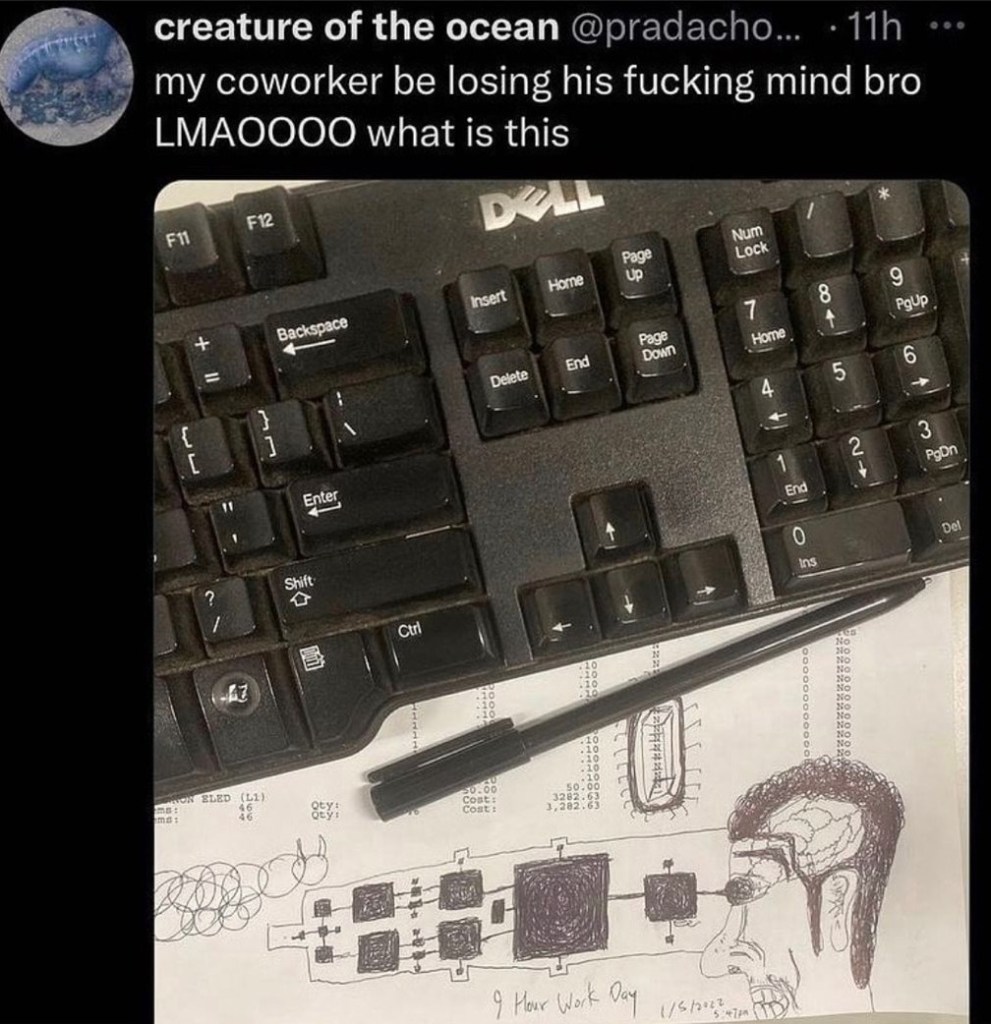
“Science Fair” has grown on me. Admittedly, this track was a skip for me for quite some time. The lyrics of this track paint a picture of someone who is the embodiment of the following tweet:
Anyways, despite the personal nature of the track, laden with references I likely will never understand, it managed to make me chuckle in all of the chaos of the music. “Just to think I could have left the fair with my dignity intact, and fled the stage with the world’s second-best Slint tribute act” is comically self-aware; one of the first things I ever thought of when listening to BC,NR, much like many others, was the stark similarity to the now defunct group Slint. Science fair continues, “still living with my mother, while I move from one microinfluencer to another.” I never thought I would ever hear the word “microinfluencer” in a song, to be honest. This line elicited a half-smile upon first listen; it’s a blunt, yet thoughtfully-placed nod to the experience of living in a digital era where social media allows anyone and everyone to be a “celebrity” in some way. Isaac Wood is a mastermind of capturing the aura of social anxiety and depersonalization–the science fair, the embarrassment, burning cheeks. All of this with a voice that sounds calm, yet markedly frantic and terrified at once.
Sunglasses is my favorite song off of this album. The song starts with this fuzzy guitar, and synth feeding back into itself. Something about the dissonance and ending on this huge open-D chord and going directly into a clean guitar riff just scratches this itch in my brain. The signature guitar riff comes in over the droning synths as the drums kick in, and the verse begins. Again, themes of class are rampant. “…She steams herself in marble rooms, courtesy of pigs” is rather upfront. Note, the lyric was originally “courtesy of big pharma” in the single version. Isaac gazes into the TV that only his girlfriend’s father could afford, while she spends money in excess.
The girlfriend’s mother is frail and weak, yet forced to appease her husband as she relies on his money. In this moment, Isaac knows that he, himself, is detached from this lifestyle of luxury, “and with frail hands she grips the NutriBullet, and the bite of its blades reminds me of a future that I am in no way part of,“ drives the point that as someone who is not upper class, he cannot relate to their anguish when there is such an excess of “things,” like the items that glow gold, the second living room etc. “In a wall of photographs in the downstairs second living room’s TV area, I become her father, and complain of mediocre theatre in the daytime, and ice in single-malt whiskey at night, rising skirt hems, lowering IQs and ‘things just aren’t built like they used to be,’ the absolute pinnacle of British engineering” pokes at the incessant need for the “old money” class to complain about everything “ruining” the way things were, and long for the days when tax evasion wasn’t needed and gasoline flowed like water. Isaac sees himself turning into something he cannot stand, proclaiming “I am so ignorant now, with all that I have learned.”
The song falls apart into controlled chaos, emerging with a time change, and firm, in-your-face guitar. The listener further steps into this persona of Isaac embodying a posh, old man, and delves into a first-person perspective. “I am invincible in these sunglasses… I am looking at you with my best eyes and I wish you could tell, I wish all of my kids would stop dressing up like Richard Hell. I am locked away in a high-tech wraparound translucent blue-tinted fortress and you cannot touch me. I am invincible in these sunglasses… there are so many roadmen on this street, and they cannot tell that I’m scared.” Here, sunglasses are used as a metaphor to depict how his girlfriend’s father views the working class. When wearing the sunglasses, you feel fear upon seeing “roadmen,” and put up a front of all-encompassing invincibility. You complain about how the younger generation doesn’t dress adequately, name-dropping Richard Hell, the bassist of the early punk outfit Television. Still, despite the blatant truth that the world has changed, you refuse to adapt, and clutch your pearls, hiding in your ivory tower.
Enough about Sunglasses, I could write a thesis on this song at this point.
Next on For The First Time is “Track X.” This song takes a different turn sonically. It’s soft and warm, with subtle violin, saxophone, and the same light guitar finger-picking reverberating between your ears. Lyrically, the track focuses on the vague concept of hope. Isaac details his contemplation of suicide, standing on the 18th floor of a building, drunk, thinking about jumping, all the while he recounts his unfinished business, such as proving his father wrong, and how those close to him would react to the grizzly sight. He decides to leave things open ended, the chorus stating “I guess, in some way-” this line acts like an unfinished interjection, indicating that there’s something worth living for, even if it means struggling for it. The title “Track X” itself indicates something unfinished, a placeholder to be revisited at another time. It alludes to the outcome of the song, wherein he has left the his fate open-ended, unfinished.
The final track on For The First Time is “Opus.” This song comes in with a somber set of duetting saxophones, building up into a syncopated minor key piece with polyrhythmic components. The excitement quickly dies down into the verse, but eventually picks back up with a fury of arpeggiating saxophones dueling for your attention. This song is a great example of the whiplash you can experience listening to Black Country, New Road. To be honest, I have never been an avid listener of “Opus,” but I can appreciate it for what it is.
The group is not afraid of experimentation, and I am excited to hear where their music will go next with this latest album. Black Country, New Road is resilient, and their ability to persevere is certainly indicative of their future success.






















 Polyvox Magazine