
Category: Ruby Kolik

  • The Asheley Catacombs and feeble little horse’s Newest Album

    The Asheley Catacombs and feeble little horse’s Newest Album

    Words by Ruby Kolik

    Bitknot (via BandCamp)

    We are descending into pixels on the internet, just in time for feeble little horse’s return with a surprise new full-length studio album, bitknot, with Saddle Creek Records.

    After a lengthy wait between the release of their 2023 album Girl with Fish and now, feeble little horse is back for more–and this time they’re not so feeble. In three years, the band has released their single “This is Real” and gone on a national tour for Girl with Fish. With this new release marking their third full album, the Pittsburgh-born band is more confident than ever to expand their horizons beyond the bounds of the US, and they have just announced that they will tour both in the US and internationally behind the album, starting July 11th through the end of the year.

    bitknot is a true showcase of the band’s alternative, electronic aesthetic. Written, arranged, produced, and recorded by Sebastian Kinsler, Lydia Slocum, and Jake Kelley across their respective homes in Pittsburgh, the album focuses its attention on themes of identity, overconsumption, and returns to a retro version of what our computers once were, grounding itself in the zeros and ones.

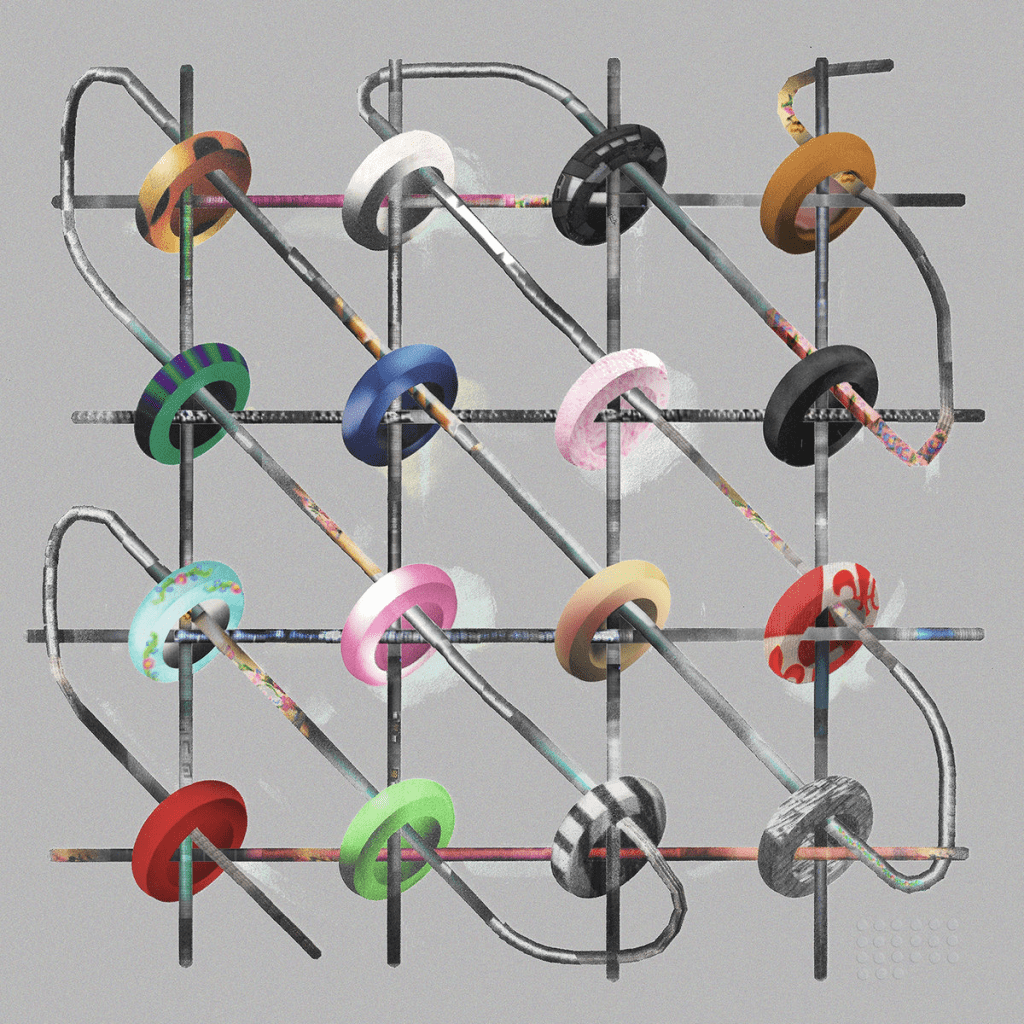
    “The album art is based on the coincidental core memory matrix,” the band writes in their Instagram post announcing both the album and tour, “which was used in old computers to store memory/access information using 0s and 1s. Each core, or ‘bit,’ is accessed through the grid of wires, like a knot that stores secret details and memories.” The wall of noise that permutates the space in your ears serves as a line between the world of real and that of the technological. Lydia whispers in your ears before breaking out into screams, as the echoed electric guitar supports, almost smothers, her vocals. They become one.

    In bitknot, they’ve returned to the studio with similar glitchcore and pop sounds from before. The album, at a short 25 minutes, sounds more summer pop than releases before, utilizing similar synth sounds heard in artists like Frost Children and ear. The opening is as epic as ever, with amp feedback and heavy drums, descending quickly into a conversation, an up-beat blend of predictable snare hits, then deeper once again to the heavier metal sounds. Lydia’s voice is relied on in songs like “Paris” and “Rewind” as it has been in the past, but in a song like “Cradle”, we hear the voices of other band members which brings a fullness to the songs presence. “DMT” is arguably the most metal song on the track list, including record scratches, electric guitar riffs, and the everpresent screams of their lead singer. “Upside Down” is held steady with a heavy bass drum line and distorted vocal tones that eventually devolve in the end, the way many of their songs tend to do, sounding intentionally rough around the edges. The album weaves between genres and sounds, opening the conversation of deep identity exploration and the multifaceted experience of a young person’s personal exploration.

    It’s no secret that, in a technologically driven world, the visual is just as important as the audio. feeble little horse’s online presence is nothing short of enchanting and maintains the aestheticism that many indie artists strive for. In the past six months, The Asheley Catacombs has seen an increased volume of posts. The Tumblr page, run by lead singer Lydia Slocum, started as a blog of sorts detailing her post-grad life, but is now generally a creative and artistic collective visualized as a website that would be seen on Windows 98. The page is dedicated to cutting out “platforms that combine art and commercials”. The band has built their brand not around rejecting modernity, but leaning into it, and returning audiences to a form of media consumption that is centered around the individual rather than larger corporations. The lack of information about the new album’s release by the band, paired with their distinct yet anonymous whimsical imagery ties feeble little horse’s aesthetic together with a loose, string of cut up metal.
  • Avoiding the Pigeonhole: A Review of Frost Children’s Hearth Room

    Avoiding the Pigeonhole: A Review of Frost Children’s Hearth Room

    Words by Ruby Kolik

    The music video for Frost Children’s “Flatline” is a sea of 80s-style high contrast, saturated visuals. The fisheye lens is used for most of the video, and we see siblings Angel and Lulu Prost strutting around what we can only assume is New York City. The song, used in the video game FIFA in 2024, was released on their 2023 album “SPEED RUN,” and uses energetic, club-ready beats to match their footsteps. Angel’s voice cuts through the beat, as he holds a single note across a full bar, simulating the sound of the familiar medical sound. Their newest album, “SISTER”, released almost two years later, is a similar mix of electronic, abrasive sounds. Frost Children has maintained this emo, harsh electronic sound throughout these two albums, begging their audience to cut the lovey-dovey crap and dance with them, making songs with electro-pop icons like Kim Petras.

    In an interview with Welcome Editorial, Lulu talked about the intention with the album:

    This project is something that we’ve wanted to put out for a while. To us, it doesn’t feel like a 180. We’re just turning to this thing we were doing individually before we started this project, but now it’s more refined. It has just a sprinkle of intention. We’ve always wanted to have songs where we can just pick up a guitar and play it. I don’t think we’ve ever had that until now, which is sick.

    When listening to the band, you wonder where they fit in the sphere of genre. If you try and pigeon-hole the duo into a specific genre, you’ll be wrong the next time they release something. They find themselves situated between punk bands like Skrillex and soft alternative artists like Alex G. “Stare At The Sun,” the third track on the album, includes a scream-sing element towards the end that calls back directly to the duo’s emo roots in their first band together: One. They described the music as a “spiritual” experience, leaving the lyrics behind and instead, using monotone screaming instead.

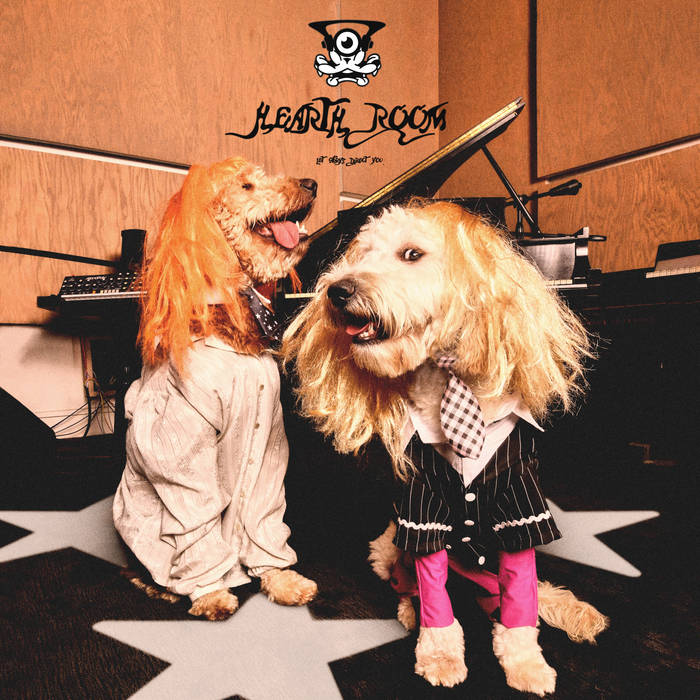
    In their music videos, and their publicity, they hit on something particularly prominent with electro-pop artists: aesthetic. “Hearth Room” was less than publicized compared to their other releases. When listening, I wonder where these angelic vocals are coming from and how they contrast so differently from their visuals of other releases. In fact, the only video we received following this album was an 18-minute youtube home video “documentary,” showing the duo traveling and recording the album. They play with balloon animals, sit on the floor of their small home studio, carelessly strum guitars by campfires–which make a starkly more apparent appearance in this album–and put phasers on audio clips, toying with what sounds best.

    In the video, the duo appears alone in the songwriting and producing process. However, this sound was brought to life partly from the help of Al Carlson, who mixed and mastered the album. Carlson, through a laptop screen window into his studio in Brooklyn, New York, said:

    “Maybe it was a reaction to Speed Run, like ‘We’re also this.’ At the time they were saying they had a lot of inspirations and wanted to do different things—they weren’t just one thing. It felt like a snapshot for them, taking it easy in the Poconos, writing something more organic from the ground up instead of in the box.”

    The duo, originally from St. Louis, Missouri, sang as children in their church. They have spoken about the prize they feel in vocal synchronization and their gratitude for growing up in the church. Angel in particular has addressed that, despite the fact that they didn’t particularly jump for joy when going to church, they valued having something to rebel against, perhaps urging them in the direction of the highly experimental genre of glitchcore and electropop. Because of this desire for rebellion, Frost desires to rebel even against what their listeners expect from them now.

    There are songs on the album which showcase the higher level of saturation in instruments that they used prior, though. “Not My Fault” is arguably the most produced track on the list, using more synthesizers to create an unworldly experience. Despite even their highly reverbed and distorted elements in their music, the voices of the pair are never lost. Their lyrics and vocals are most prominently important to the duo,.

    While the other albums may resemble artists that have come before the duo, adding elements of Green Day and Evanescence, “Hearth Room” slows us down from the noise and pulls us away from the wall of sound. Here, we are floating in a sea of alternative love. The opening thirty seconds of the album are a series of harmonizing vocals without any backing music. We are immediately set up to be relaxed.

    When I asked about his work on “SISTER,” and how that process differed, Carlson said, “[It] was more dialed-in for them, especially for Lulu, who did all the mixing. It wasn’t ‘help us get this,’ it was ‘this is exactly what it should sound like.’ I worked on more than the vocals, but ultimately, they only used the vocal mixes. Those basically became the a cappella tracks.”

    Frost Children consistently checks their alternative and emo boxes, always returning to their electronic sounds, but, in 2023, they took a detour into something more whimsical. The album shows us that, despite the hardened feelings we may have for softer music and softer feelings, there is room to love, and room to love loudly. We aren’t raging over a FIFA game, or in the middle of a club with a strobe light; we are sitting by the campfire with them, listening to the soft strumming of their guitar.

    “Everything exists in a constellation of binary switches,” Angel said in the same Welcome interview, “Every song, every project, are these microcosms of nuggets of focused material, and presented altogether, those micronuggets of focus make a larger portrait. So the idea was these two vibes that are pretty different from each other, that you can switch in and out of. One compliments the other, and you get this double record that’s larger than the sum of its parts.”